Getting It Booked In
Washington sits about 10 miles from our shop in Peoria
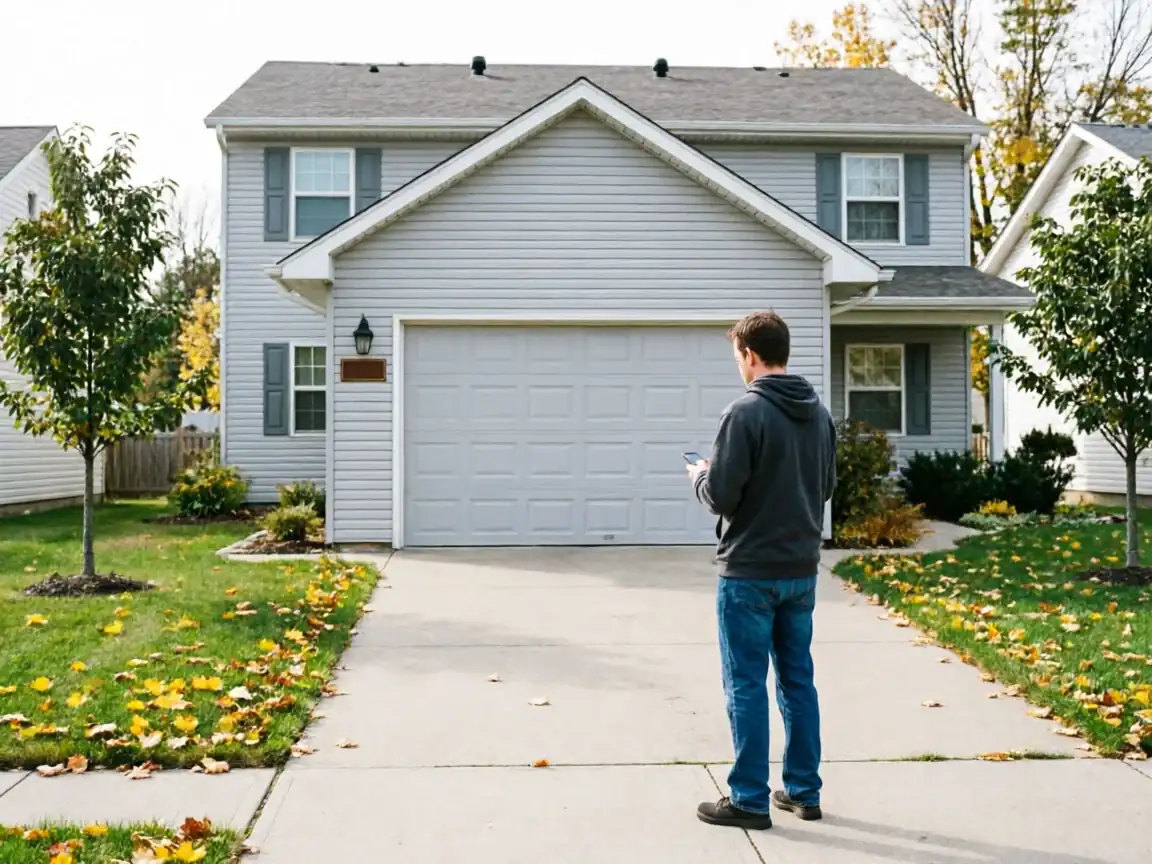
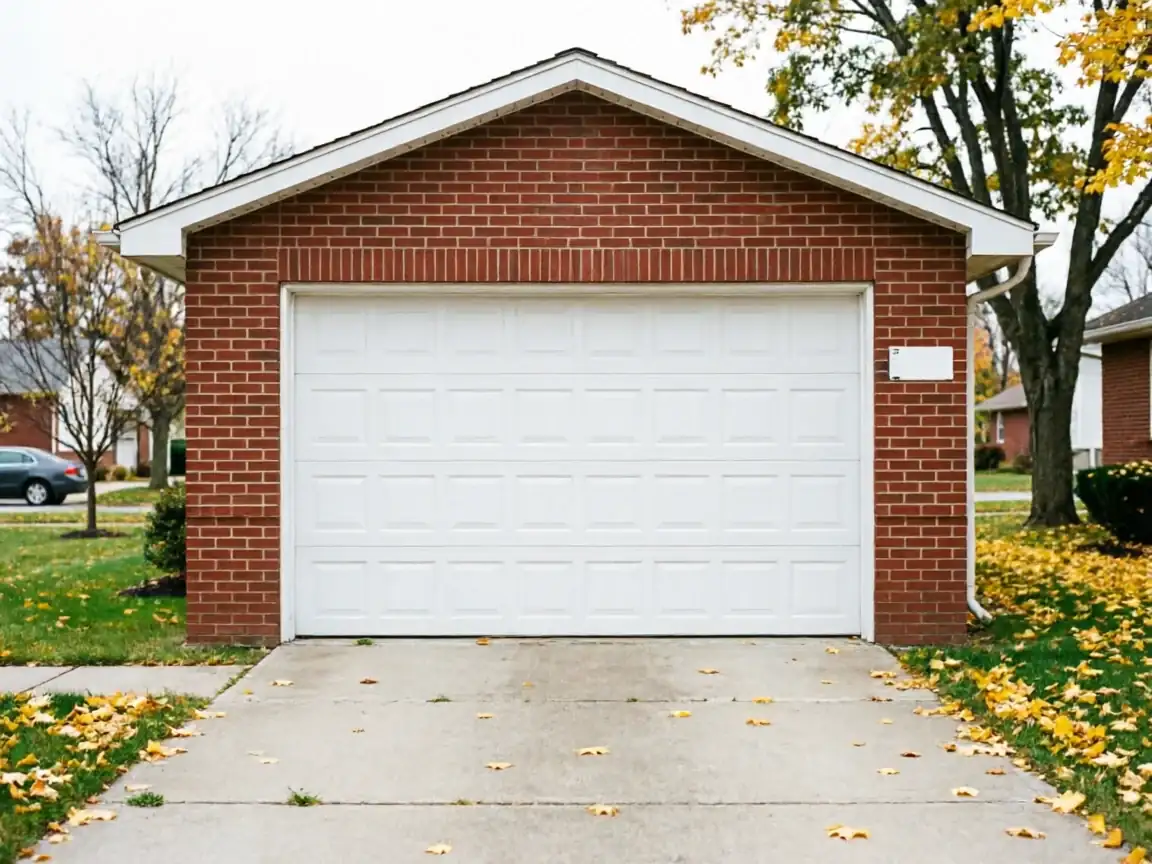
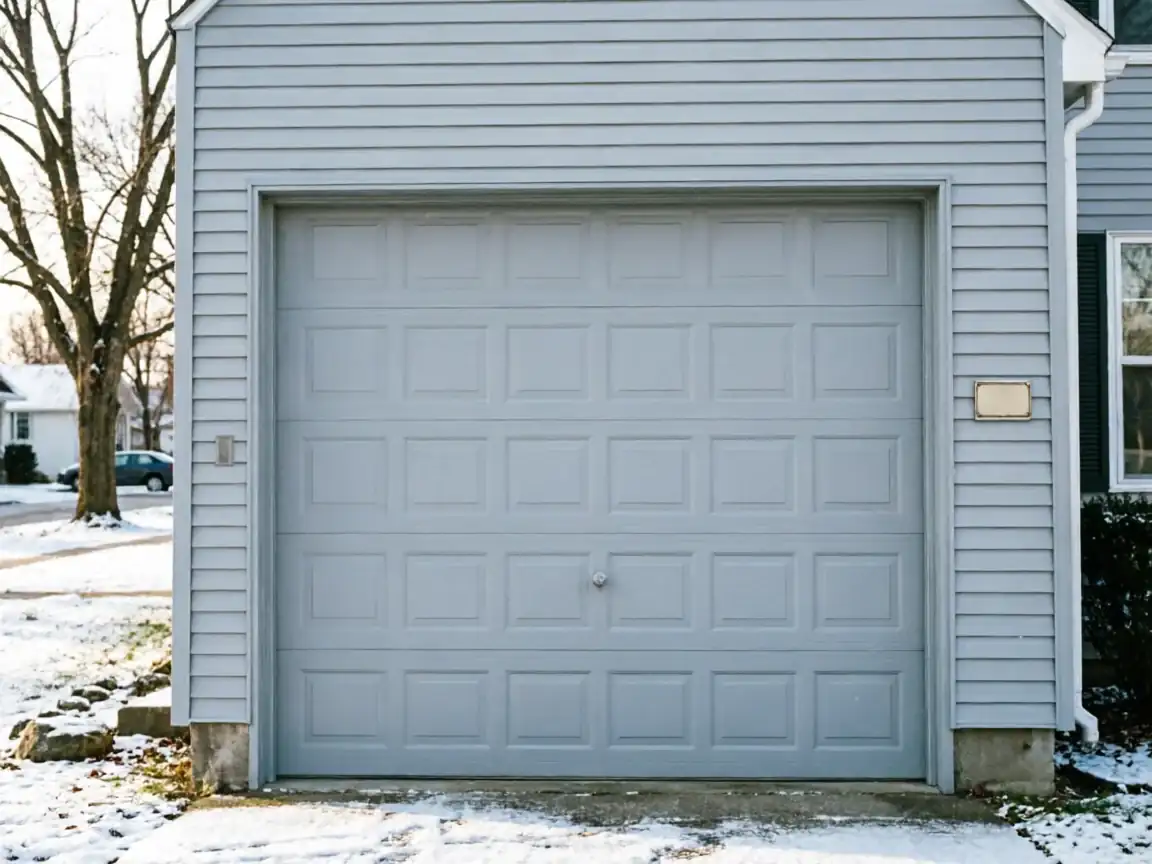
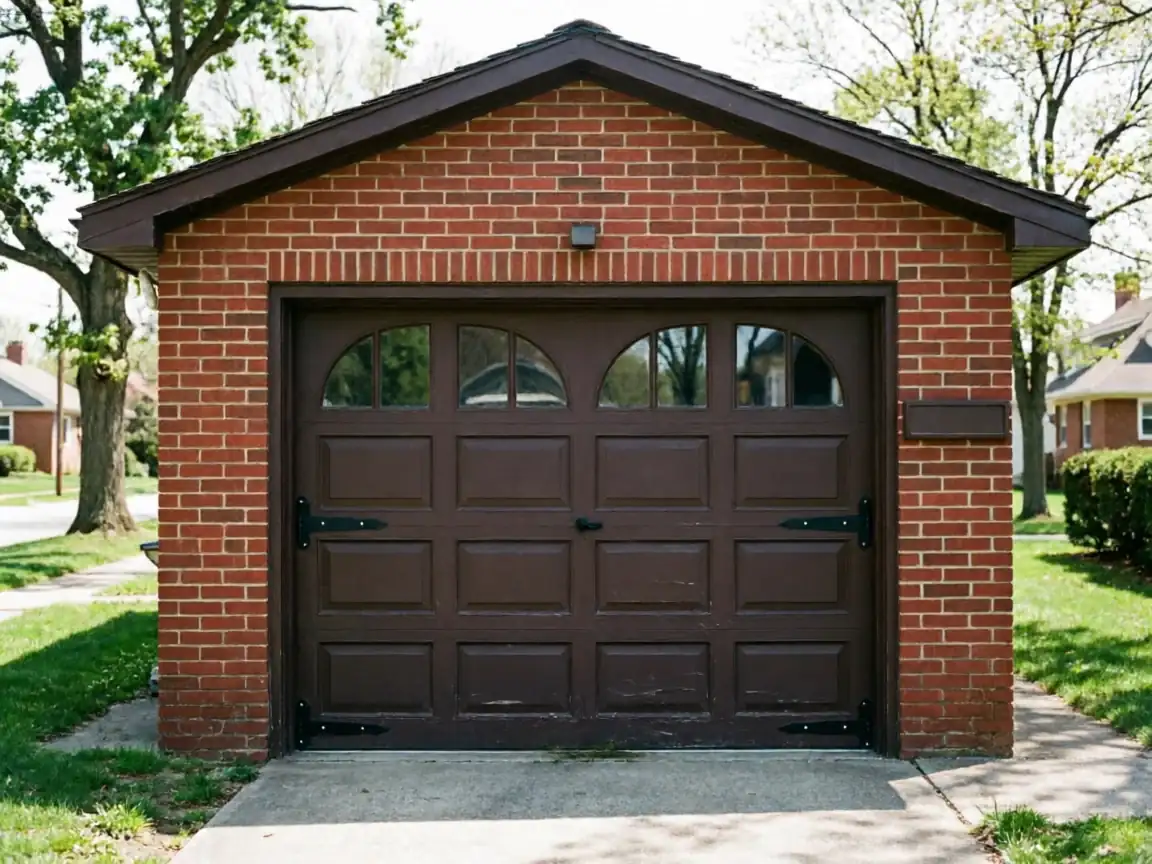
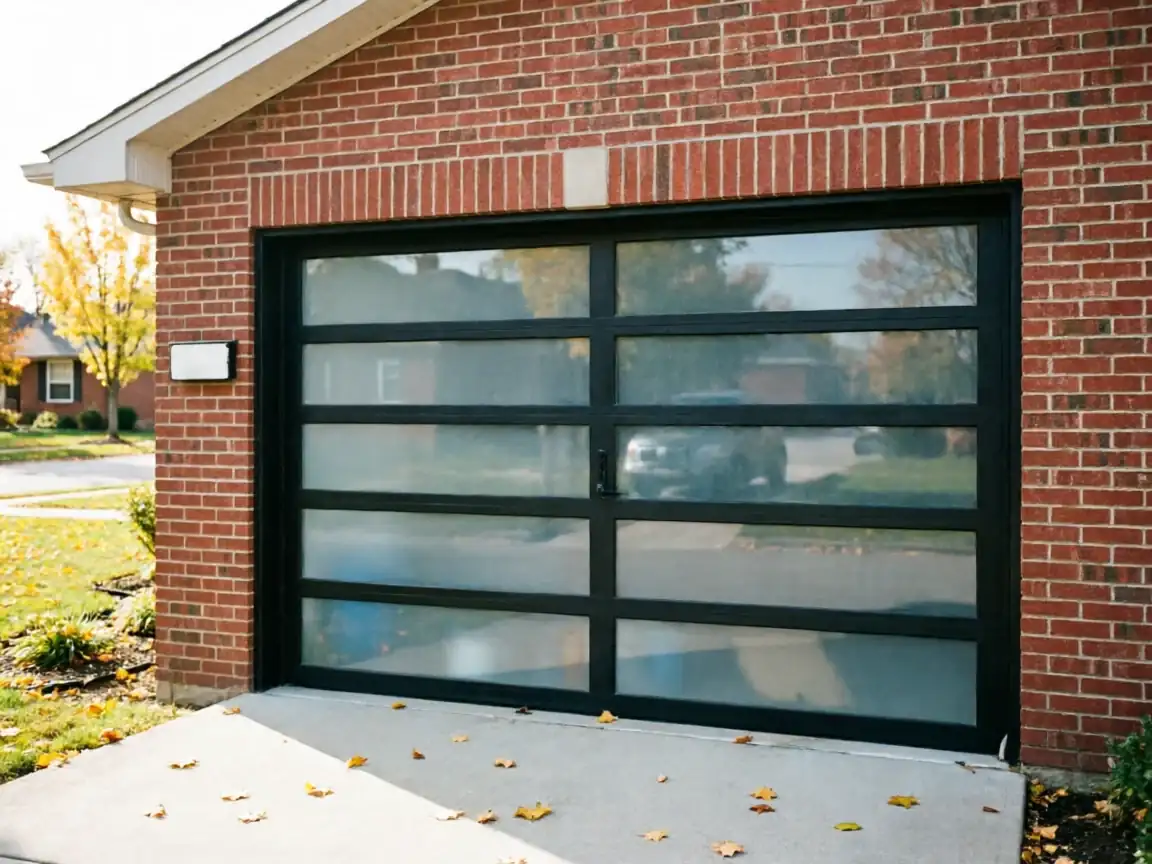
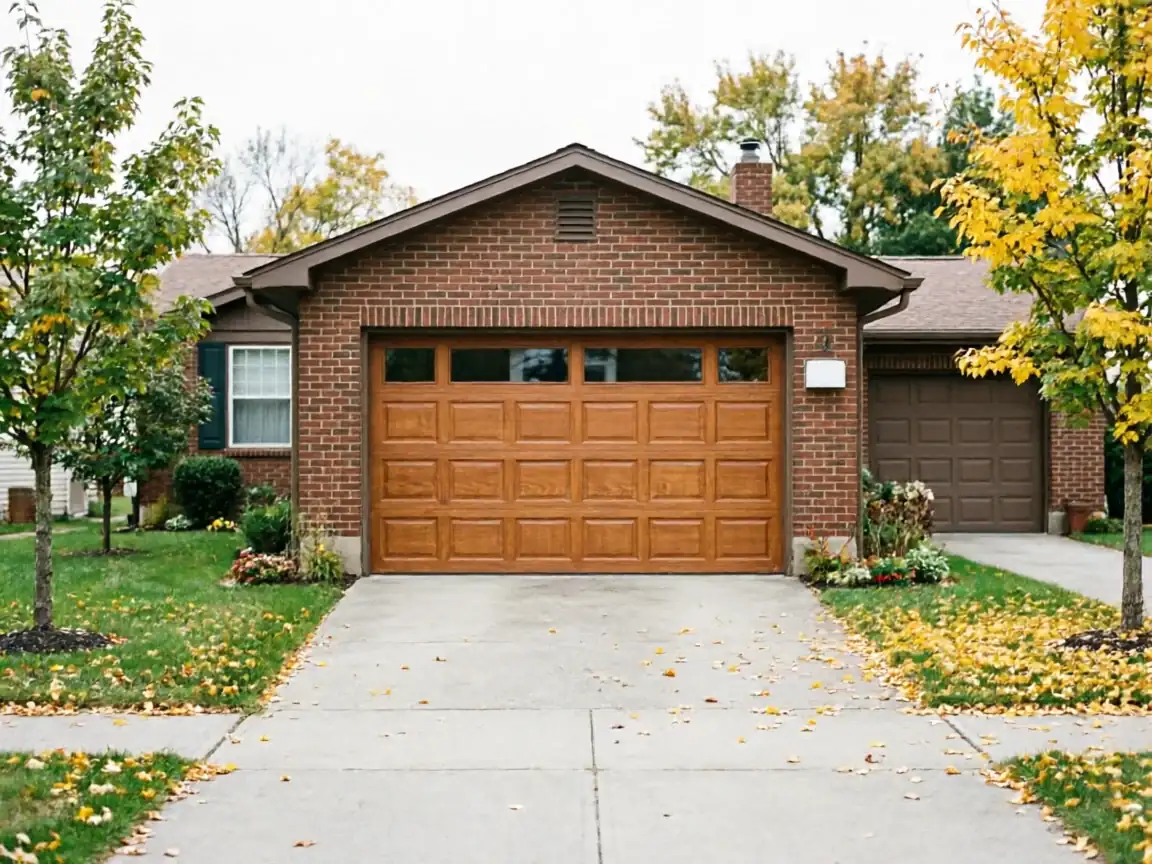
And the first thing that separates this job from a call in the older parts of the metro is the house itself. Across the wider service area the median home was built back in 1964, but Washington's own median build year lands around 1978 - a solid decade and a half newer. That gap matters more than it sounds. A 1978 build usually means a steel sectional door on an extension or early torsion setup, not the one-piece wood doors and odd hardware you find on 1950s stock closer to the city. When you call, we ask the build era of the house before we ask what's wrong, because it tells us what's probably inside the header before the truck even leaves.
- 10 miles
We travel out from Peoria for every call here
There's no branch office in Washington, so scheduling runs through the same dispatch as the rest of the coverage area. That's not a knock against the town, just how the company is set up. Washington is also a higher-income area than the service area average - median household income runs about $91,360 against the wider area's $71,763 - and that shows up less in what breaks and more in what people choose to replace instead of patch.
The DIY Question
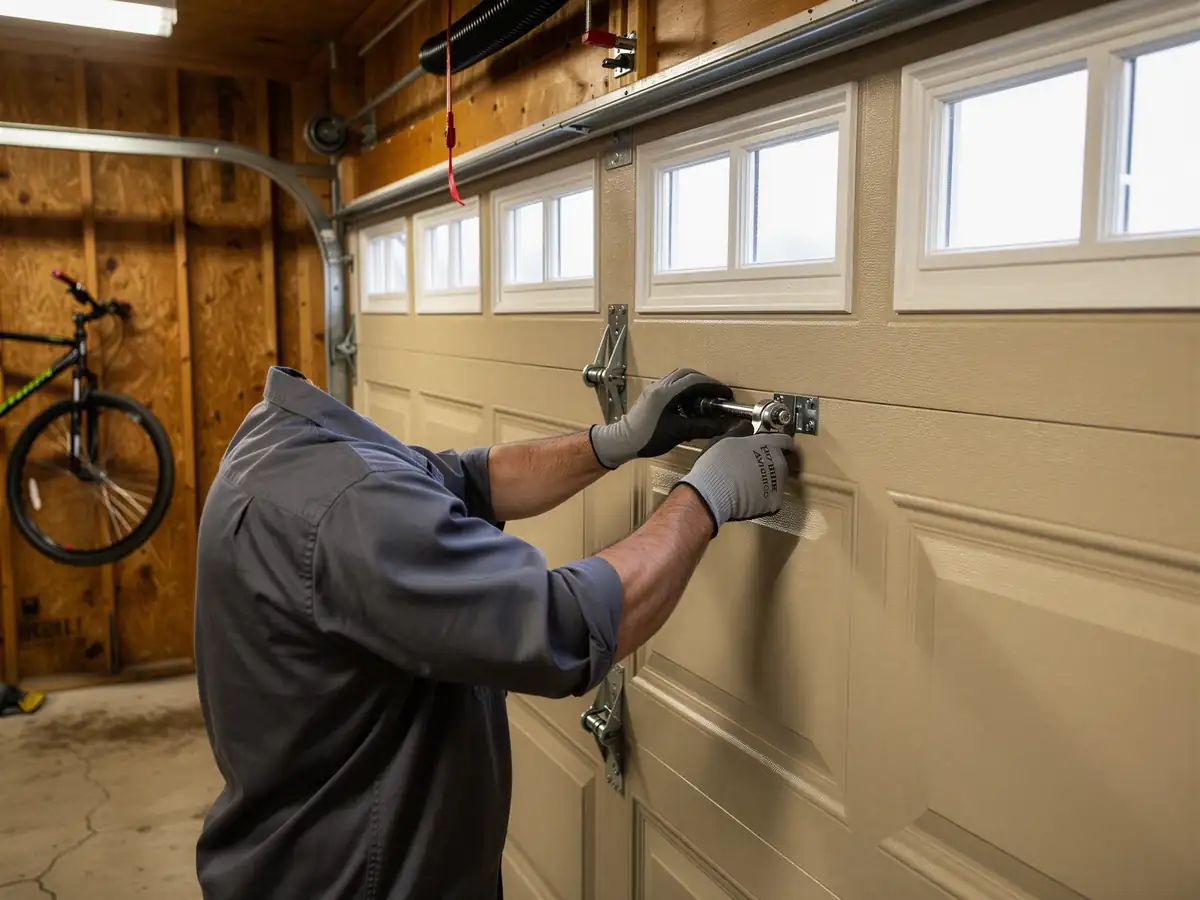
A door from the late 1970s through the 1990s is usually more DIY-friendly than the older stock closer to Peoria, mostly because parts are still made to fit it. Standard torsion springs, standard track widths, openers that take off-the-shelf parts. If your door is sticking or noisy, you can often get away with checking roller wear, tightening hinge bolts, and lubricating track yourself.
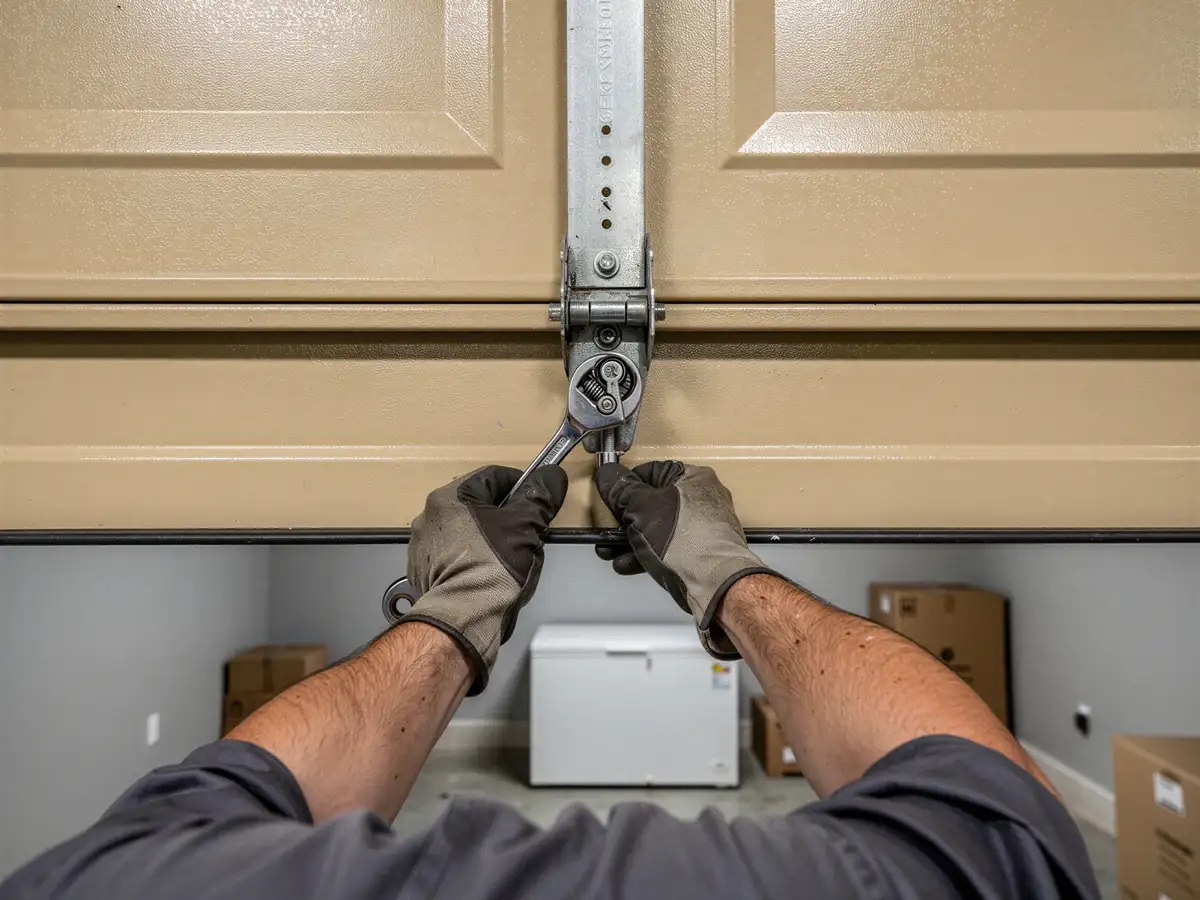
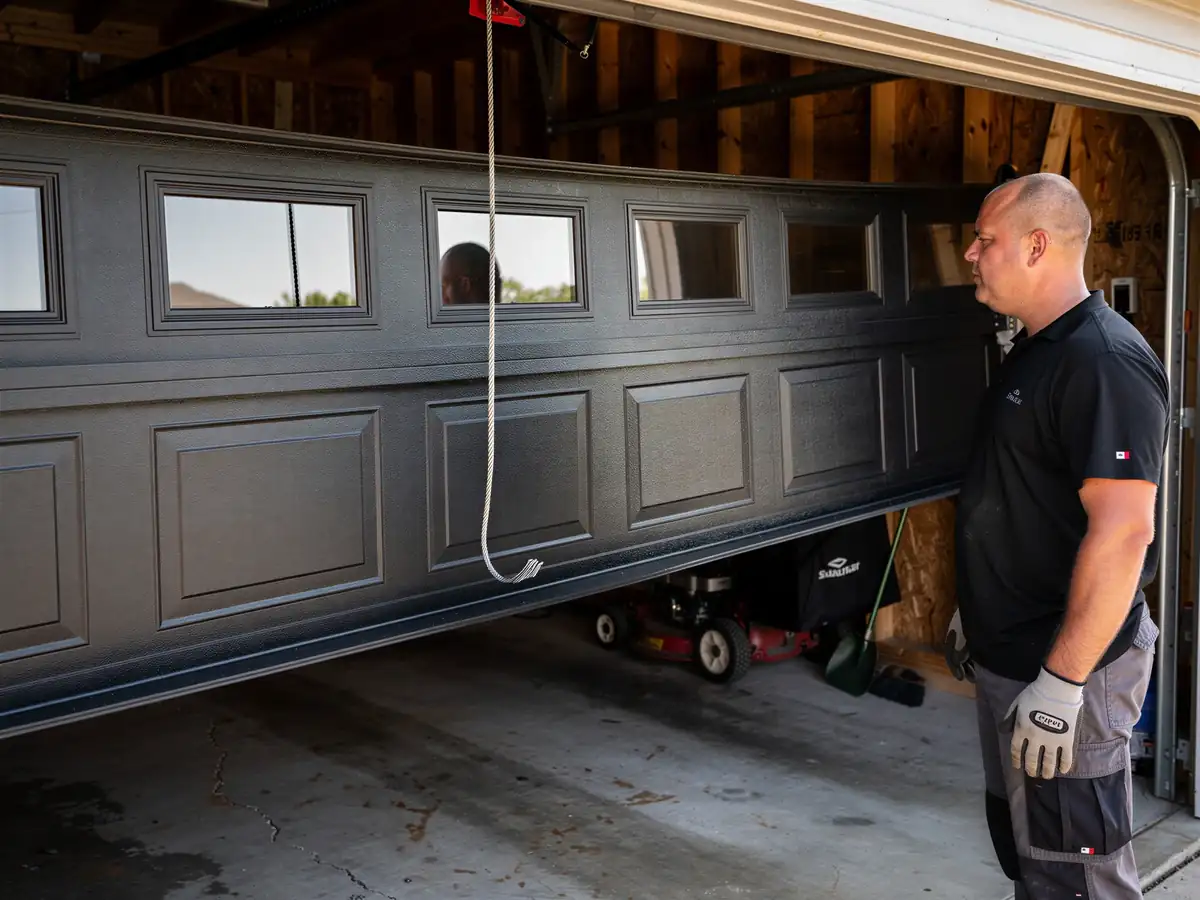
What you shouldn't touch is the spring system. Torsion springs on any door built in this era store enough force to break a wrist or worse if the winding bars slip, and that risk doesn't shrink because the house is newer. Cable tension and off-track panels are the other two jobs we tell people to leave alone regardless of the home's age. If the door won't move at all, or one side is visibly lower than the other, stop and call - that's a tension problem, not an adjustment problem.
What It Costs
We don't publish flat pricing here because the job varies too much by what's actually on the door - a single broken extension spring is a different bill than a bent track plus a worn opener gear. What we can tell you is that Washington's housing age works in your favor on cost: because so much of the stock here was built from the late 1970s onward, parts availability is better than it is for the older sections of the coverage area, which keeps repair bills from creeping toward full replacement as often.
We'll give you a number before we start, and if a repair is going to run close to the cost of a new door, we say so. That's the honest limitation worth stating up front: on a door old enough that the opener, springs, and track all need attention at once, replacement is usually the better money even if the repair is technically possible.
How We Fix It
On a typical Washington call, the diagnosis starts with the opener and spring type
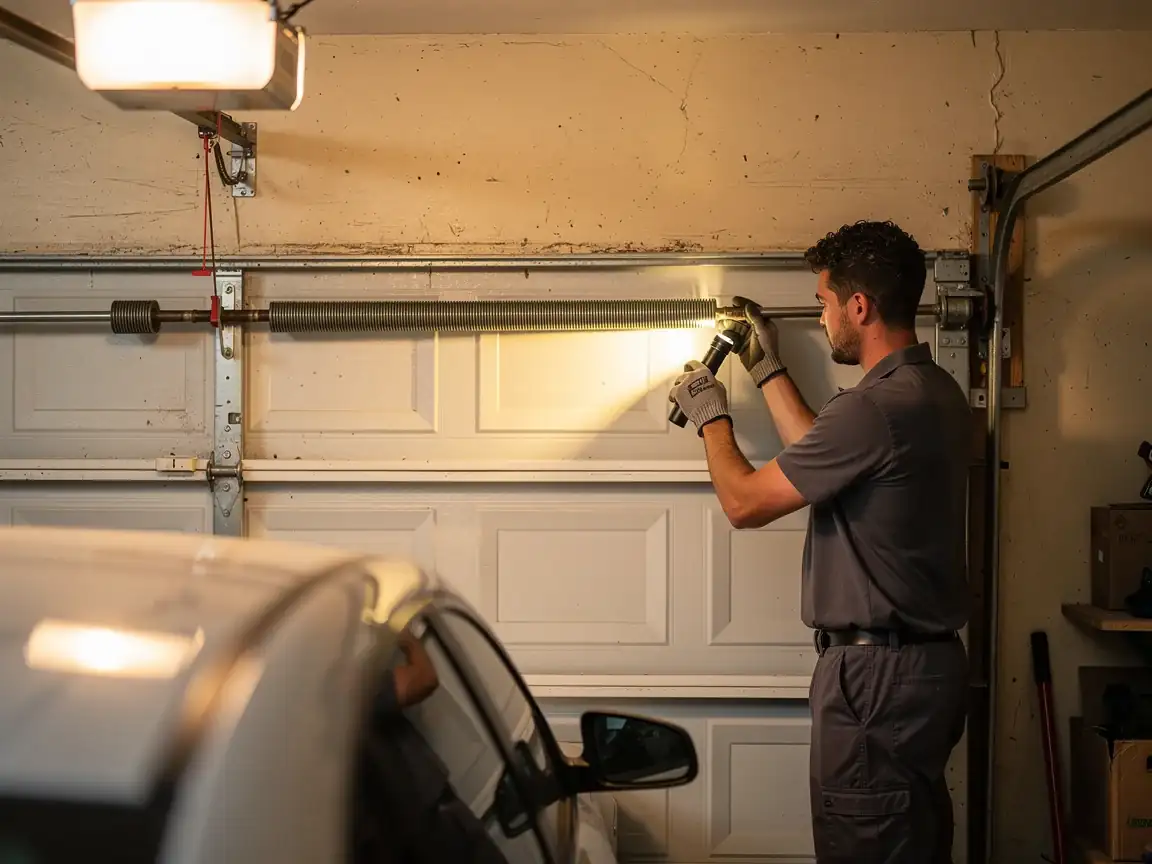
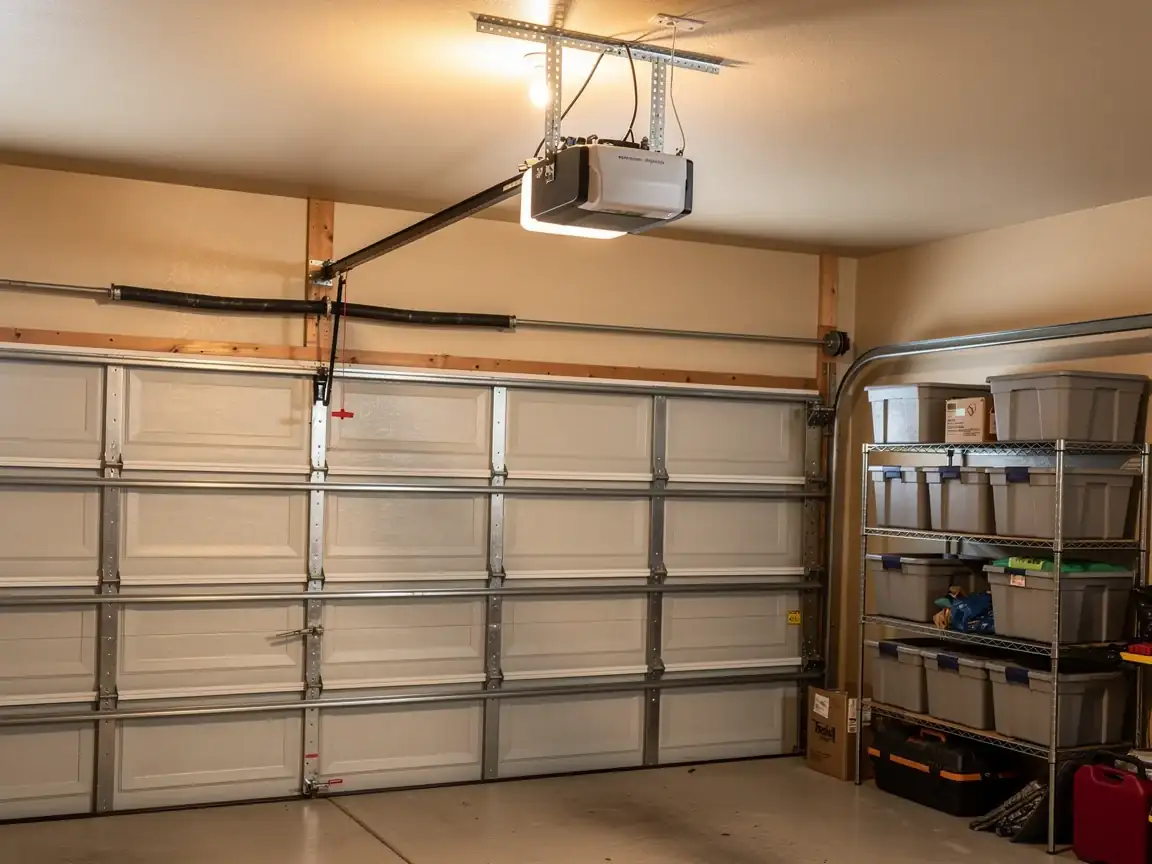
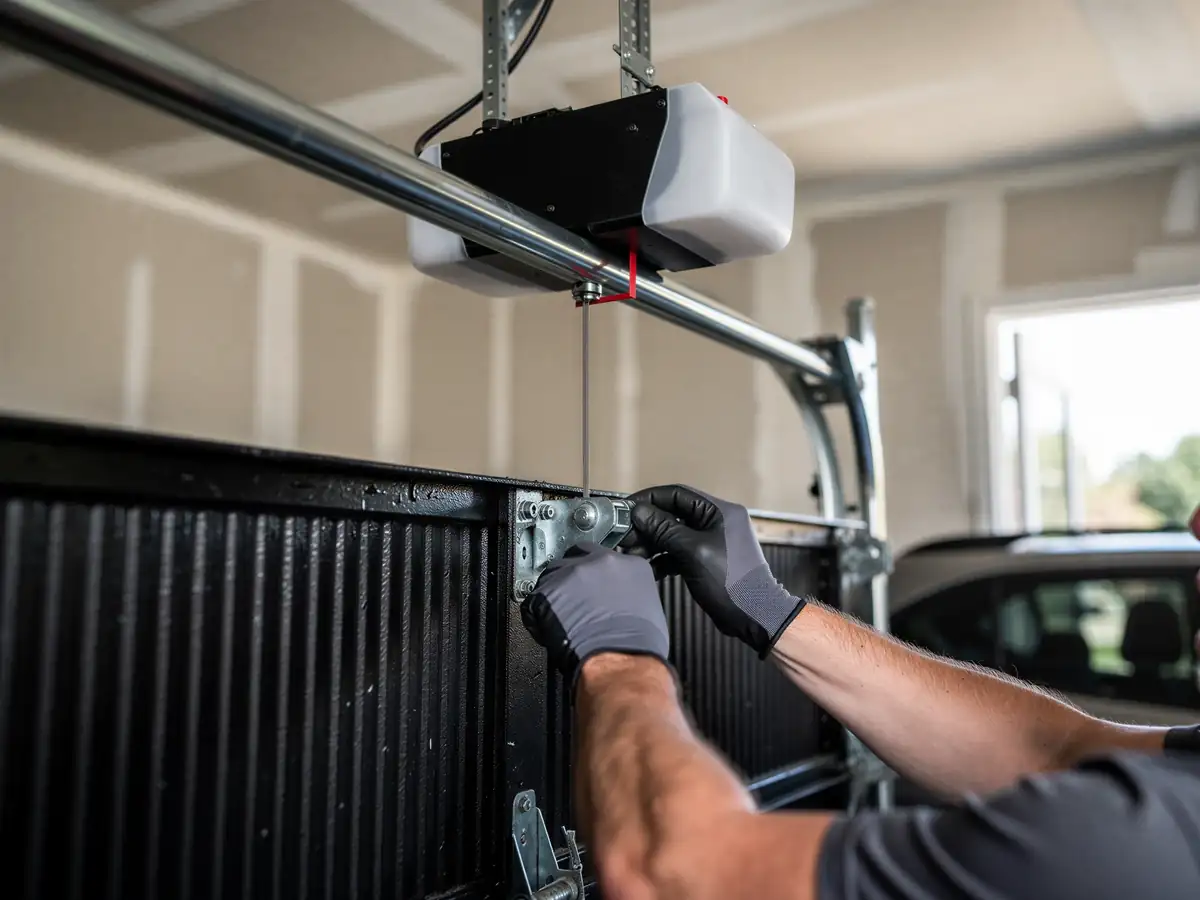
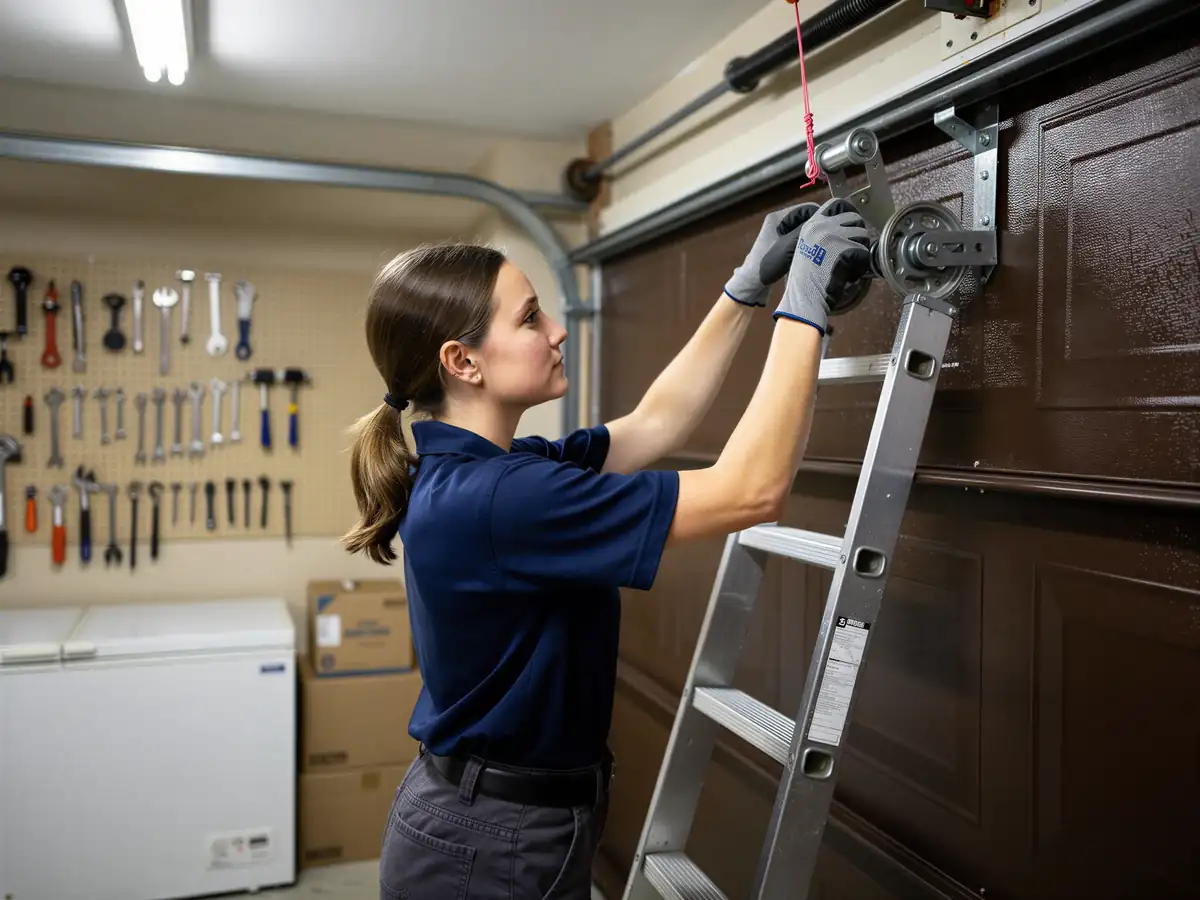
Since the home's build era tells us roughly what we're dealing with before we open the panel. Extension spring systems from this period get inspected for frayed cables and worn pulleys as much as the springs themselves - that hardware wears out before the springs usually do. Torsion setups get checked for drum wear and shaft alignment.
We test the door's balance by hand before touching the opener
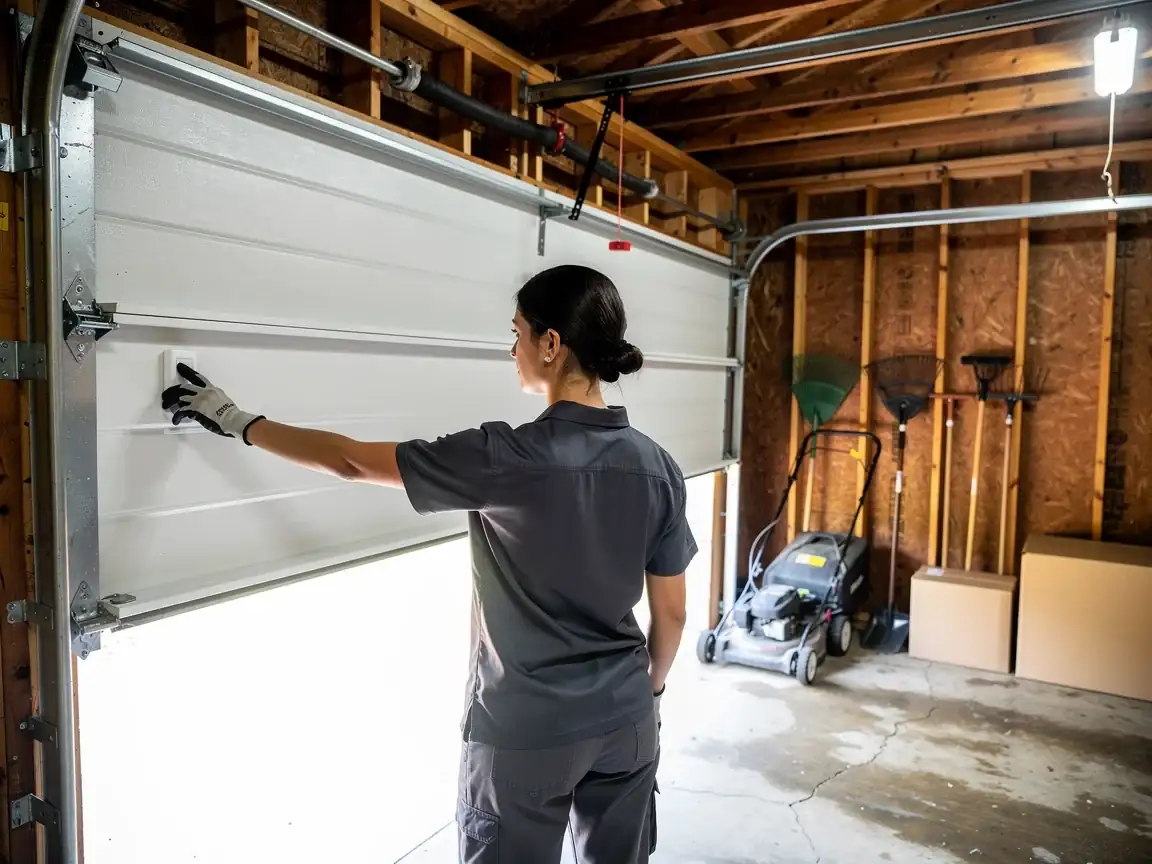
Because a door that's out of balance will burn out an opener motor regardless of how new that opener is. Track alignment gets checked next, then the opener's force and limit settings. We don't replace parts that are still within spec just because they're old - if a cable has life left in it, it stays.
Stocked Parts
Our truck carries the parts that fit the hardware most common to houses built from the late 1960s through the 1990s - standard torsion and extension springs, steel rollers, standard-width track sections, and the drive components for the openers most common in that era. That range covers the bulk of what we see in Washington.
What we don't carry on the truck is anything proprietary to a specific opener brand's newer smart-home line, or springs sized for a door wider than standard two-car dimensions. Those get special-ordered, and we'll tell you that on the spot rather than pretend otherwise. For everything else typical of a 1970s-to-90s build, we're usually in and out same visit.
Why This Fails Locally
The failure pattern in Washington isn't the same as it is in the older neighborhoods near Peoria proper. There, original 1950s and 60s hardware is the problem - parts nobody stocks, doors nobody makes anymore. Here, with a median build year around 1978, the doors themselves are usually fine. What fails first is the stuff that wears out on any cycle count regardless of age: rollers, cables, and opener gears that have done 40-plus years of daily cycles.
The COLD climate band this area sits in also plays a role - winter cold makes steel contract and lubricant stiffen, which is exactly when a roller or cable that's already worn gives out. It's not a Washington-specific weather event, just the ordinary cold-season stress that an aging but mid-era door shows differently than a much older one would. Six thousand-plus households in this area means a lot of doors hitting that same wear point around the same decade.