Getting It Booked In
Washington sits about 10 miles from our shop in Peoria
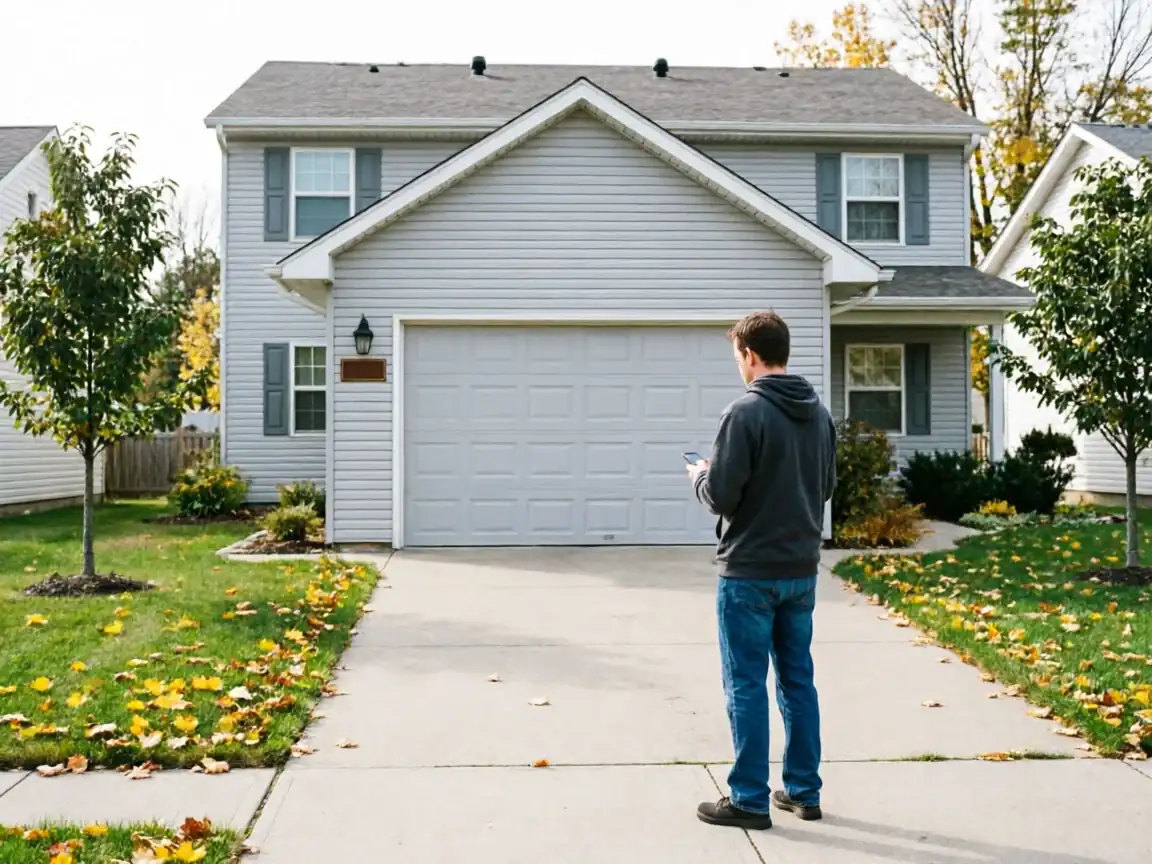
So when you call we're scheduling a truck to come out to you, not sending someone from a counter down the street. We don't have a branch in Washington and we're not going to pretend otherwise. What we can tell you is that a Washington address doesn't put you at the back of the line behind closer towns - the truck routes based on the day's calls, not zip code.
- 10 miles
Before you book, have two things ready
The age of the house if you know it, and whether the door is stuck open, stuck shut, or just making noise. Washington's housing mostly dates from the late 1970s onward, median year built 1978, which is newer than a lot of what we see elsewhere in the service area. That matters for what parts we bring - newer doesn't always mean easier, it means different.
The DIY Question
Median household income in Washington runs around $91,360, noticeably higher than the roughly $71,763 median across the wider Peoria service area. That number matters for one reason: it changes the math on repair versus replace. At that income level, a lot of homeowners here are better served putting money into a full door and opener replacement once a door starts needing repeated repairs, rather than nursing along a 1980s steel door panel by panel.
That said, plenty of fixes are still worth doing yourself to avoid, at minimum, the call. A torsion spring under tension is not a DIY job - full stop, regardless of your budget. But tightening loose hinge bolts, cleaning and lubricating tracks, or replacing worn weatherstripping are all reasonable weekend jobs. Know the difference before you pick up a wrench, because the spring job is the one that sends people to the ER, not the one that saves them a service call.
What It Costs
We don't publish a flat price here because what a Washington door needs depends heavily on its age. A house built in 1978 is now pushing fifty years on its original garage door hardware if nothing's been replaced, which means you're often looking at a full torsion spring and cable replacement rather than a single part swap. Newer builds in town, especially anything from the 1990s or 2000s, tend to need opener boards or sensor repairs more than structural door work.
We'll give you a number after we look at the door, not before, because quoting blind on a door we haven't seen does nobody any favors. What we can say is that replacing a spring costs less than replacing a door, and replacing a door costs less than an ER visit from a spring that let go in someone's hands.
How We Fix It
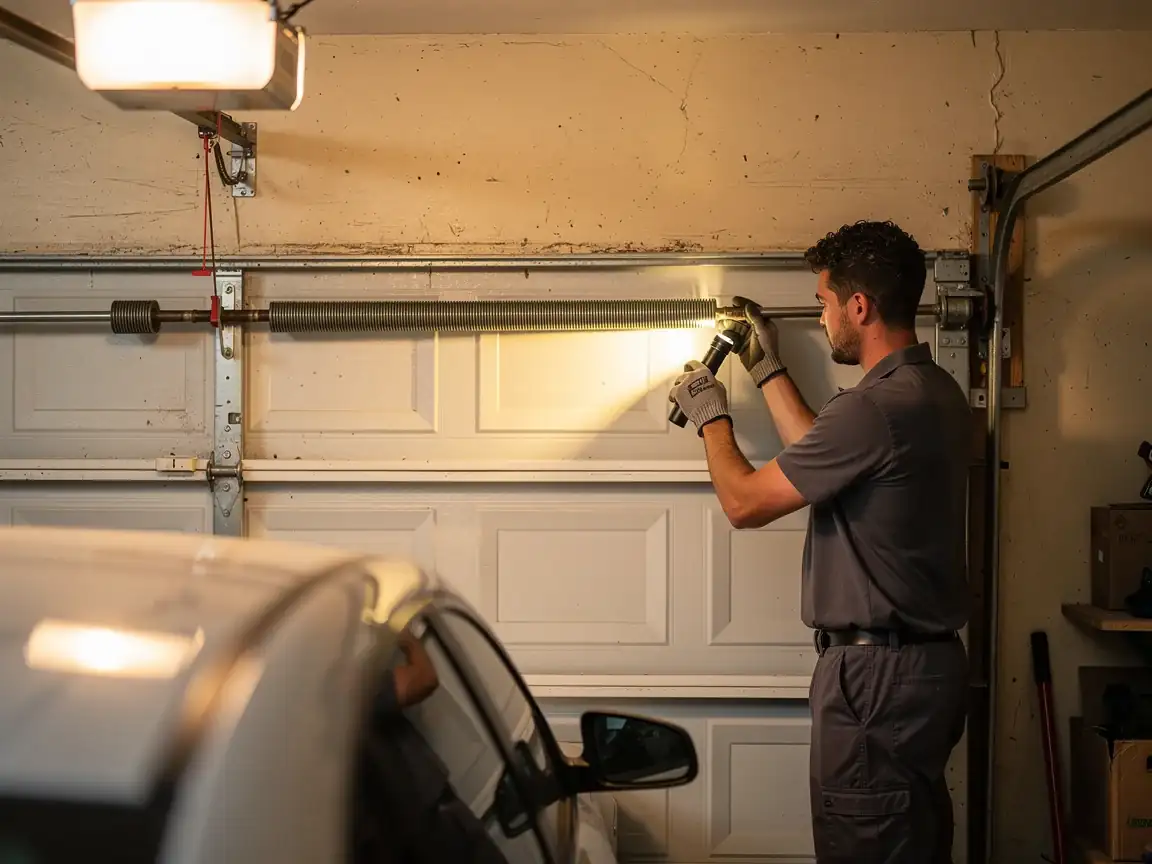
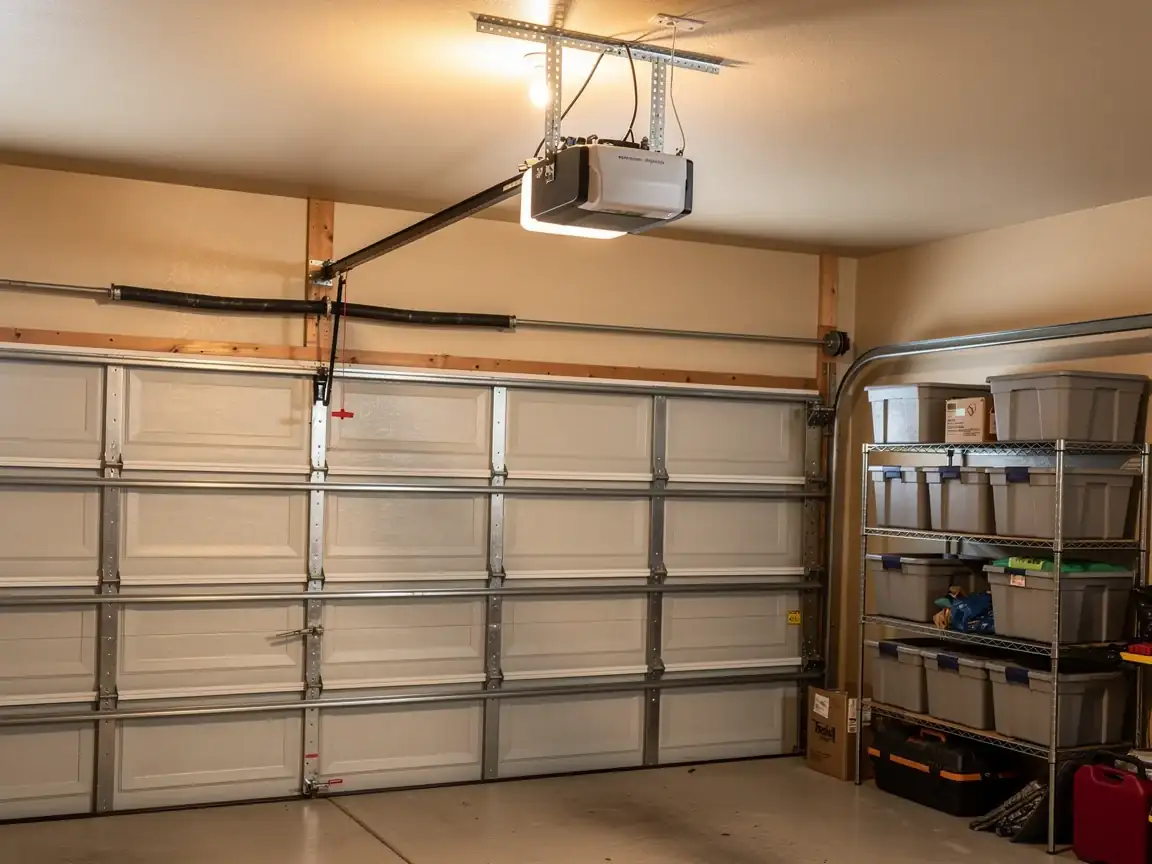
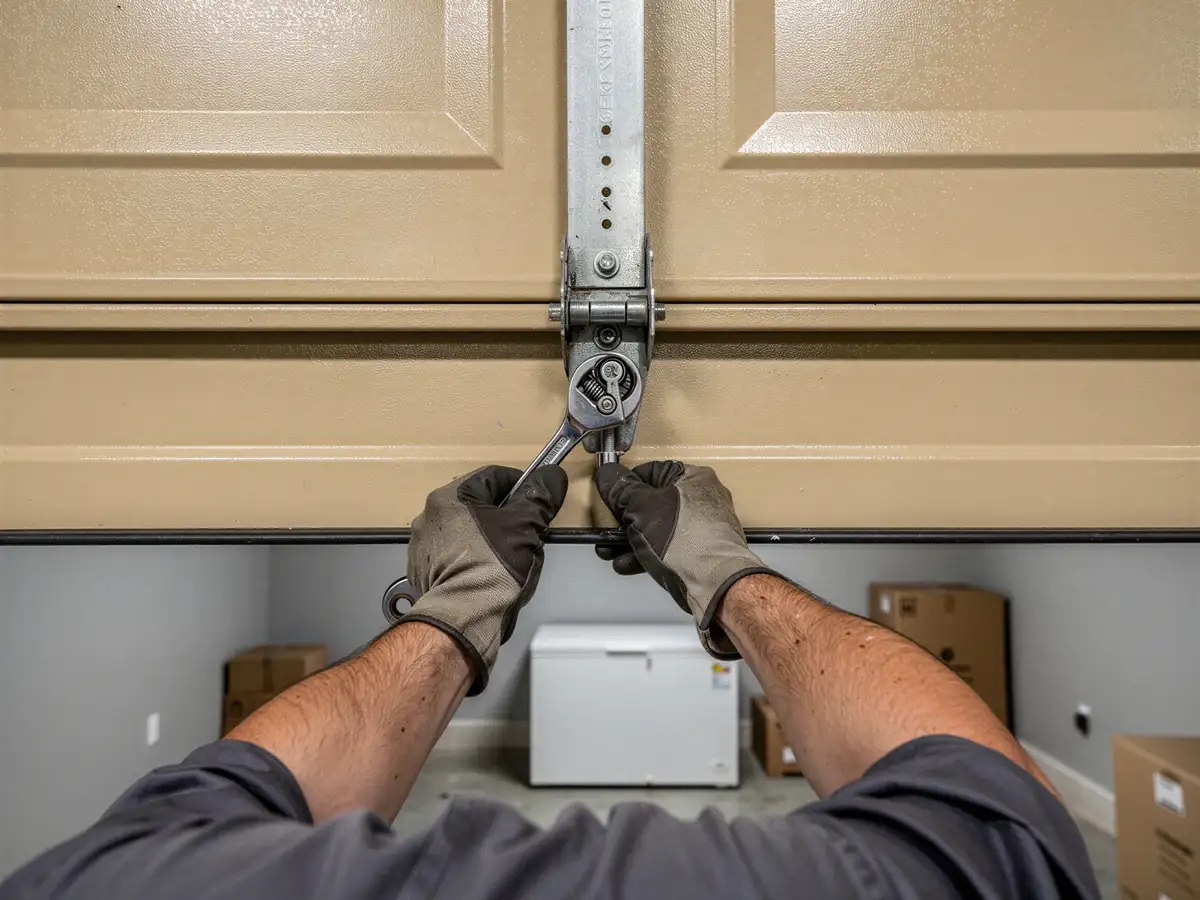
Most of the diagnostic work starts with the spring and cable system
Since that's what fails first on doors from Washington's housing era. We check torsion spring wind and cable fray before we touch anything downstream like the opener, because a door that's binding on worn hardware will blow through a new opener motor just as fast as the old one.
On houses built closer to 1978, we often find the original torsion hardware still in place
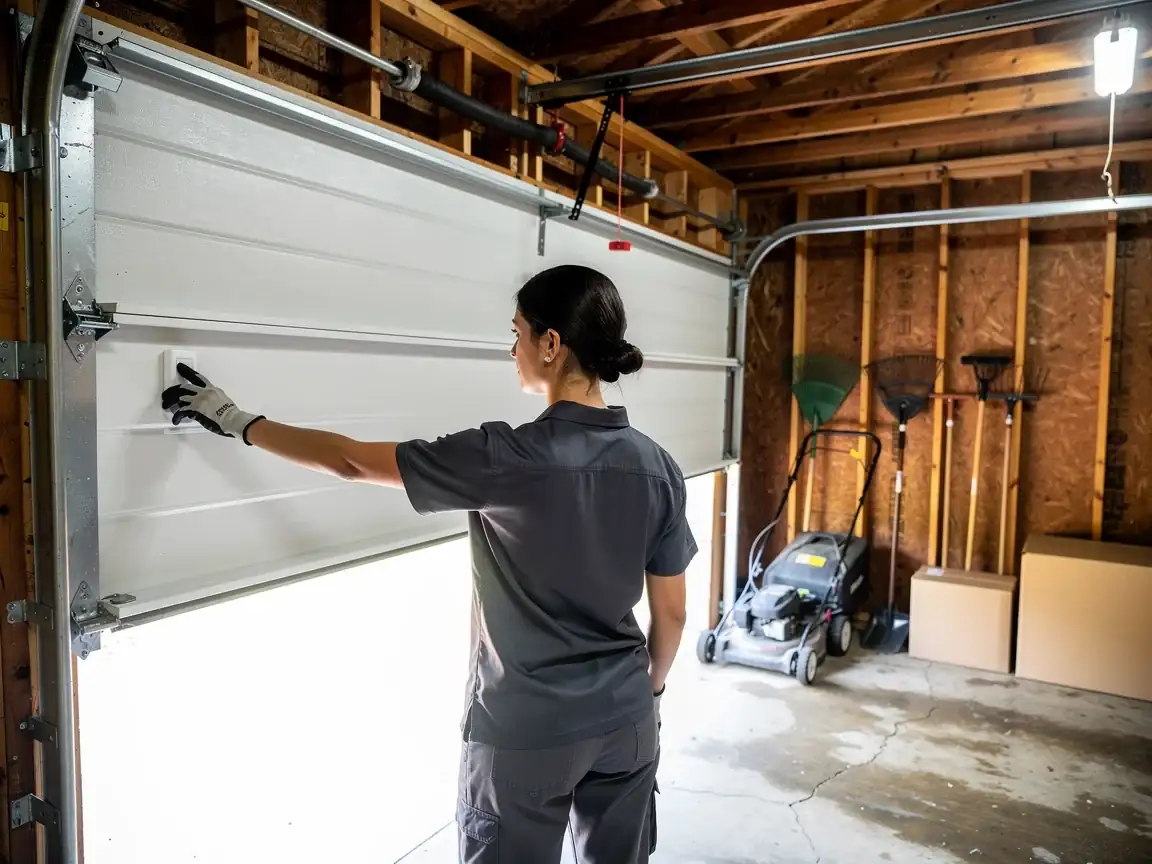
Sized for a lighter door than what may have replaced it over the years - a heavier insulated steel door hung on springs rated for the original panel. That mismatch shows up as an opener straining, a door that won't stay up on its own, or a spring that's worn out years ahead of schedule. We rebalance the system to match the door that's actually hanging there now, not the one the house came with.
Stocked Parts
We carry common torsion springs, standard rollers, and cable sized for residential doors built from the 1960s through the 2000s, which covers the bulk of what's on the road between Peoria and Washington. Washington's newer average build year means we see more galvanized spring setups and fewer of the older oil-tempered coils that show up closer to Peoria's core.
Here's the limitation: if your door is an unusual size, a custom width, or an older model from a manufacturer that's since changed its spring specs, that part may need to be special-ordered, and that adds lead time we can't shorten. We'll tell you up front if that's the case rather than quote a timeline we can't hit.
Why This Fails Locally
Washington's climate sits in the same cold, moderate band as the rest of the region, which means steel doors here go through the same freeze-thaw cycle every winter - metal contracts, lubricant stiffens, and anything already worn gets pushed past its limit on the first hard cold snap. That's true everywhere in the area, but it hits differently on a 1978-era door than on a door from 1995, because the steel gauge and spring tolerances were different then.
The failure we see most in Washington specifically is a torsion spring that's lasted longer than it should have simply because the house is younger than the regional average, so owners haven't had to think about it yet - until the day it goes.