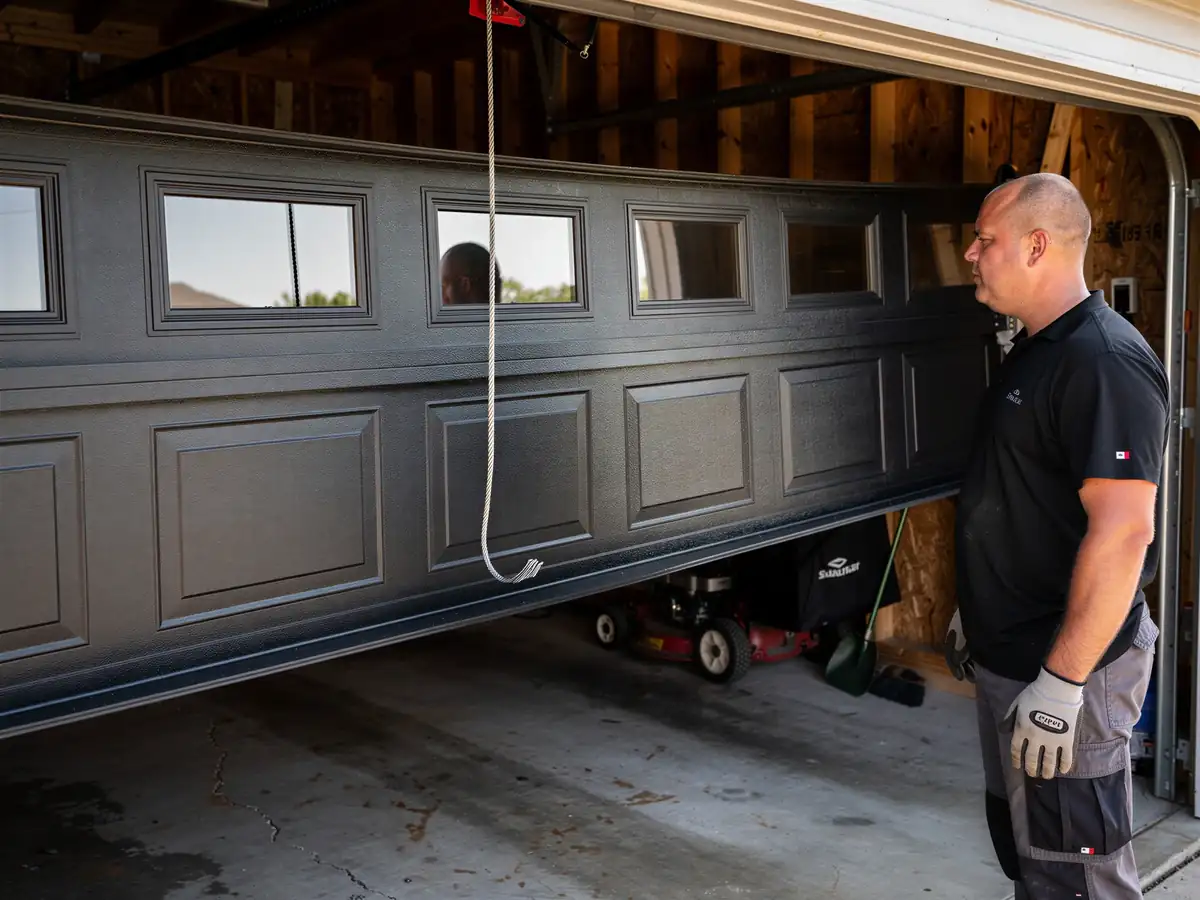
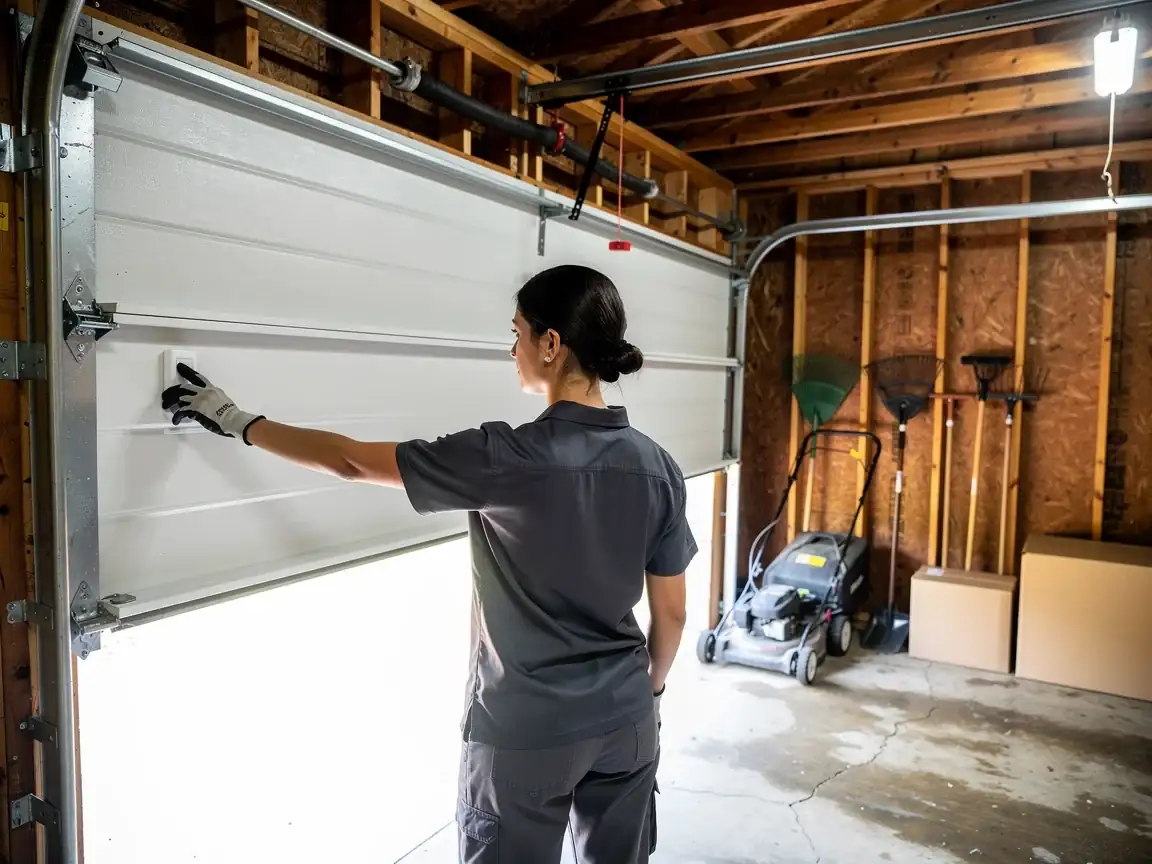
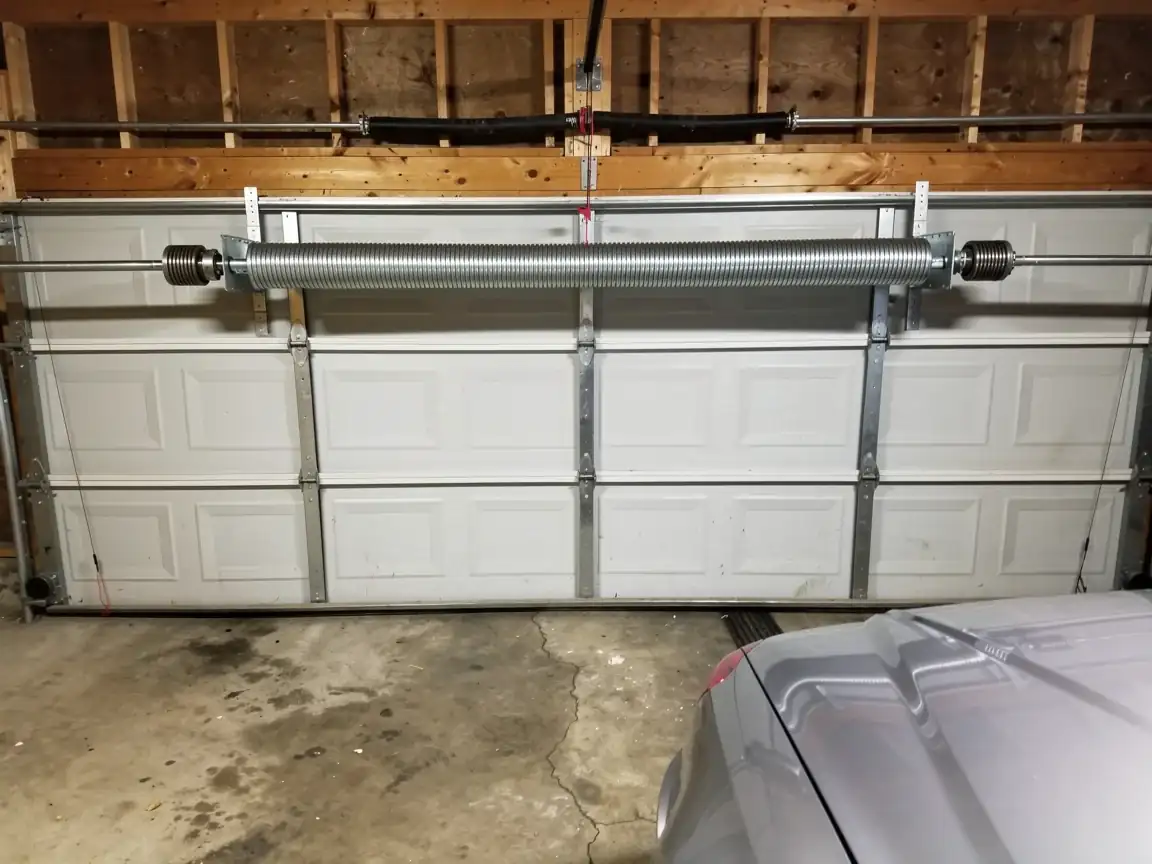
One side of the door hangs lower than the other, or the door won't lift past a foot before it binds and the opener strains against it. Sometimes you'll see the problem outright: a cable has jumped off the drum and bunched up next to the bottom bracket, or it's frayed into little wire hairs near the roller. On a lot of Peoria houses, this shows up first thing on a cold morning, because the cable that's already thinning from age gets stiffer and less forgiving right when the door sees the most resistance. Peoria's housing was mostly built between 1938 and 2002, with the bulk of it going up in the 1960s and '70s across the area's older neighborhoods - and a cable system installed during that run has had decades to stretch, corrode at the drum groove, or fray where it wraps. A broken cable on one side will also throw the door off-square, which is why you sometimes hear a grinding or scraping noise from the track before the cable actually lets go. If you catch it at the fraying stage, that's a repair. If it's already snapped and the door dropped, don't try to force it back up - the other side is carrying double load and can let go too.
How We Fix It
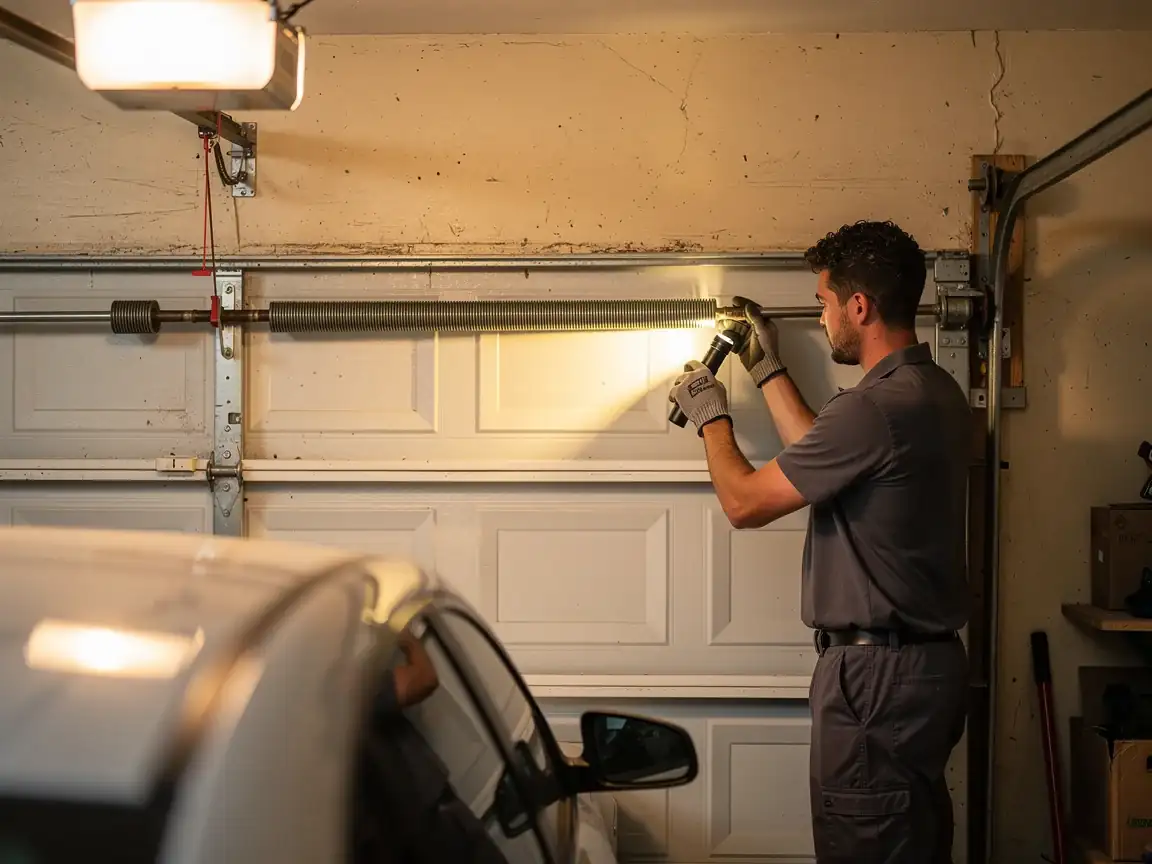
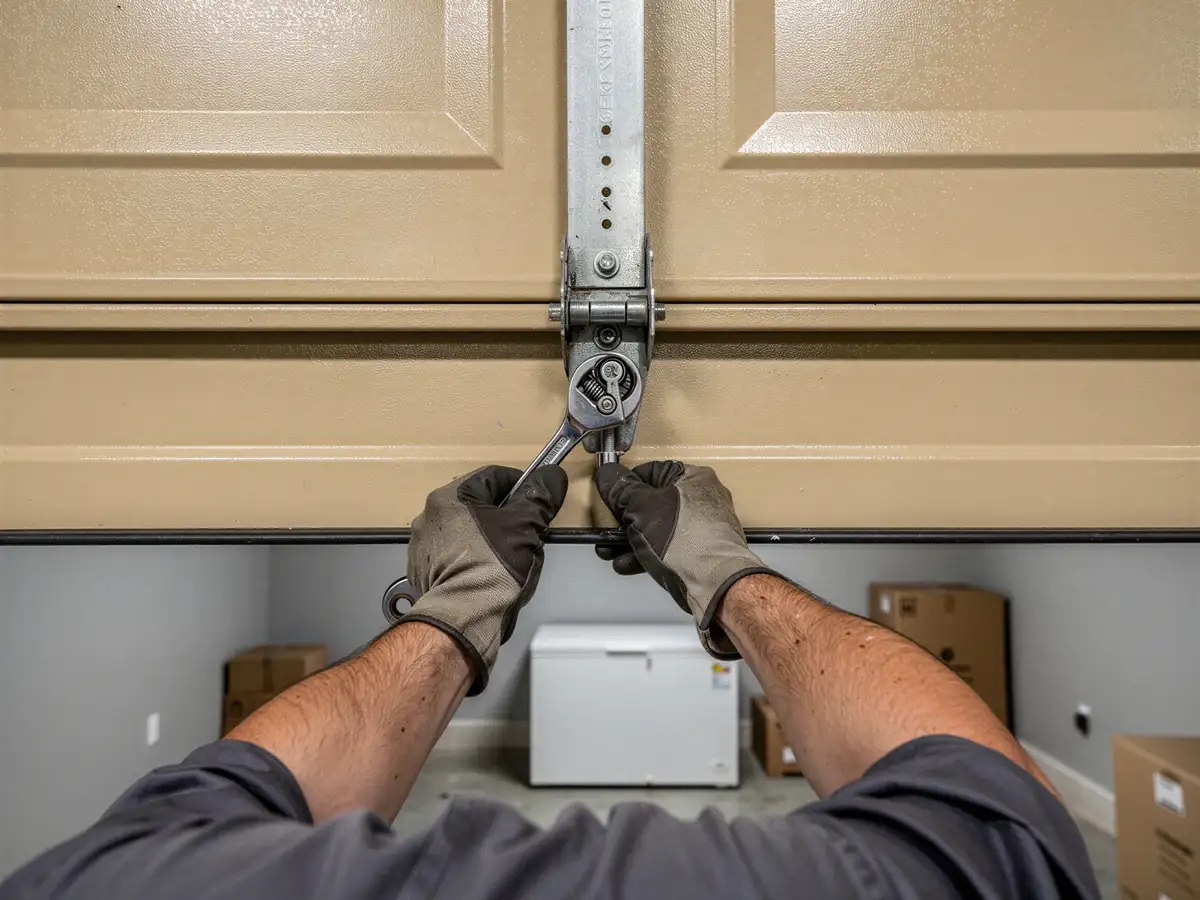
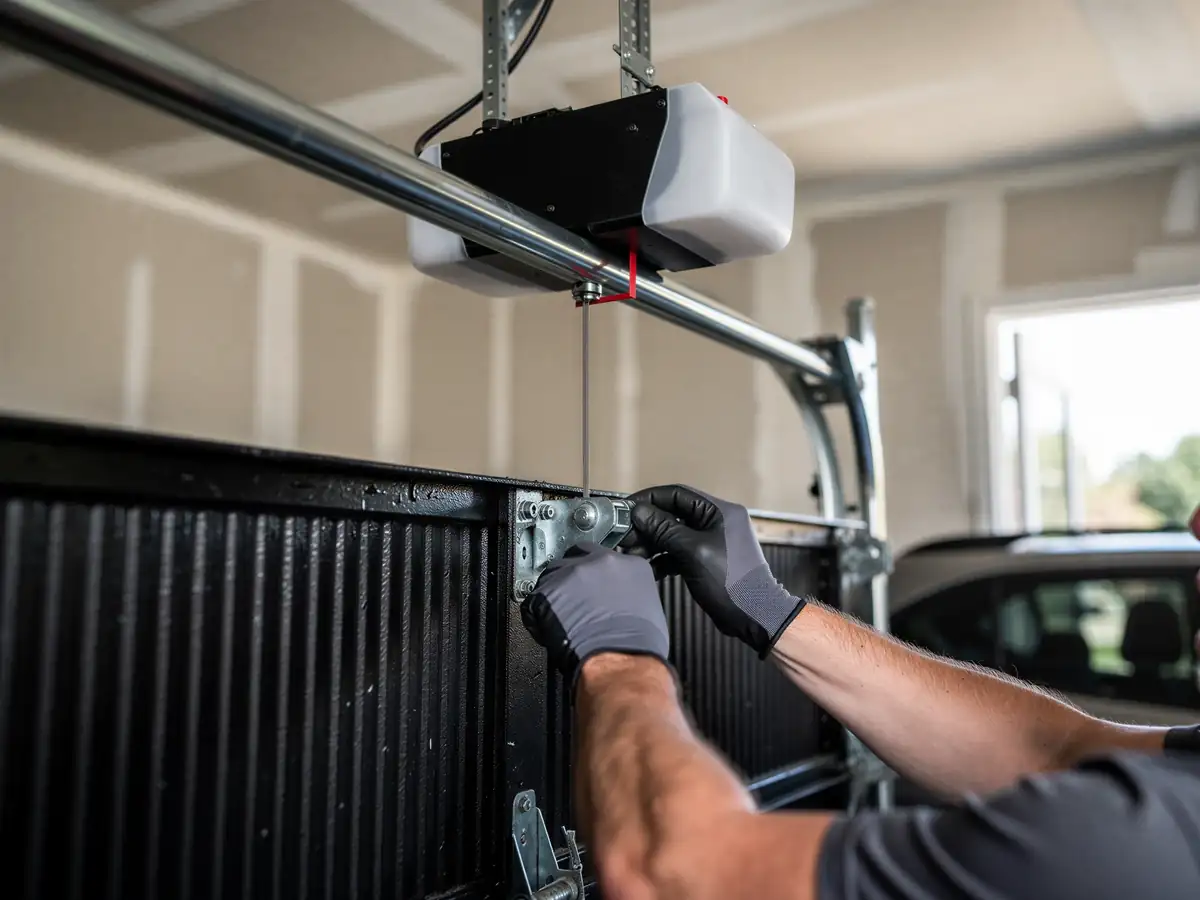
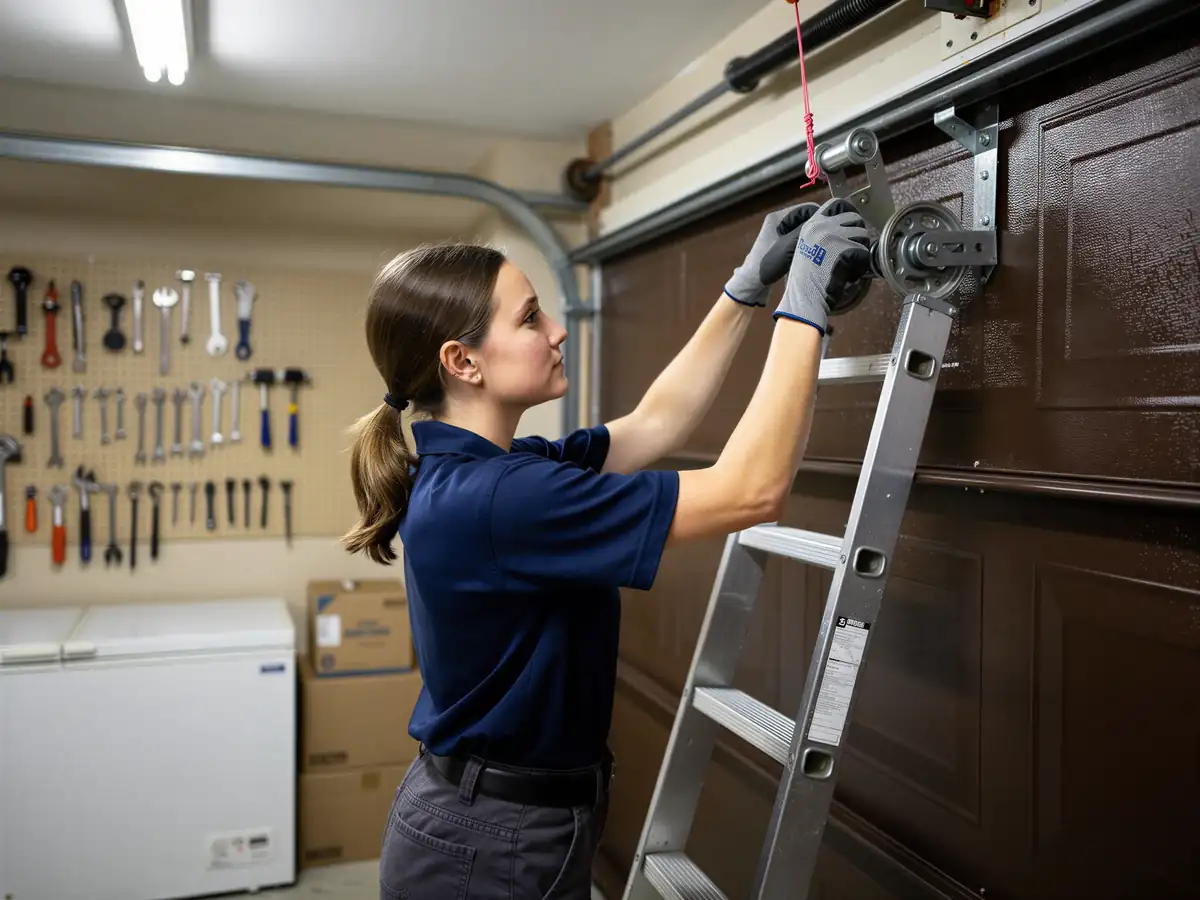
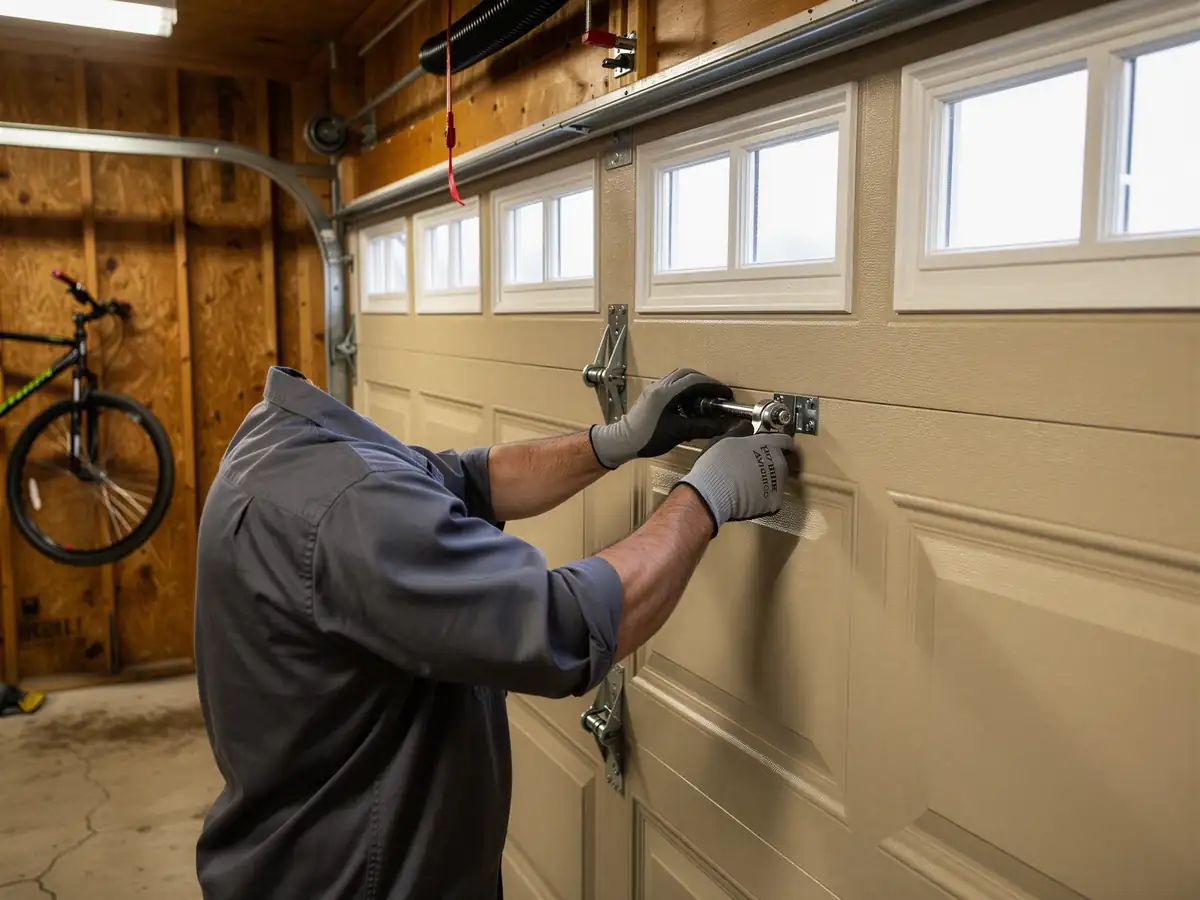
We start by releasing tension safely - cable work means the spring system is still loaded, and that's the part that hurts people when it's rushed. Once the door is secured, we pull the old cable off the drum, check the drum itself for a worn or chipped groove, and inspect the bottom bracket and fitting the cable anchors to. A lot of cable failures aren't really a cable problem - they're a bracket or drum problem that wore the cable down faster than it should have. We replace the cable to match the door's weight and drum size, re-seat both cables evenly so the door travels level, and run it through a full open-close cycle while we watch the drums and track for anything else working loose. If the spring itself is rusted or undersized for the door, cold-weather stiffness in our climate band makes that worse, and we'll say so rather than hand back a door that'll strand you again next winter. Not every cable job is a quick fix - if the drum is cracked or the track is bent from the door dropping unevenly, that's additional work, and we'll tell you before we start, not after.
Stocked Parts
We carry standard lift cables, galvanized aircraft cable in the common gauges, cable drums for both torsion and extension systems, and the bottom brackets and fittings that cables anchor to - these are the parts that fail most often on the 1960s-70s stock that makes up a large share of Peoria's housing. What we don't keep on the truck is every oddball size for the handful of pre-1950s doors still out there with nonstandard drums; those sometimes need a day or two to source. For a standard residential double or single door built on the common torsion hardware from that era, we can usually complete a cable replacement same visit, including re-tensioning the spring system and squaring the door in the track.
Why This Fails Locally
This isn't a generic wear-and-tear story - it's tied to what's actually on the ground here. Housing across the service area runs from 1938 to 2002, with a median build year of 1964, and most of the 26 named areas we work in share that same mid-century stock. Original cable and drum setups from that period were built for a lighter-use, less-automated door; decades of opener cycling since then puts more strain on hardware that was never spec'd for it. Add the cold climate band - Peoria sees real winter cold, and cable and cable-adjacent hardware (drums, brackets, fittings) get brittle and less forgiving exactly when ice or cold-stiffened grease adds resistance to the lift. Across the 45,146 households and 31,073 owner-occupied houses in this area, a large share of garages are holding original or first-replacement hardware that's now 30-plus years old, well past the point where cable fraying becomes common. That combination - older housing stock, a cold climate, and hardware that's aged out - is why cable failure shows up here as a recurring call rather than a rare one.
How it works
From “it’s stuck” to “it’s fixed”
1
Tell us what’s wrong
Describe the symptom - won’t open, loud bang, opener runs but the door won’t move.
2
On-site diagnosis
A technician tests the door under power and by hand and finds what actually failed.
3
Clear, up-front plan
You get the fix that’s needed and what drives the cost - before any work starts.
4
Repaired & tested
The repair is done, the door is set true and tested, and the work area left clean.
Not sure which repair your door needs in Peoria, IL? Describe what it’s doing - every job starts with a diagnosis.
01Can I drive on a broken garage door cable to get my car out?
If one cable has snapped, the door is unevenly loaded and can drop further or jam the track if you force it. It's safer to leave the door where it is and call for the repair rather than risk the door coming down on the car or the opener.
02Why did my cable fray instead of just snapping?
Fraying usually means the cable's been rubbing against a worn drum groove or a misaligned bracket for a while before it finally lets go. On older Peoria homes with original 1960s-70s hardware, that slow wear is common because the drum or bracket aged alongside the cable.
03Is cable repair cheaper than replacing the whole door?
Usually yes - a cable and drum replacement is a contained repair, not a full door job. The exception is when the drum is cracked or the track is bent from an uneven drop, which adds parts and labor beyond the cable itself.
Ready to get your garage door sorted?
Tell us what it’s doing and where you are in Peoria - we’ll take it from there.