What Local Conditions Do
Peoria sits in a cold-moderate climate band
Which means winters cold enough to stiffen steel but not so brutal that everyone's replaced their hardware out of necessity. That combination is worse for springs than either extreme, because a spring that's been fine for forty winters finally gives out on the forty-first, usually on the coldest morning of the stretch.
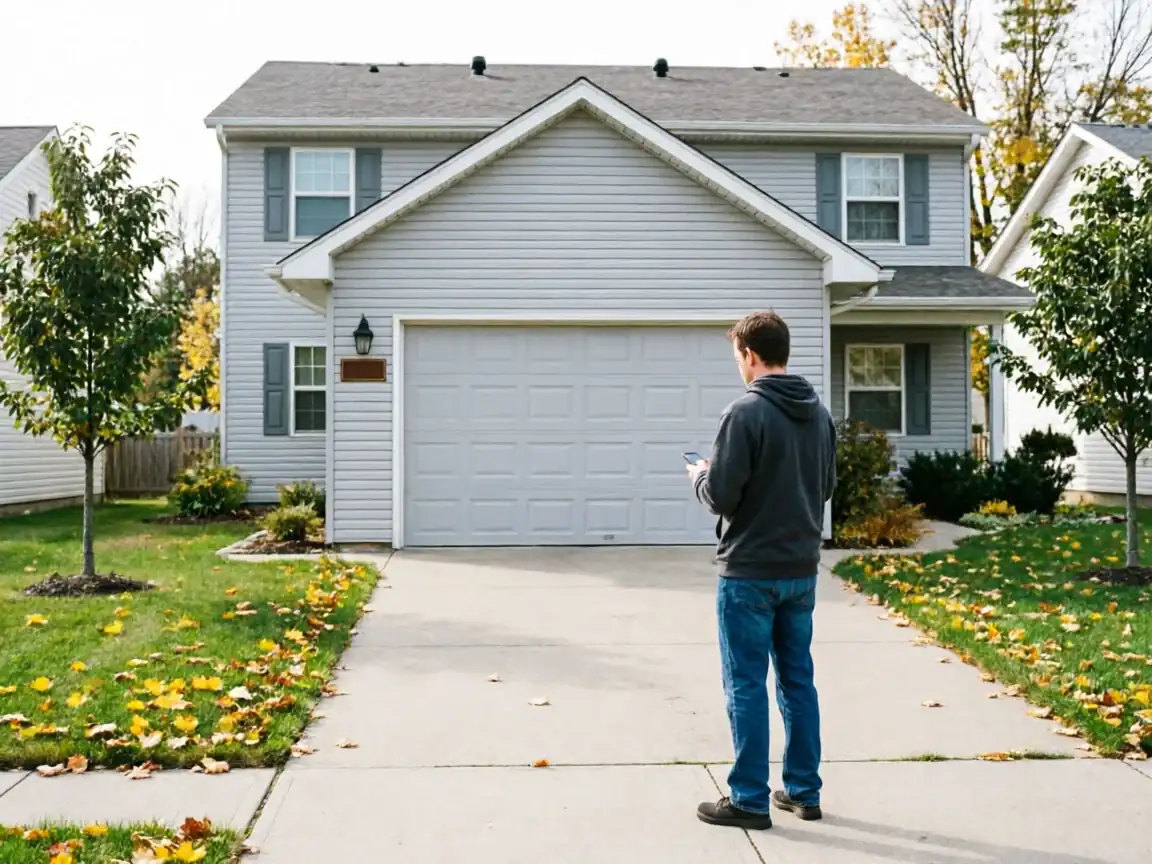
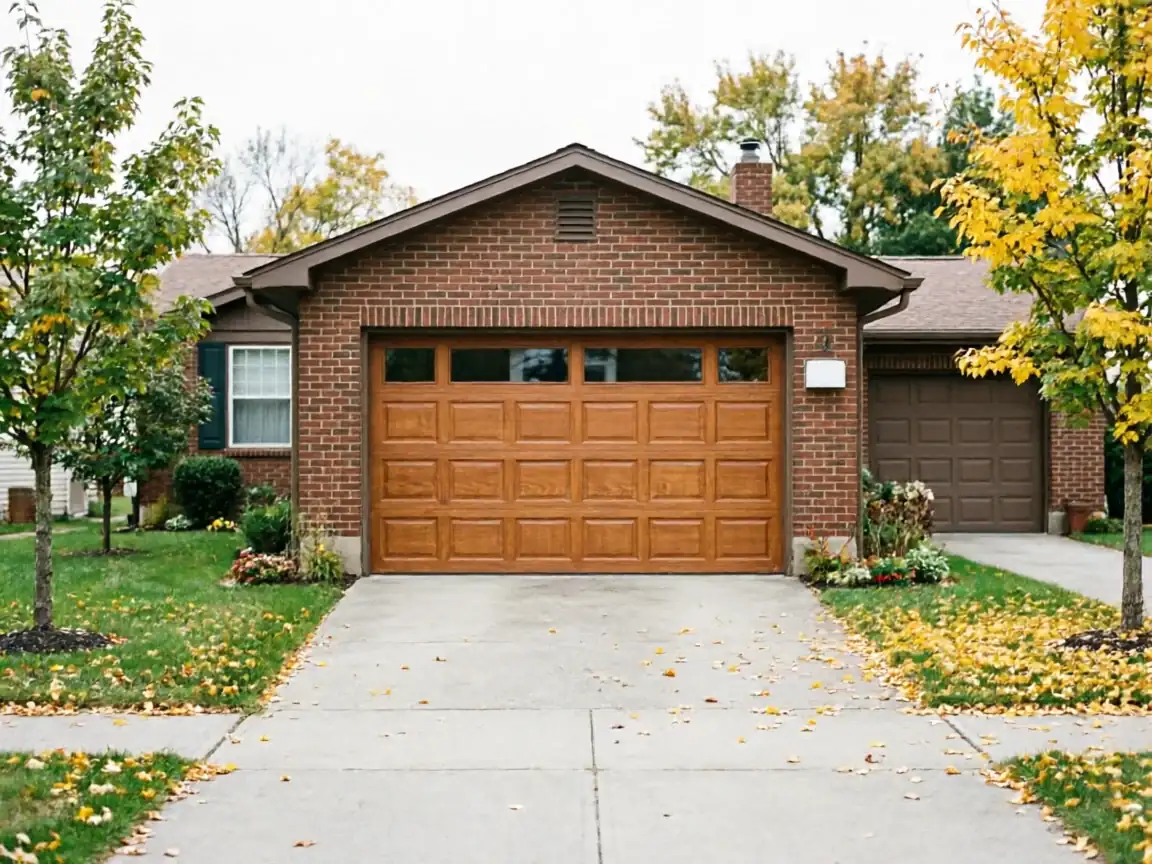
Most of the houses this company works on were built between 1938 and 2002
With the median landing around 1964, and the bulk of the stock across the 26 named areas we cover is 1960s and 70s construction. That matters because torsion springs from that era were wound for the door weight and R-value standards of their time, not for the heavier insulated panels a lot of owners have since bolted onto the original track and hardware. A spring doing double duty on an upgraded door, in a winter cold snap, is exactly the failure this page is about.
None of this means every old spring is a ticking clock
Plenty of 1960s torsion setups are still doing fine. It means the odds shift hard once the temperature drops and the spring is already decades into its wind cycle.
The Problem
Steel loses a little flex every time it gets cold, and a torsion spring that's already near the end of its coil count doesn't have much flex to lose. The spring doesn't care that it's 6 a.m. and you're late - it just finally lets go, usually with a bang loud enough to bring a neighbor outside.
In a service area built mostly in the 1960s and 70s, with 31,073 owner-occupied houses on record, a big share of the doors out there are still running something close to original hardware. Original doesn't mean original spring in every case - some have been replaced once already - but a lot haven't, and nobody keeps a maintenance log on a garage door spring.
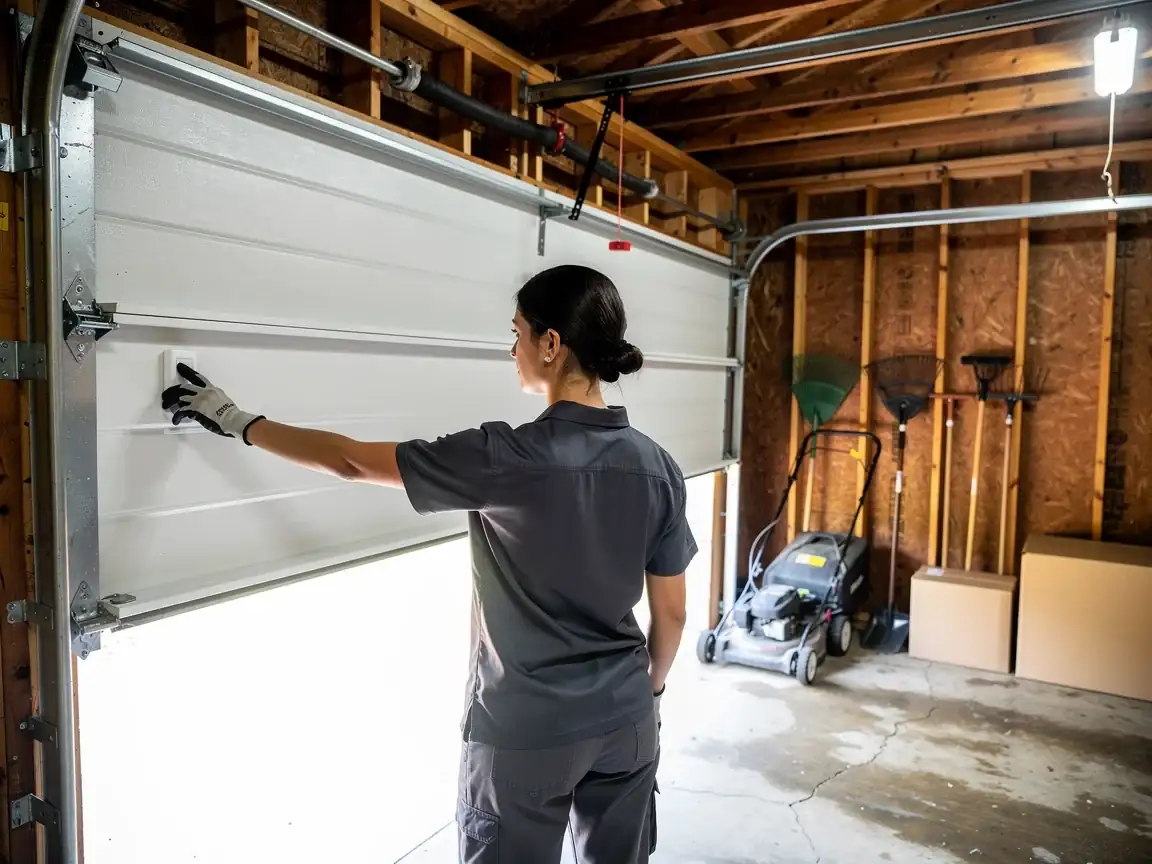
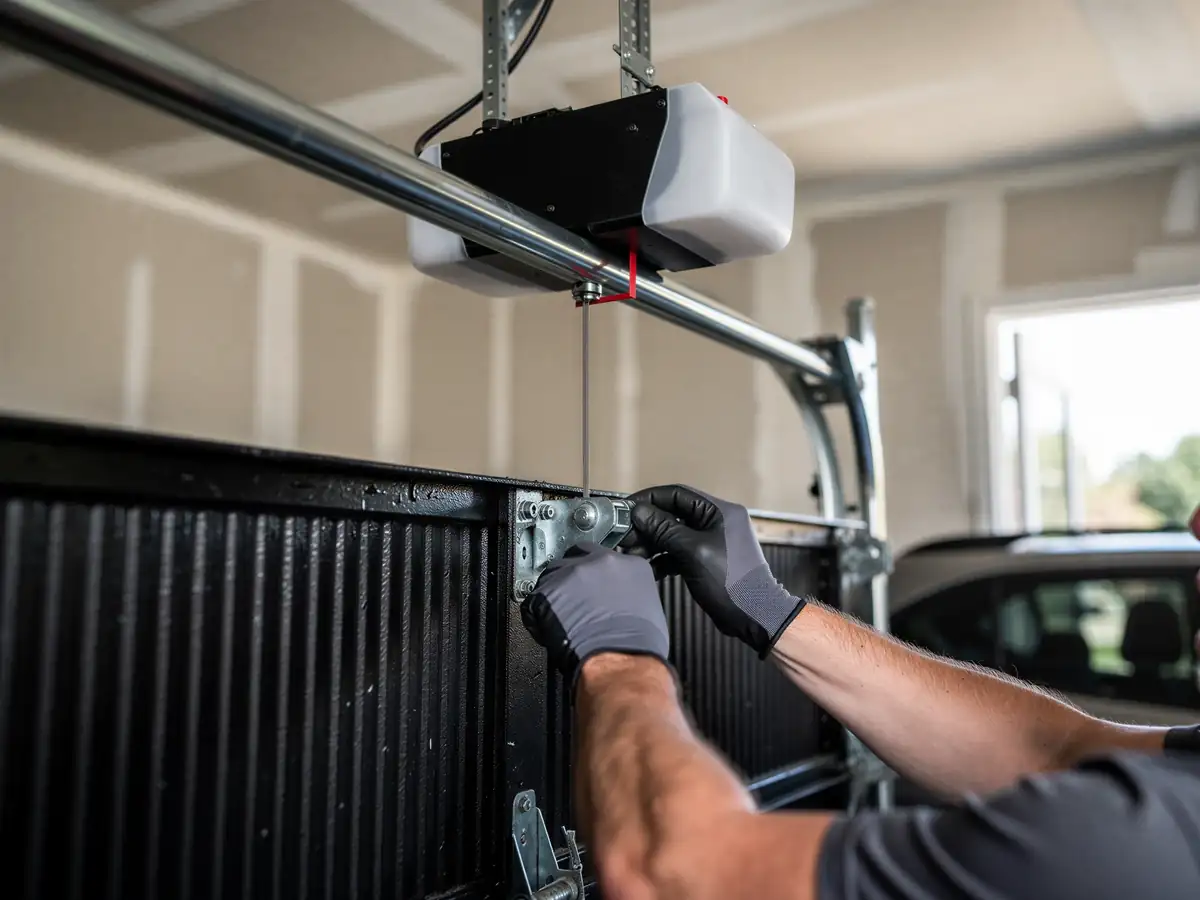
The practical problem for a homeowner in West Peoria, Mossville, or anywhere closer in is that a broken spring means a door that won't open safely by opener or by hand. The cables stay under tension from the drum side even with the spring gone, which is the part that gets people hurt when they try to force it. Cold makes the steel more likely to snap rather than just loosen, so winter mornings are when this call comes in most.
When to Get Help
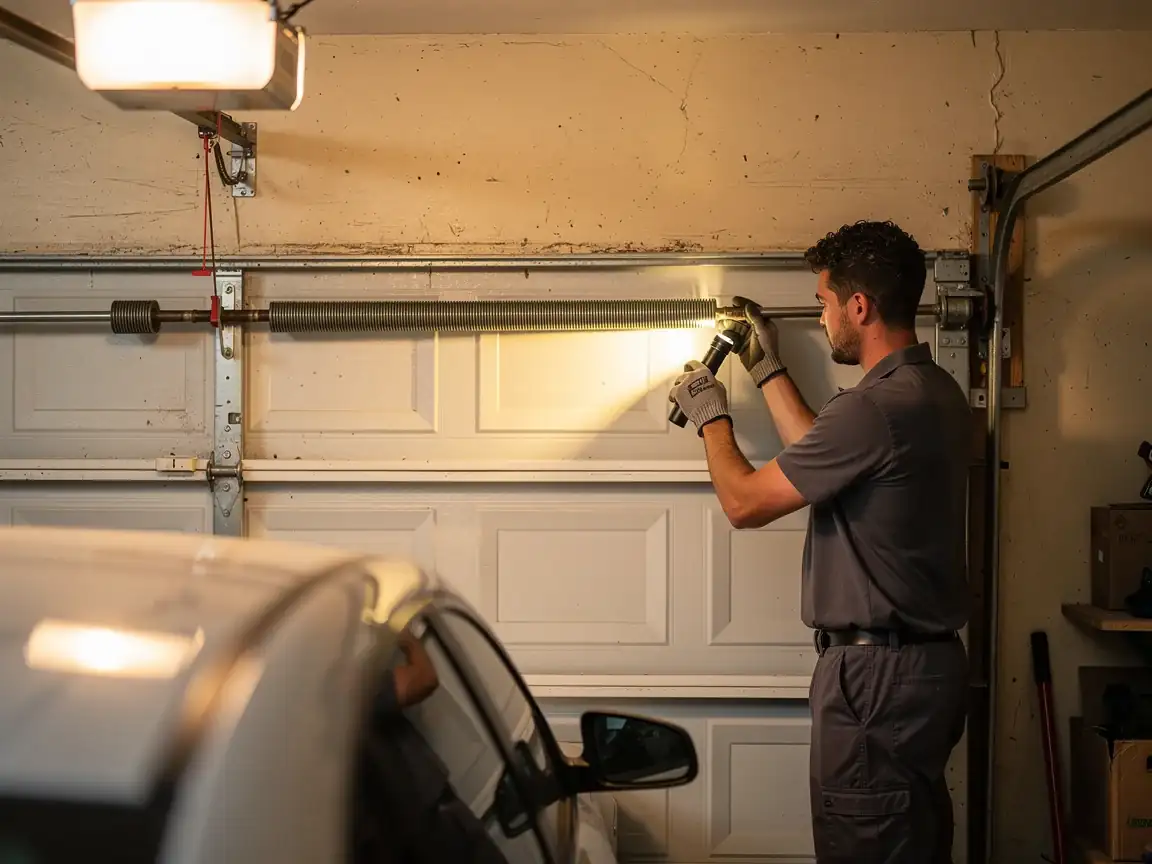
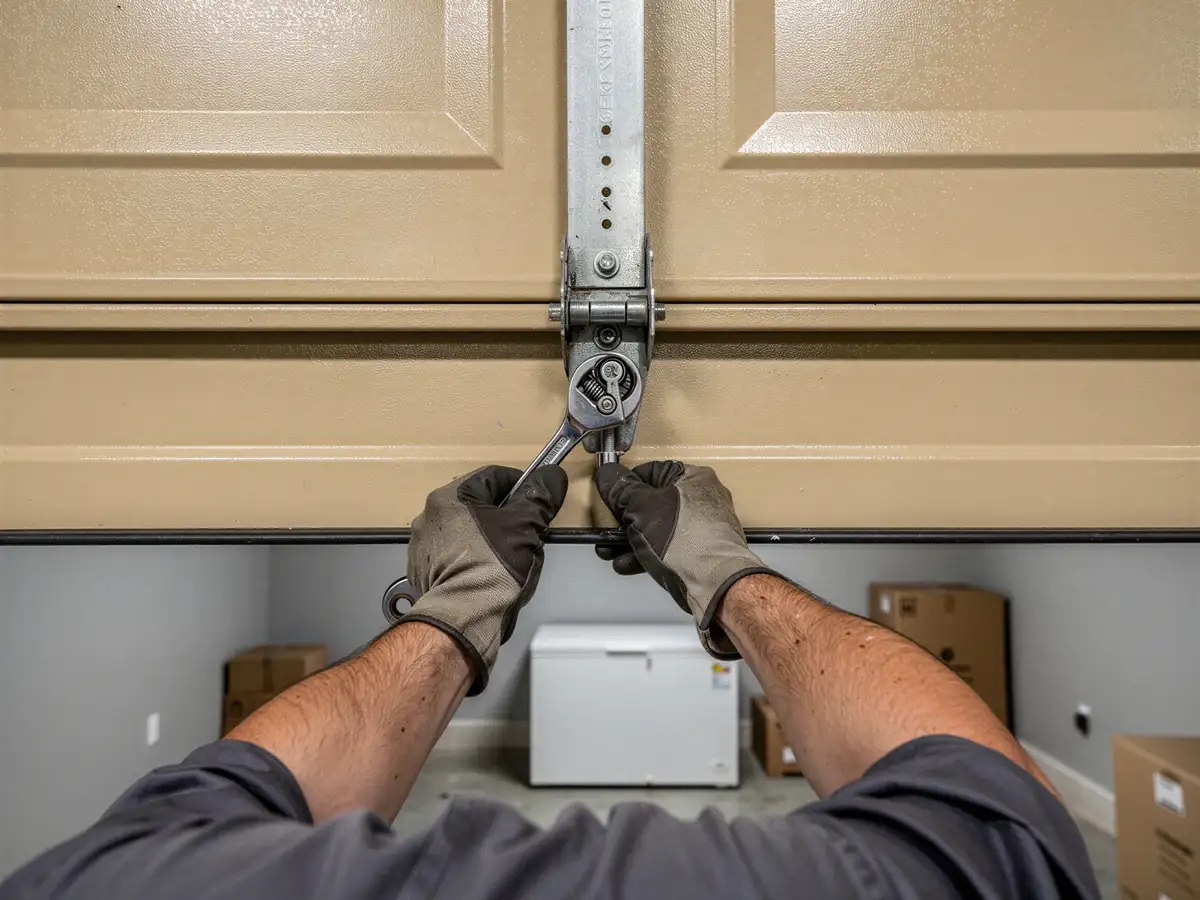
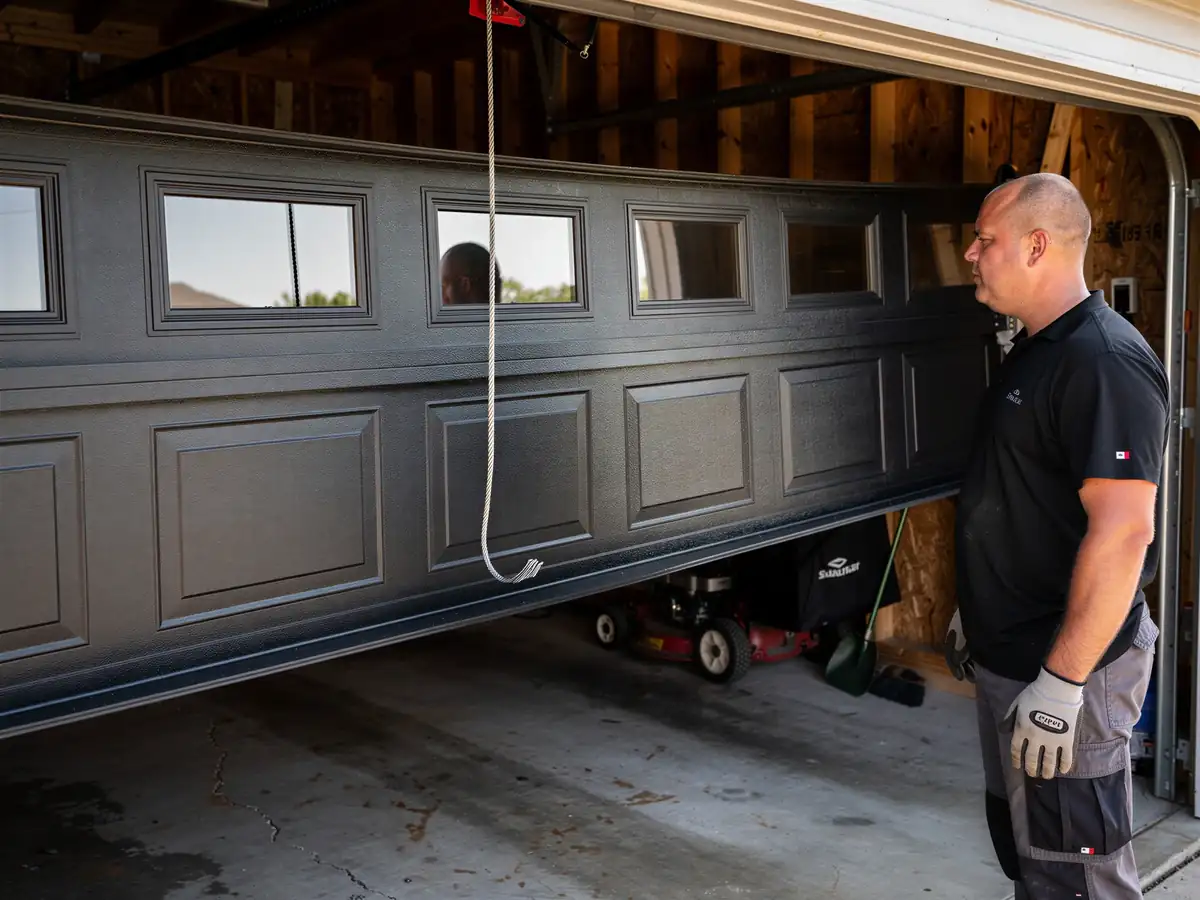
A spring that's visibly separated - a gap in the coil, a door that slams down instead of lowering - needs a call, not a YouTube video and a pry bar. Torsion springs are under enough stored tension to do real damage if the wrong person touches the wrong bolt, and that's true whether the house is in Peoria proper or out in Metamora or Eureka.
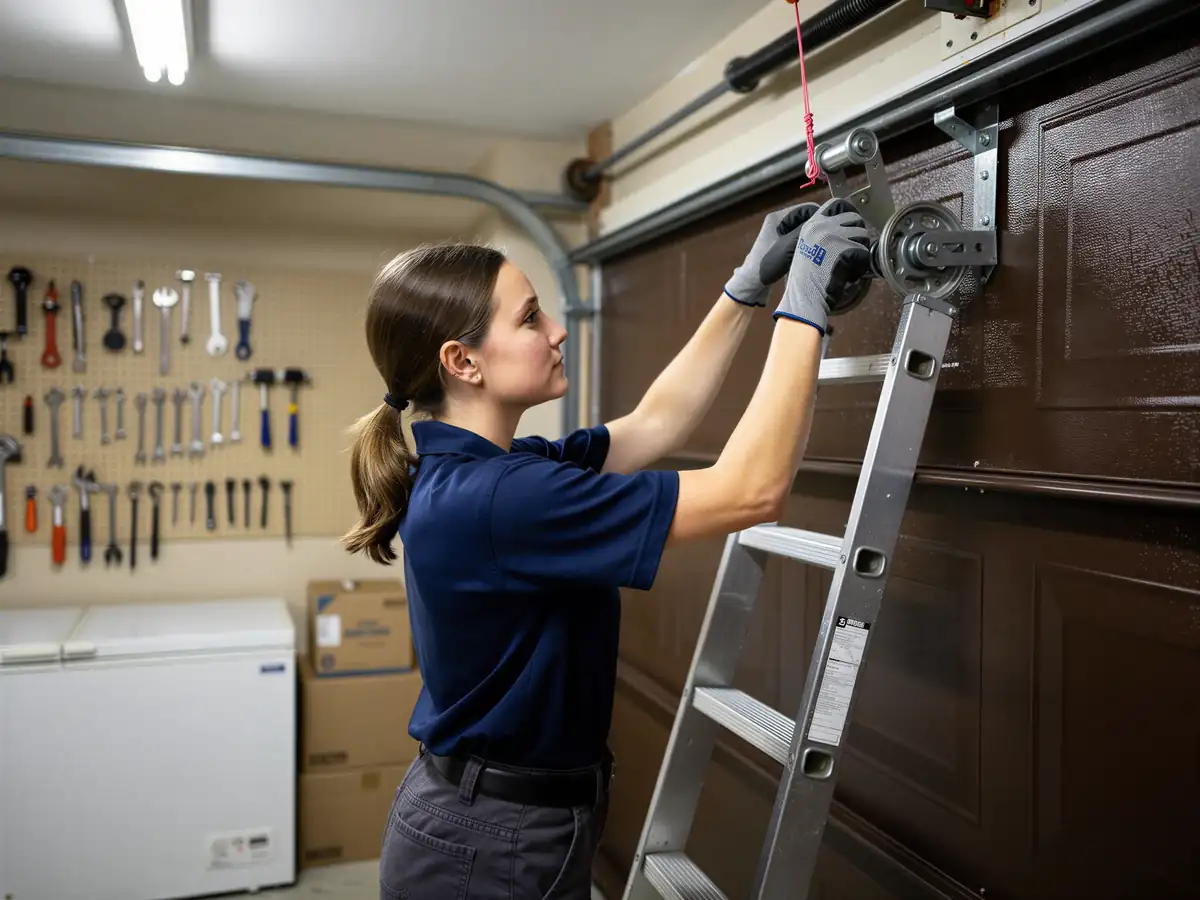
Signs worth paying attention to before the spring fully goes: a door that feels heavier than it used to when you lift it manually, a loud bang from the garage followed by the opener straining but not lifting, or visible rust and gaps forming on the coil. On houses from the 1960s stock that make up most of this area, a spring showing that kind of wear is usually past the point of lubricating it back to health.
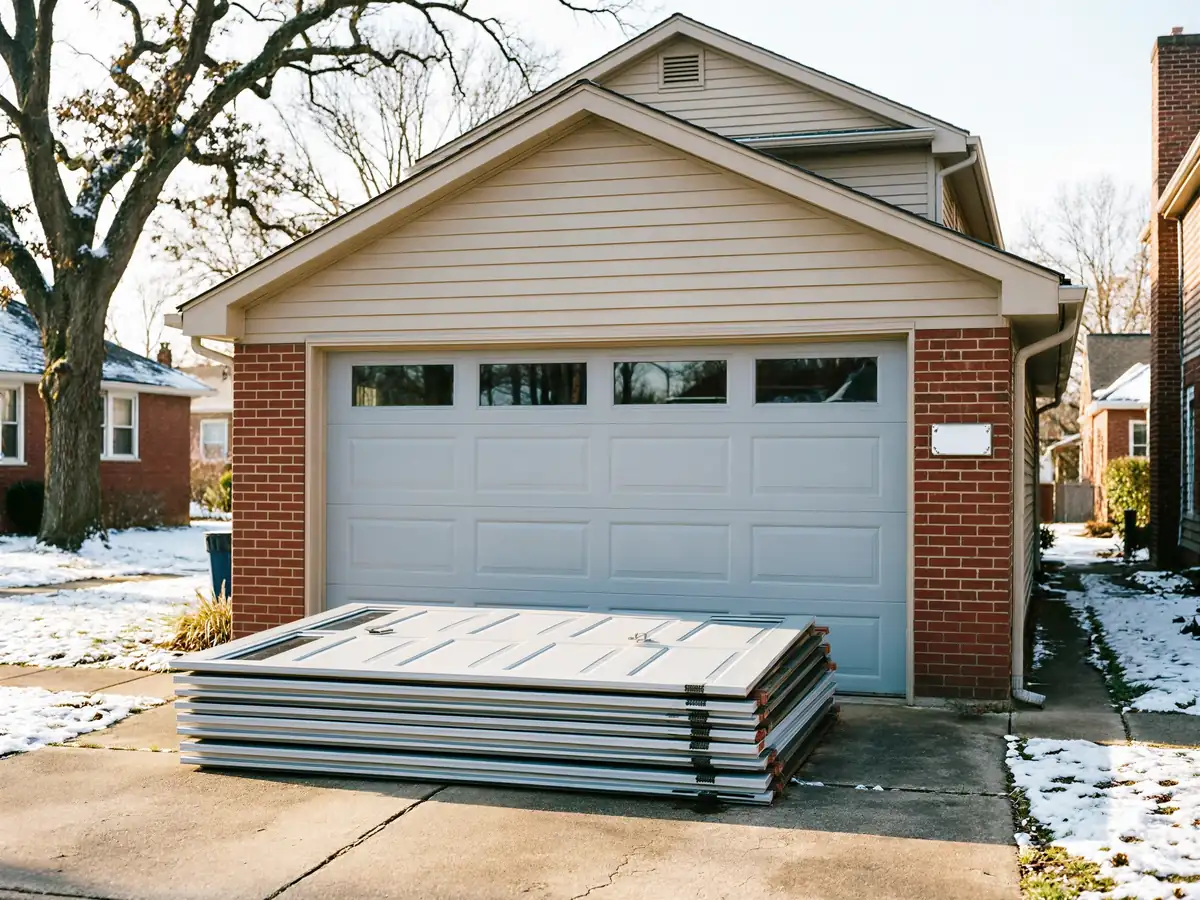
Here's the limitation worth saying plainly: if the door has come off its track on top of a broken spring, or the opener has been straining against a dead spring for a while, that's sometimes a job where replacing the whole assembly makes more sense than patching one part. We'll tell you when that's the case instead of just doing the easier repair.
What It Costs
We're not going to put a number here that doesn't hold up once someone's actually in your garage
So we won't guess at one. What drives the cost on a job like this is the spring size and type your door needs, whether it's a single or double door, and how much the rest of the hardware - cables, drums, bearing plates - has worn alongside the spring.
On a lot of the 1960s and 70s builds that make up most of this service area
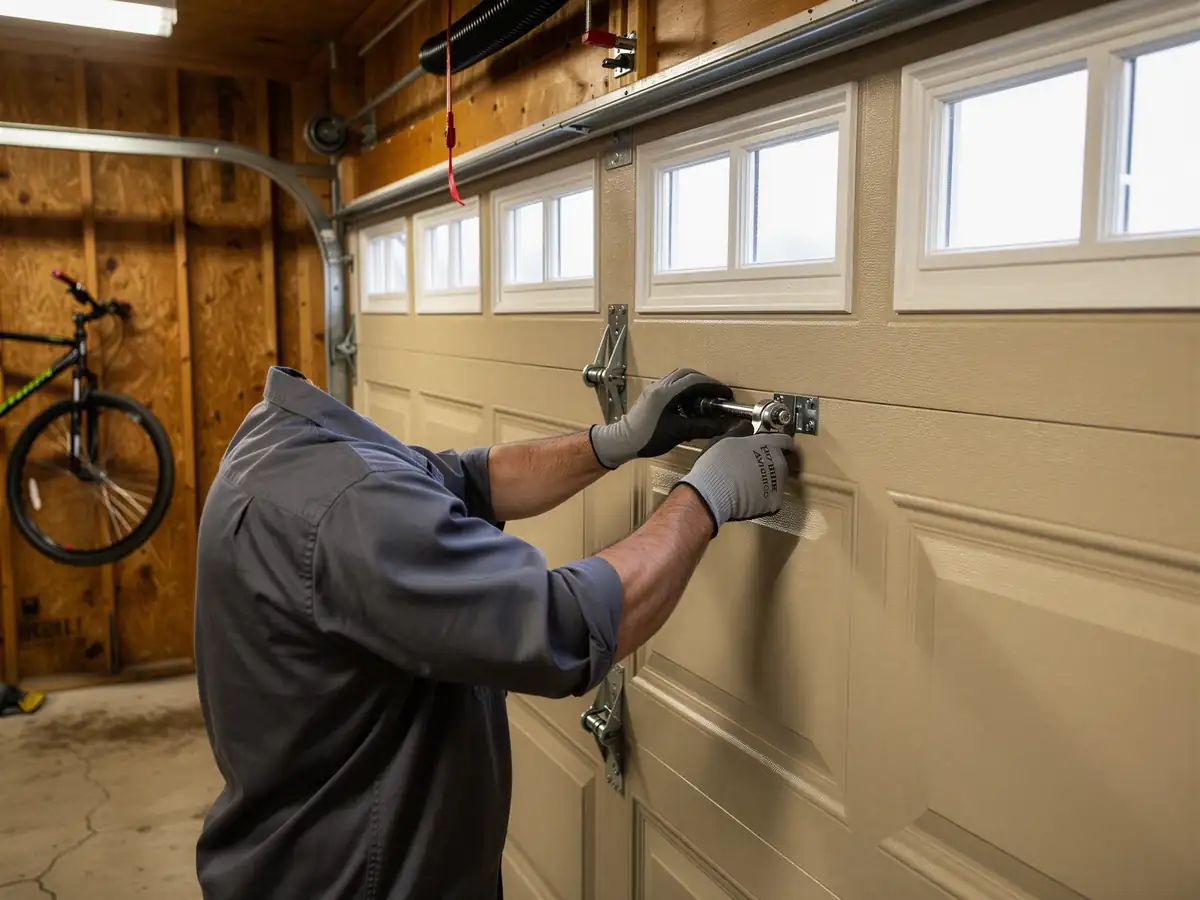
The torsion setup is a known quantity and the repair is straightforward. On houses that have had the door swapped for a heavier insulated model without the spring being re-rated for it, the job sometimes means correcting a mismatch, not just replacing a part.
Income and household size aren't something we use to price a job
But it's worth knowing the area median household income here runs around $71,763, which is the kind of number that tells you this isn't a market full of luxury upgrades - most people want the door fixed right at a fair price, not the most expensive option on the truck. We'll give you the actual number after we've looked at the spring, the door, and the opener, not before.