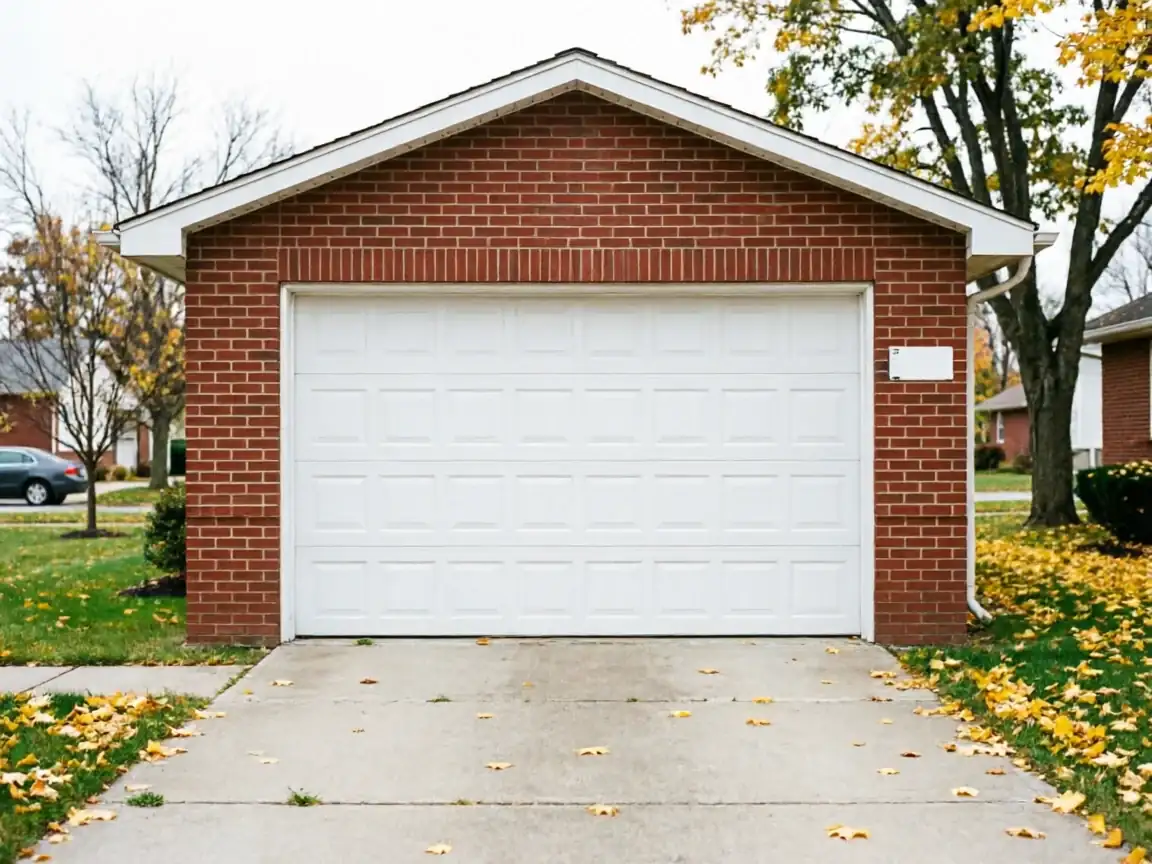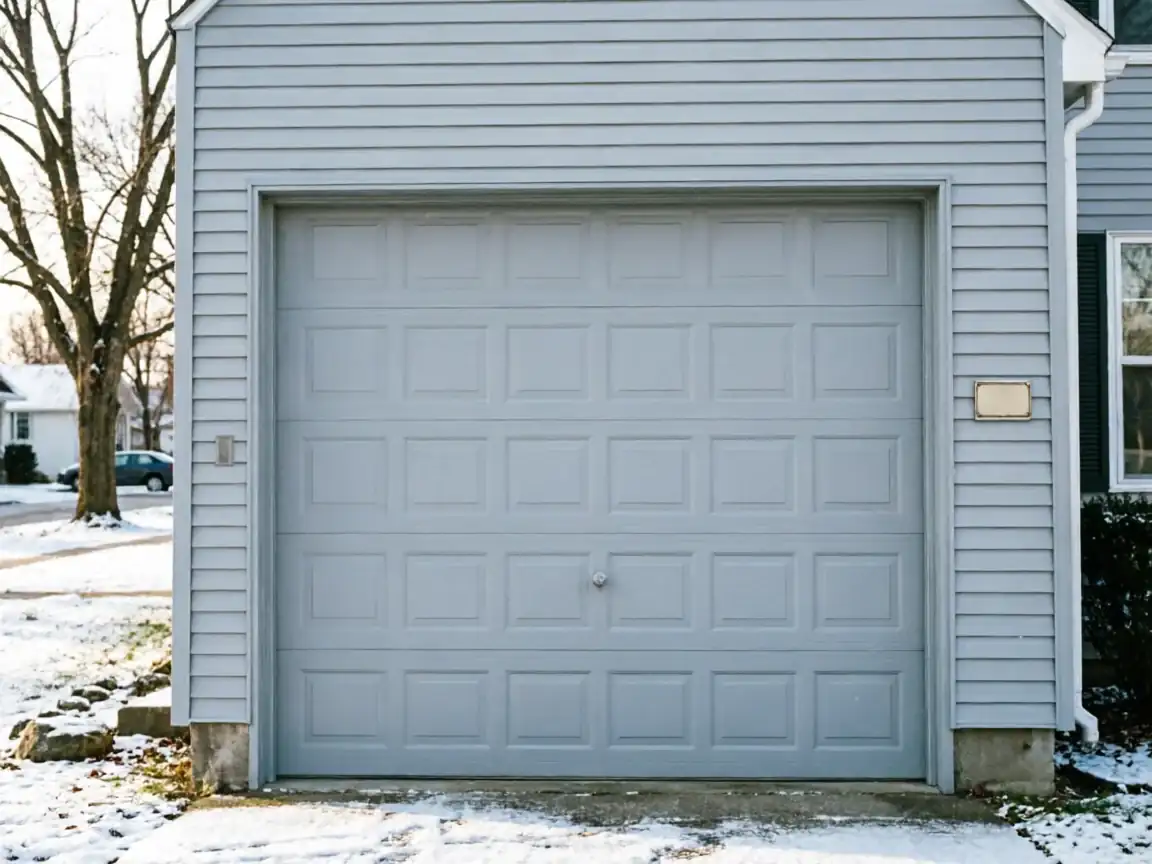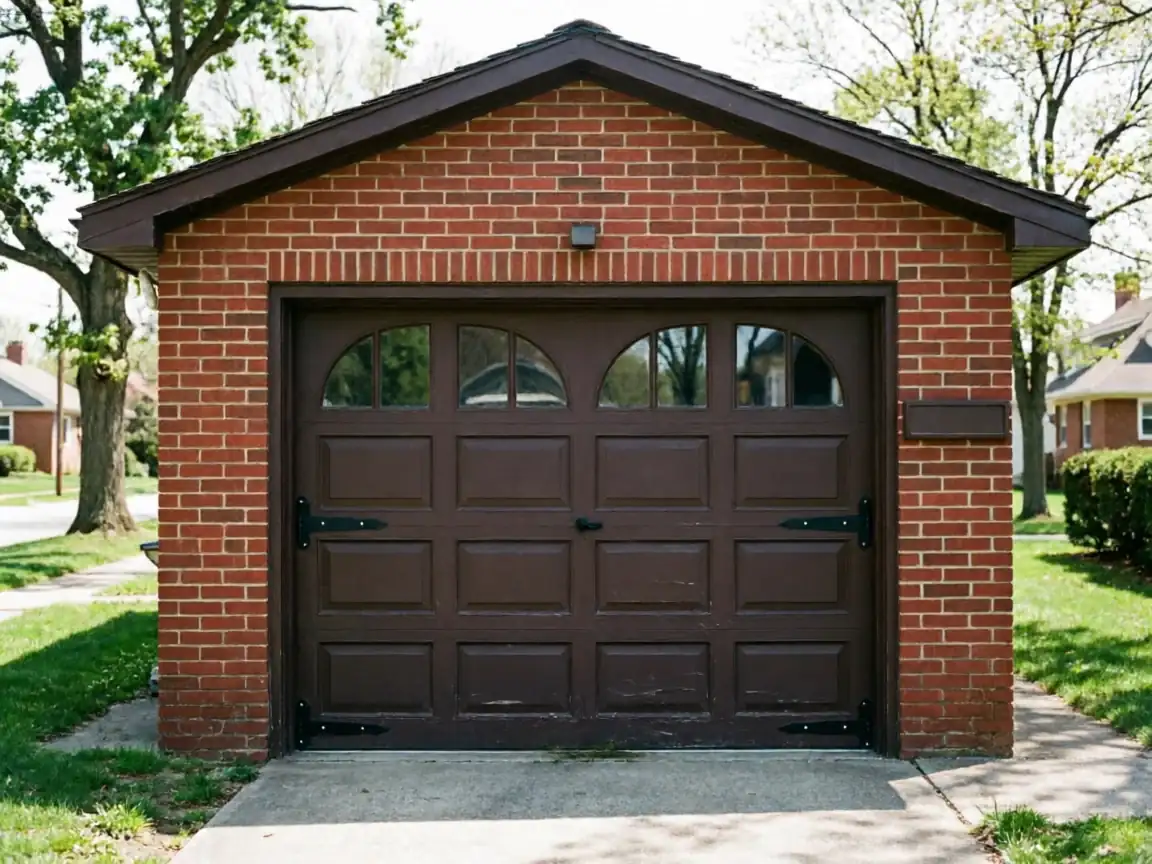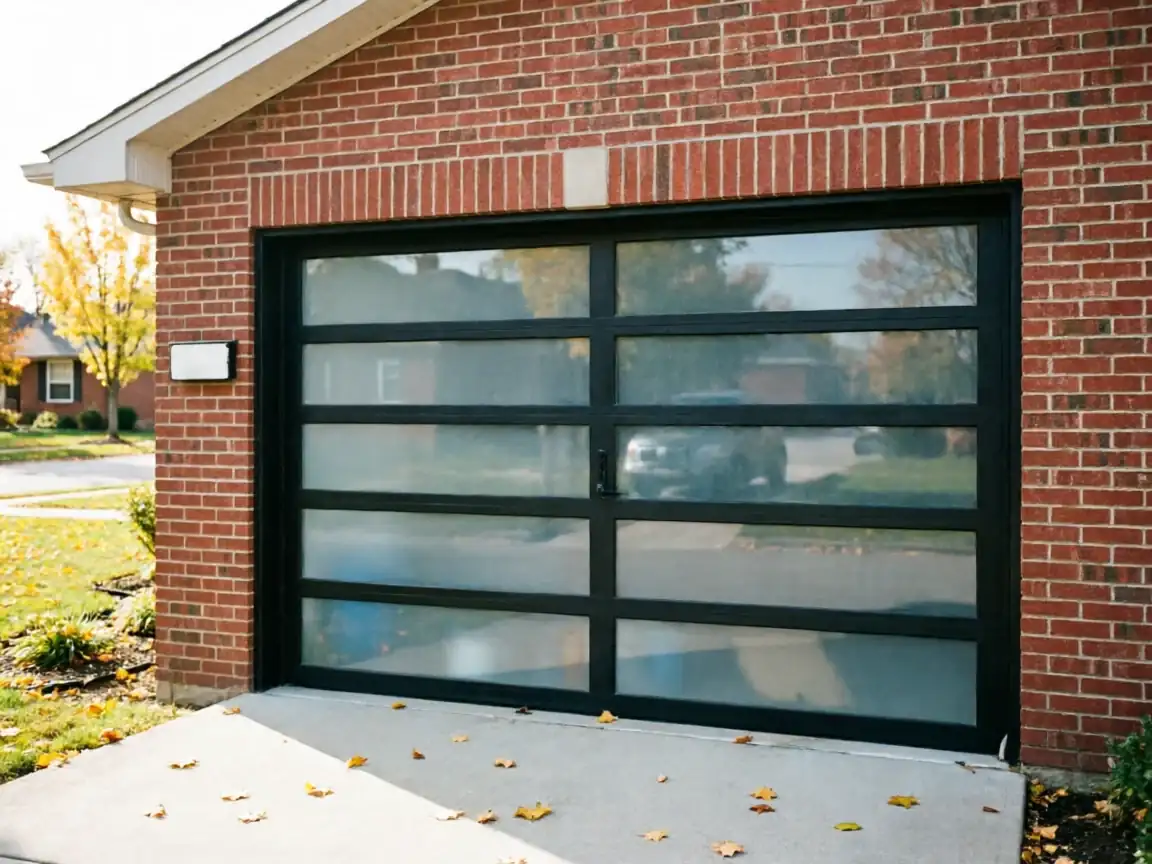
The Symptom
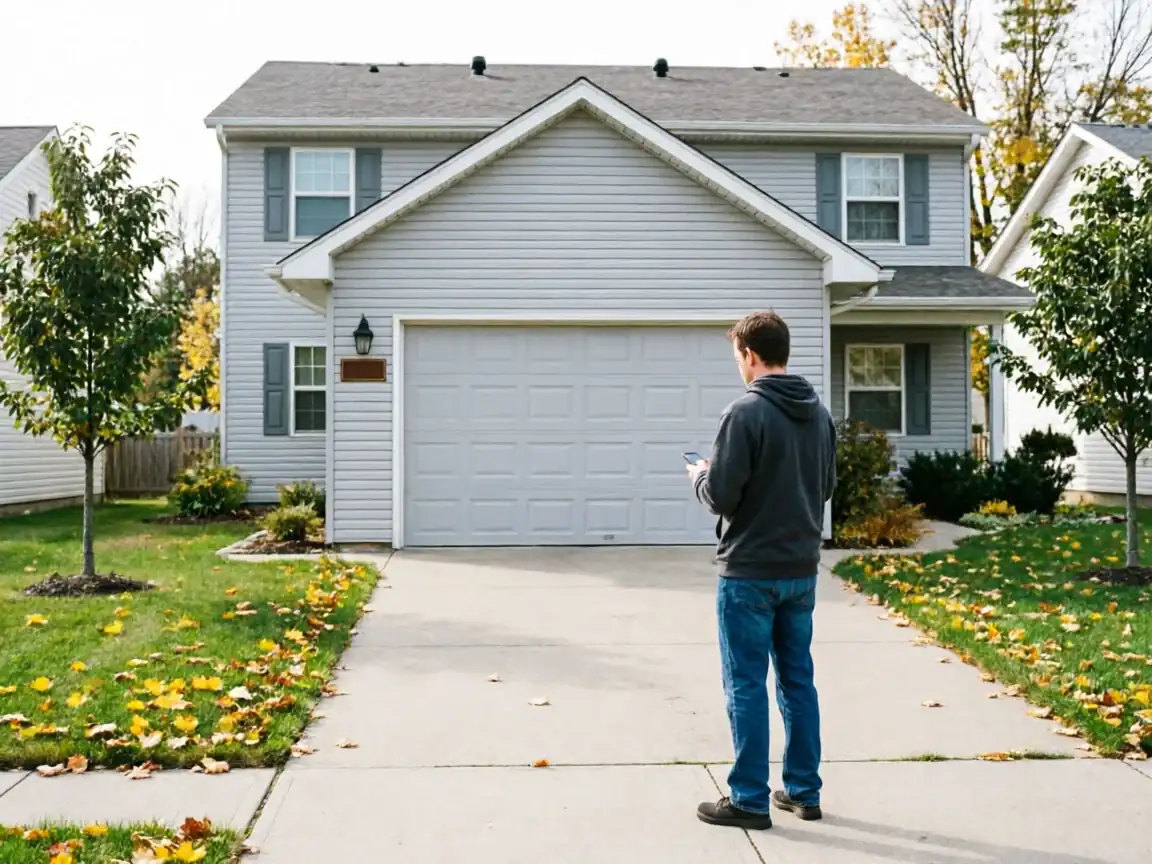
The door starts fine in October and by January it's groaning halfway up, stopping short, or reversing before it closes
Sometimes the opener just hums and the door doesn't move at all. On a lot of Peoria houses this shows up every winter like clockwork, because the climate here runs cold with real seasonal swings, and cold steel, cold grease, and cold rubber all behave differently than they do in July.
If your house was built anywhere in the 1938-2002 window that covers most of this area
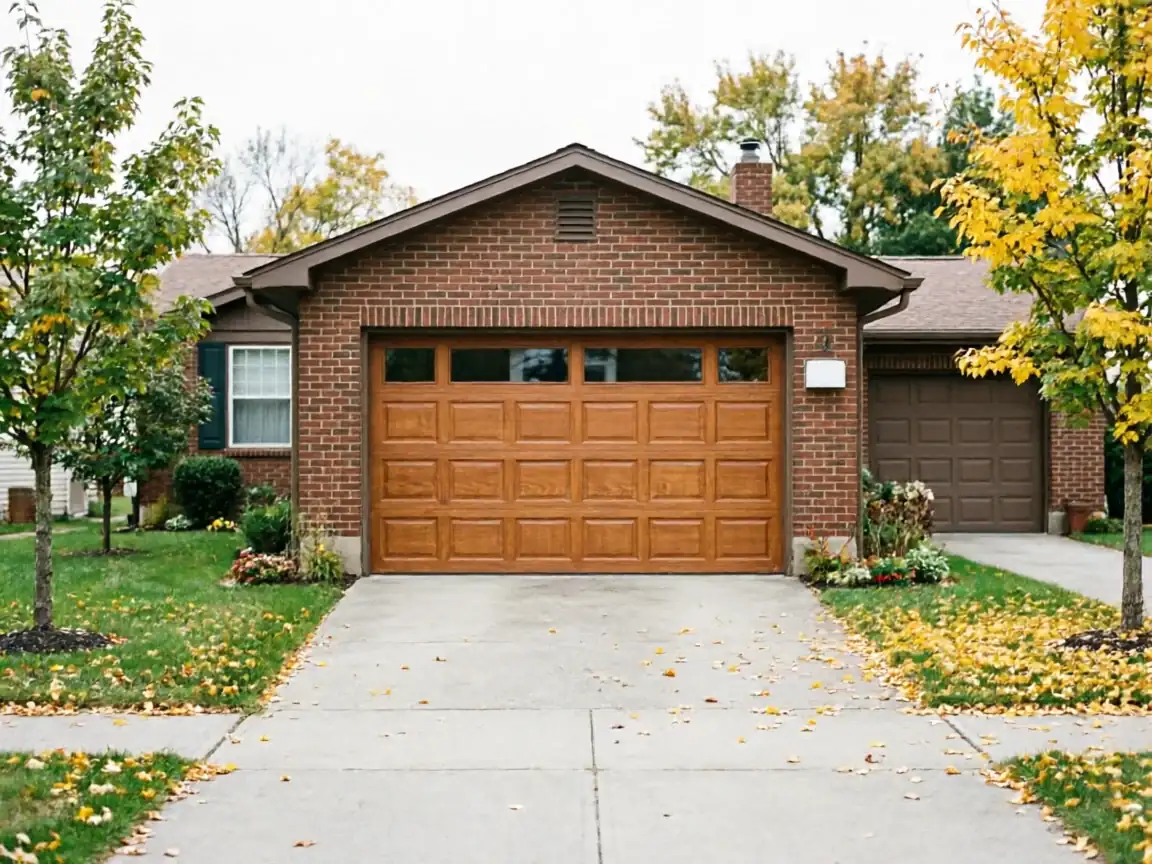
With the bulk of that stock going up through the 1960s and 70s, there's a decent chance the door hardware has never been touched since it left the factory. Original rollers and bearings that were fine for forty summers start binding the second the temperature drops and the lubricant thickens. Tracks that were installed slightly out of plumb in 1966 get worse every year as the slab settles, and cold makes the slack more obvious, not less.
Another version of the same symptom
The door works but it's loud enough that you can hear it from the backyard. That's usually wear that's been building for years, not something that happened overnight.
How We Fix It
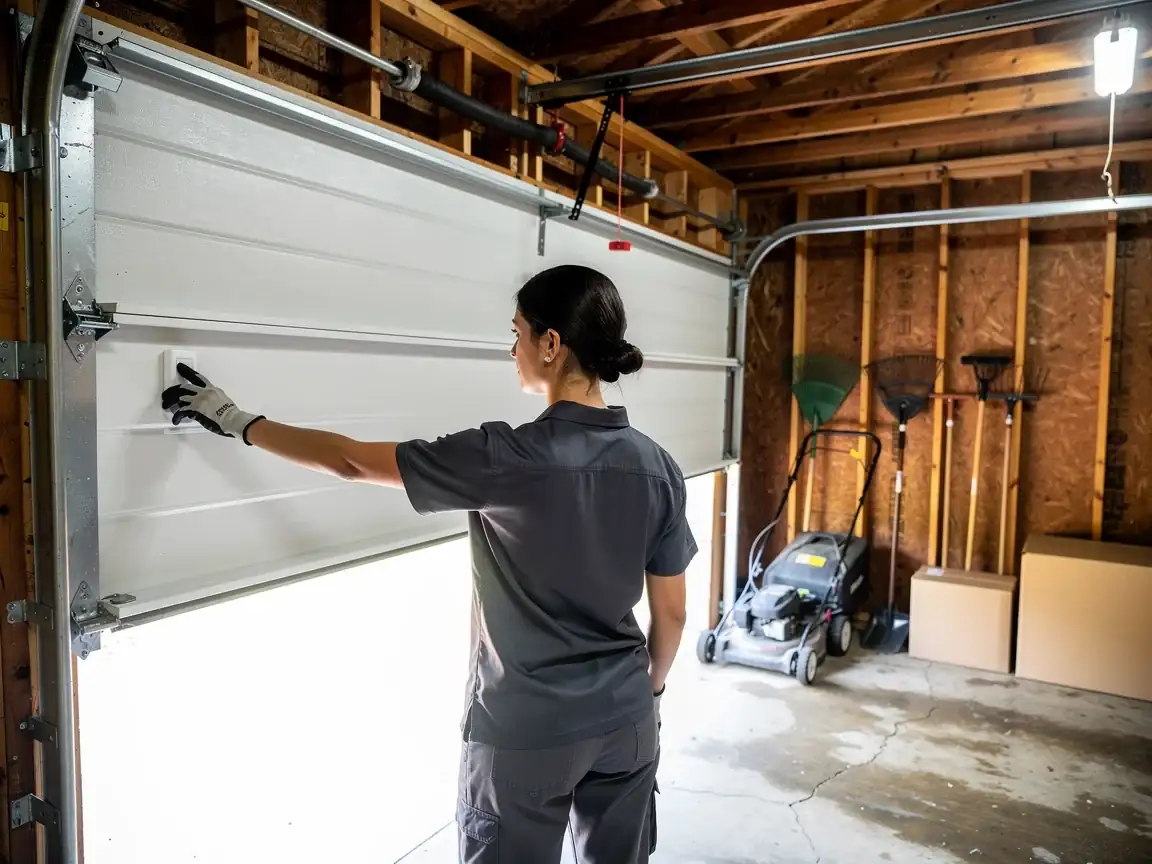
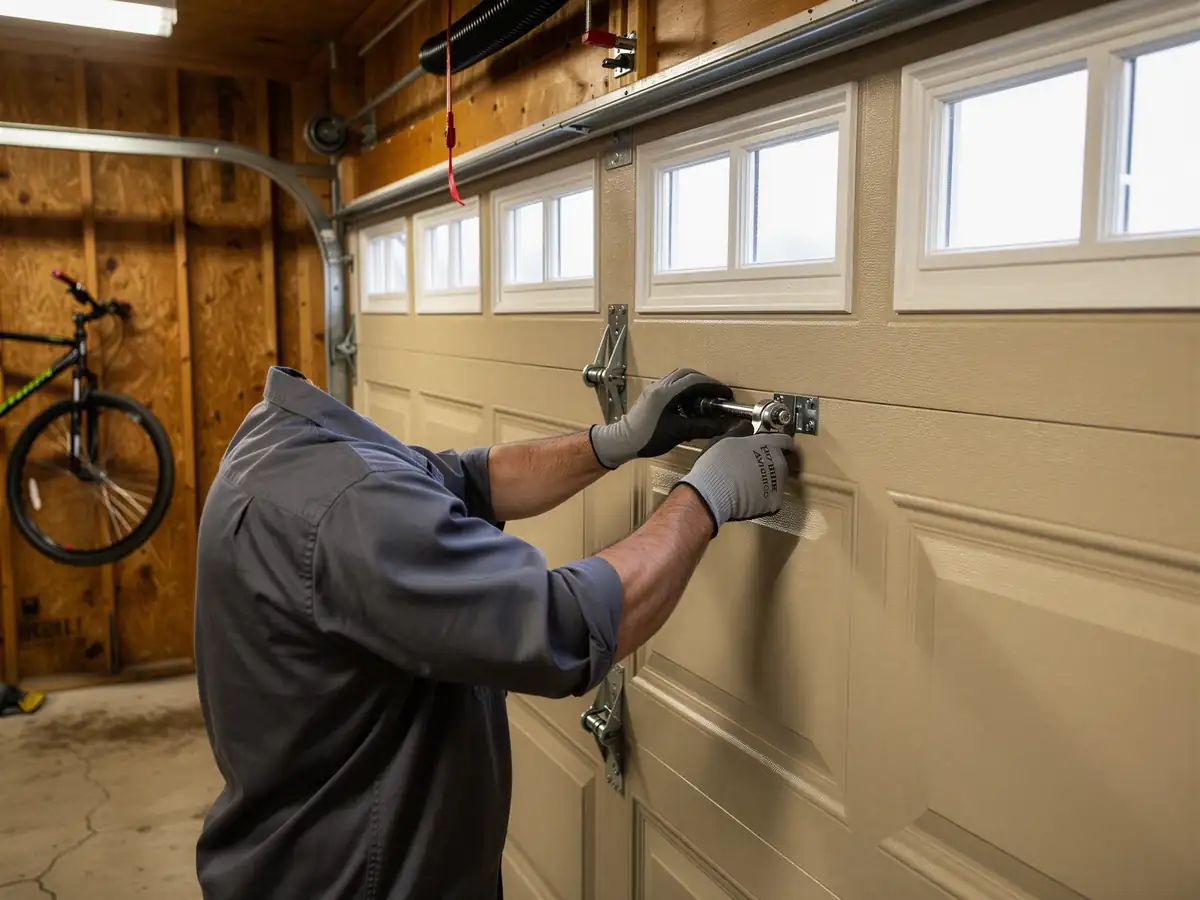
We start by running the door manually, disconnected from the opener, because that tells us in thirty seconds whether the problem is the door itself or the opener trying to compensate for a door that's already fighting its own hardware. A door that's hard to lift by hand has a spring or balance problem no opener adjustment will fix.
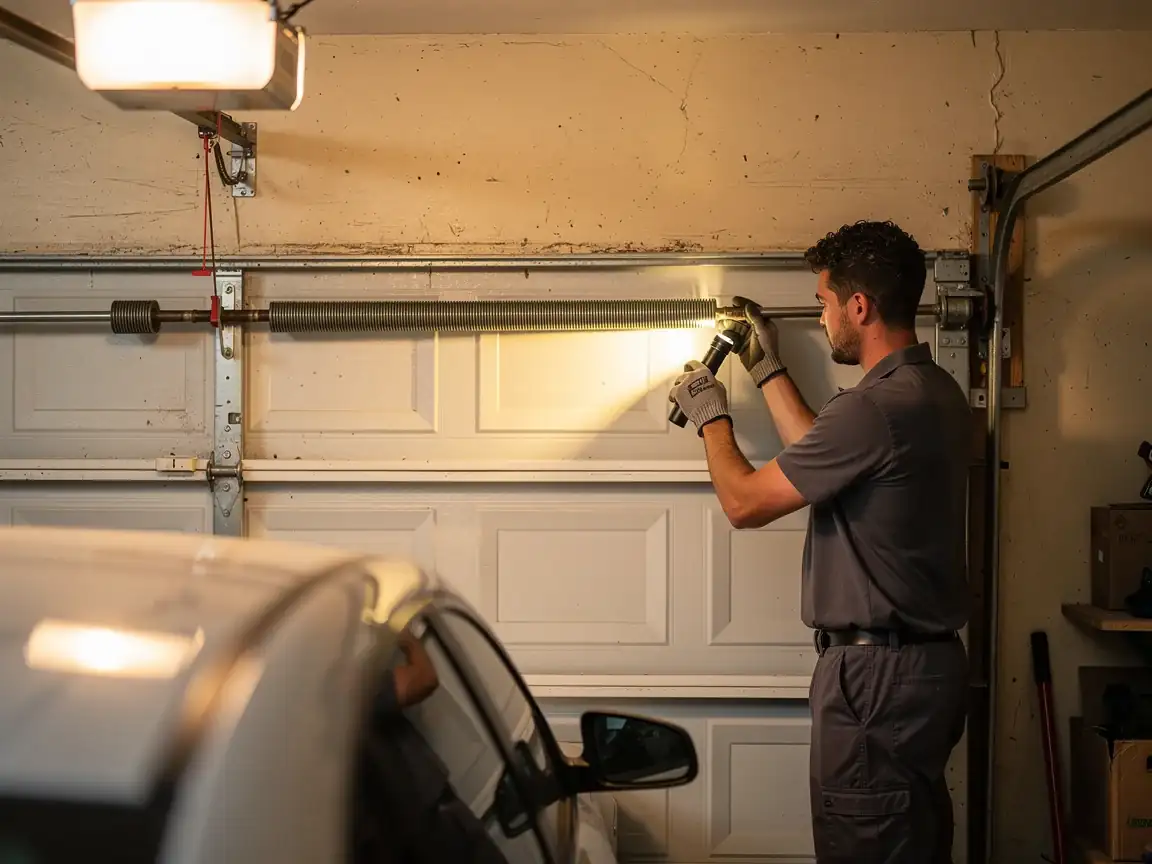
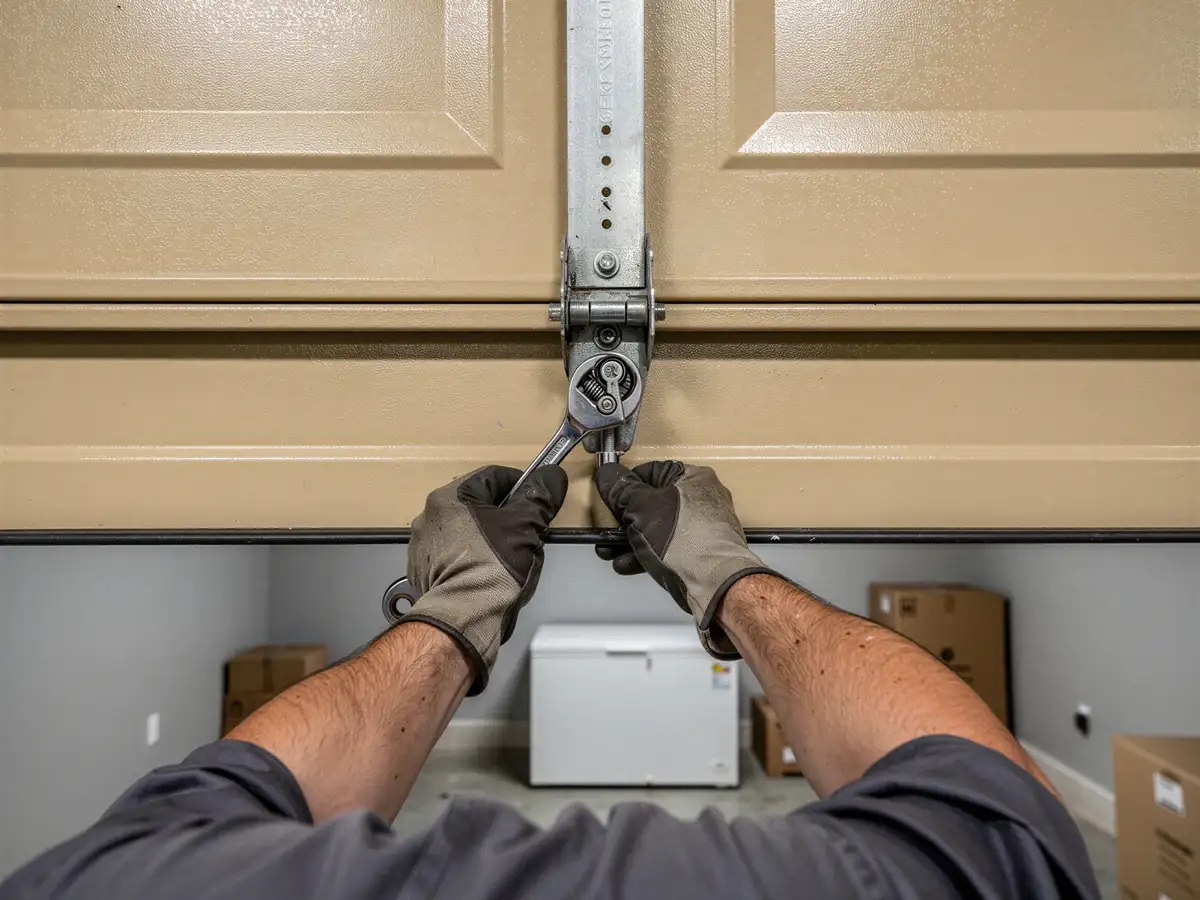
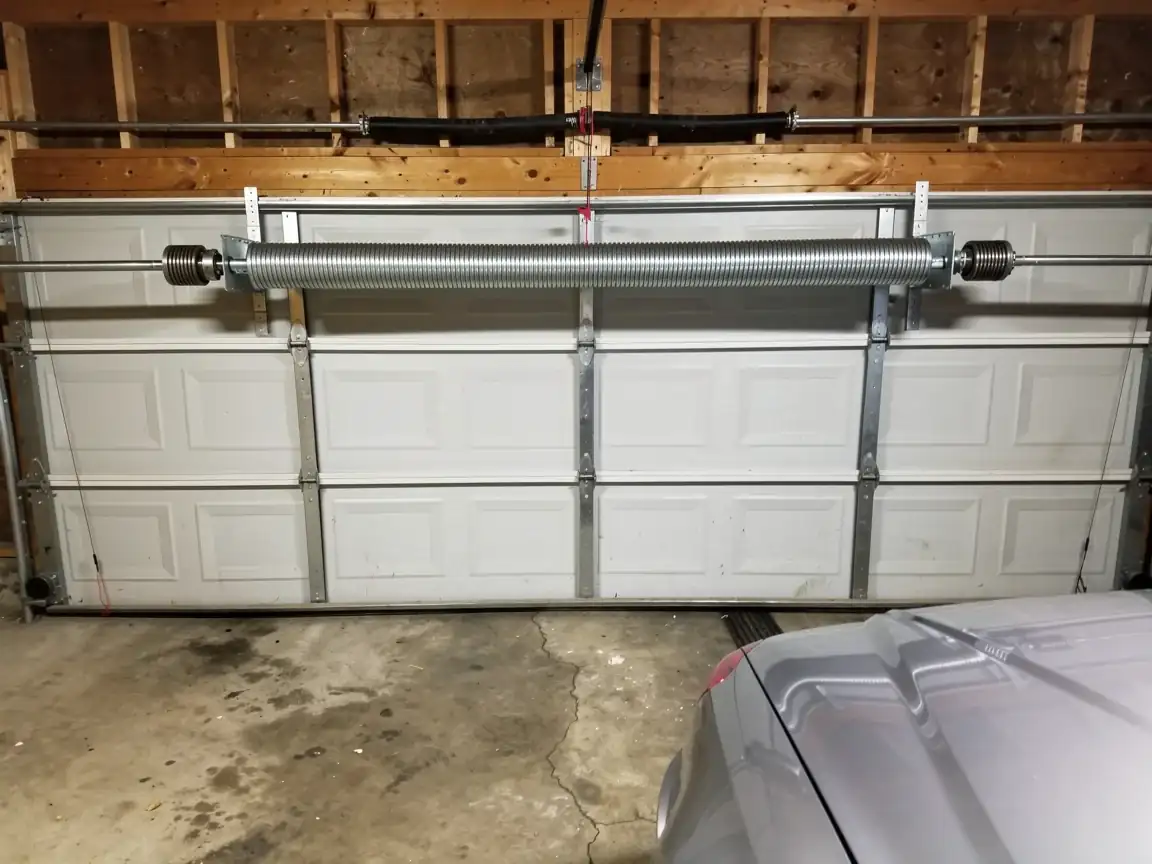
From there we check the obvious winter culprits in order: spring tension, roller condition, track alignment, and hinge wear, since on older torsion and extension setups these all move together as temperatures swing. We lubricate what should be lubricated, tighten what's worked loose, and replace what's actually worn rather than guessing. If the opener's drive gear or capacitor is the real issue, we say so instead of tuning a door that was never broken.
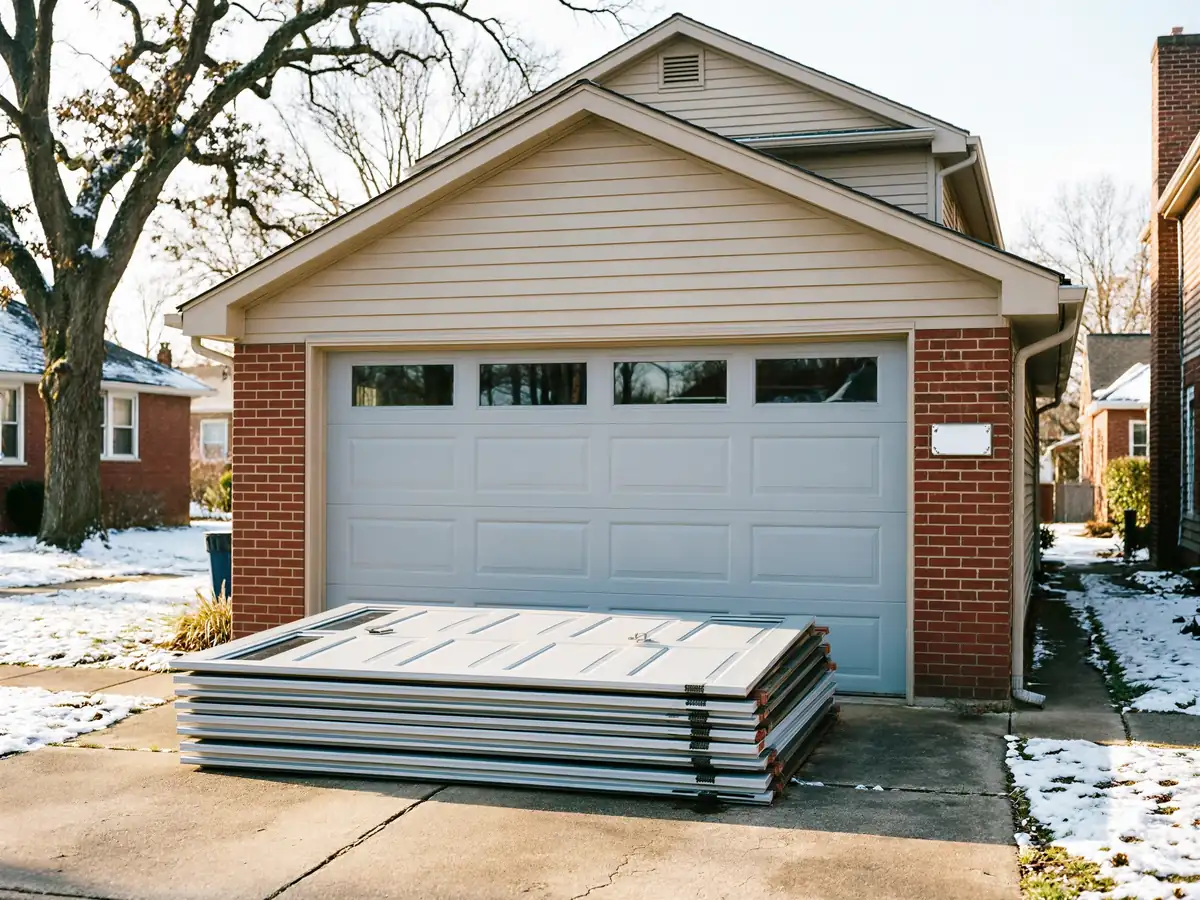
We don't push full replacement on a door that just needs its hardware serviced. If the panels and track are sound and it's a balance or roller issue, that's a service call, not a new door. Replacement makes sense when the door's structure or track geometry is actually failing, not just when something's noisy.
Stocked Parts
Given how much of the housing in this area dates to the 1960s and 70s, we carry the rollers, hinges, and standard torsion springs that fit that generation of door on the truck, not on backorder. These are the parts that fail most on doors installed when a house was built in that era and never upgraded.
What we don't stock on the truck is anything proprietary to a specific newer opener brand's circuit board or a custom-width panel - those can take longer to source and we'll tell you up front if your job needs one. For most service calls on a door from that original housing stock, we're carrying what the repair needs the day we show up.
Why This Fails Locally
This isn't a generic garage door problem
It's specific to the combination of a cold moderate climate and a housing stock that's heavily concentrated in one 15-year build window. A door and track system installed in 1964 was never engineered with today's openers or today's insulation standards in mind, and forty-plus winters of expansion and contraction have moved that track just enough to matter.
Across the roughly 31,073 owner-occupied houses in this service area, a large share share that same build era
Which means the same hardware is aging out at the same time across whole blocks, not just one unlucky house. That's also why we see the same failure pattern repeat house to house in the older sections of town and in nearby communities like West Peoria and Bellevue that share the same building period.
- 31,073 owner-occupied