What Local Conditions Do
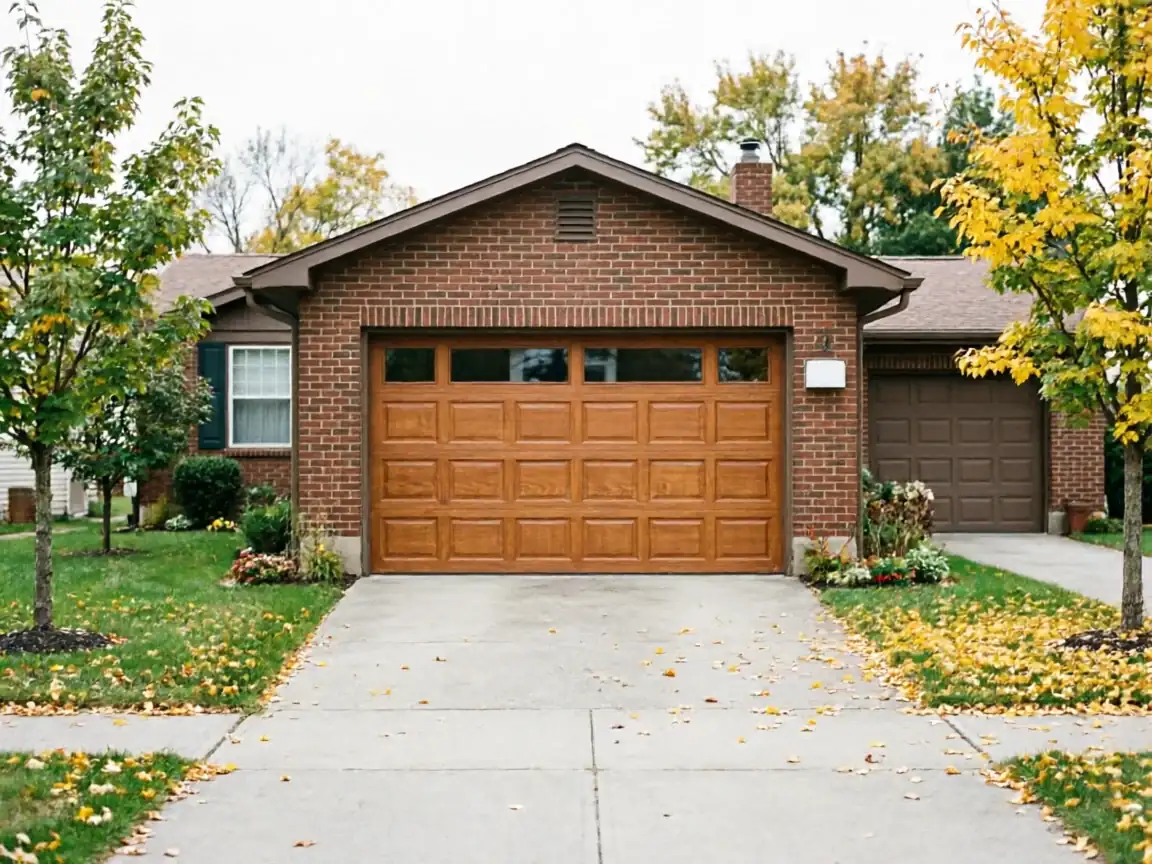
Housing in this service area was mostly built between 1938 and 2002
With the bulk of it going up in the 1960s and '70s. That's the stock across all 26 communities this shop works in, from West Peoria four miles out to Elmwood eighteen miles away. None of those houses were framed with a garage door insulation standard in mind, because none existed yet.
- 26 communities
Peoria sits in a cold moderate climate band
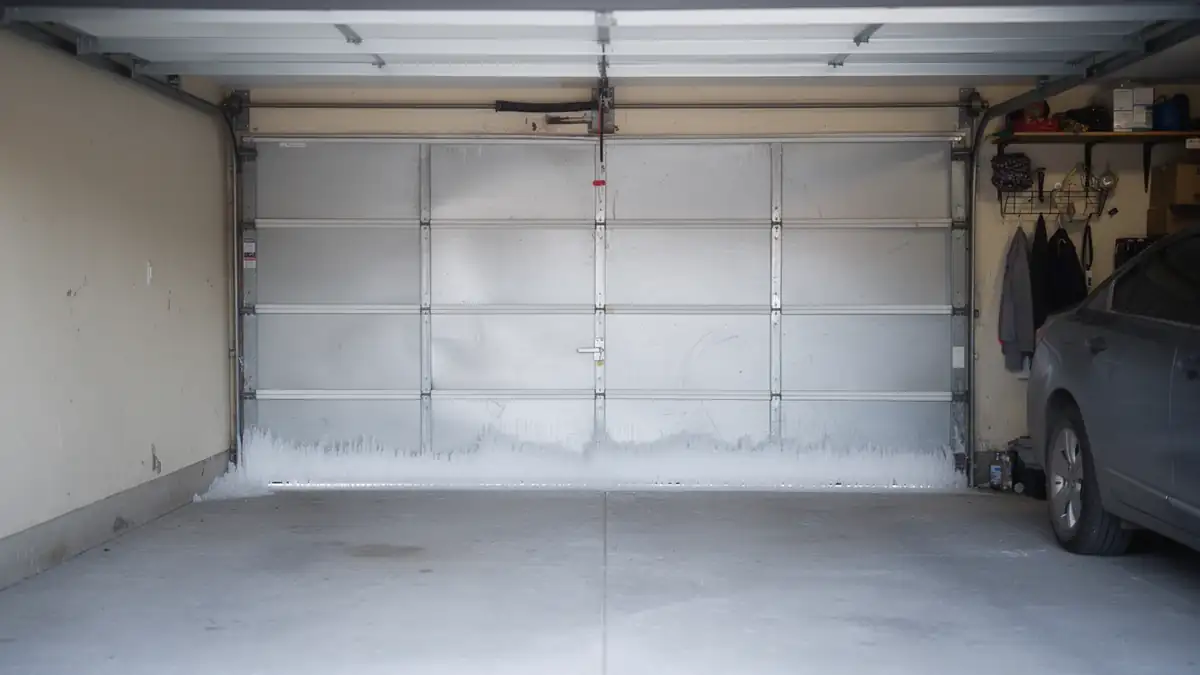
That matters because a single-layer steel panel door, which is what most houses this age came with, doesn't resist heat loss or temperature swing the way a modern sandwich-core door does. The steel contracts in deep cold, the weatherstrip at the bottom hardens and cracks, and the track hardware - often the original side-mount torsion setup - starts binding when the cold tightens every joint at once.
This isn't a defect
It's just what an old door does in a cold climate when nobody ever designed it to hold heat. Owners who ask why their garage feels ten degrees colder than it should, or why frost builds up on the inside of the panel by February, are usually looking at a door that predates any insulation requirement by decades.
The Problem
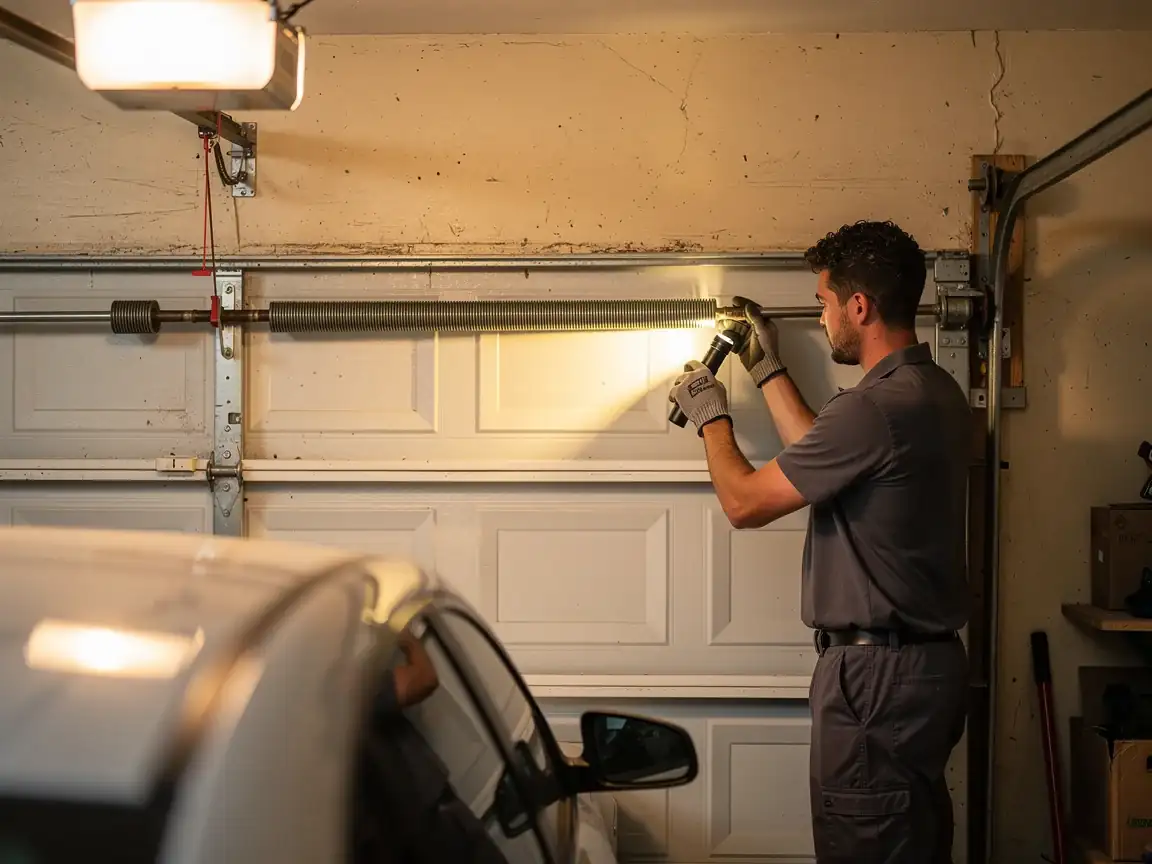
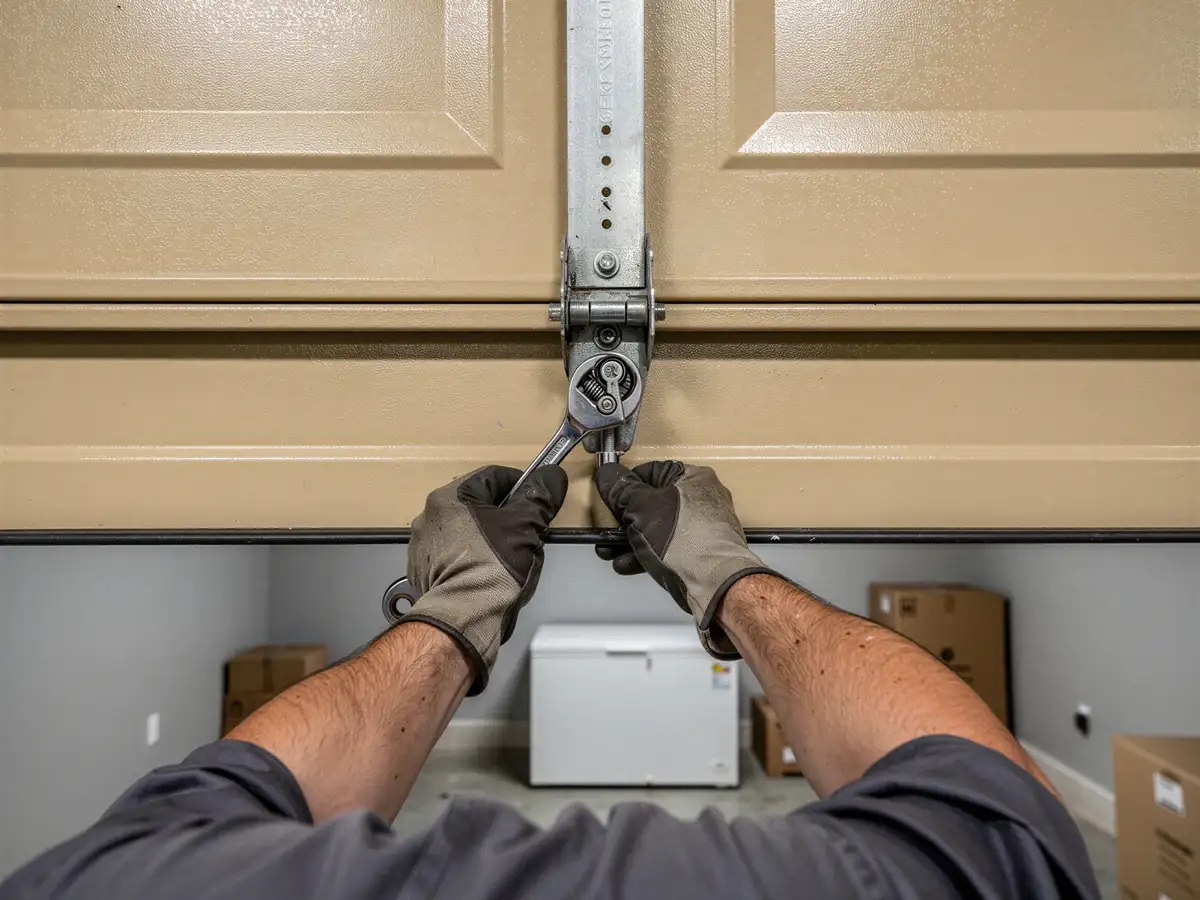
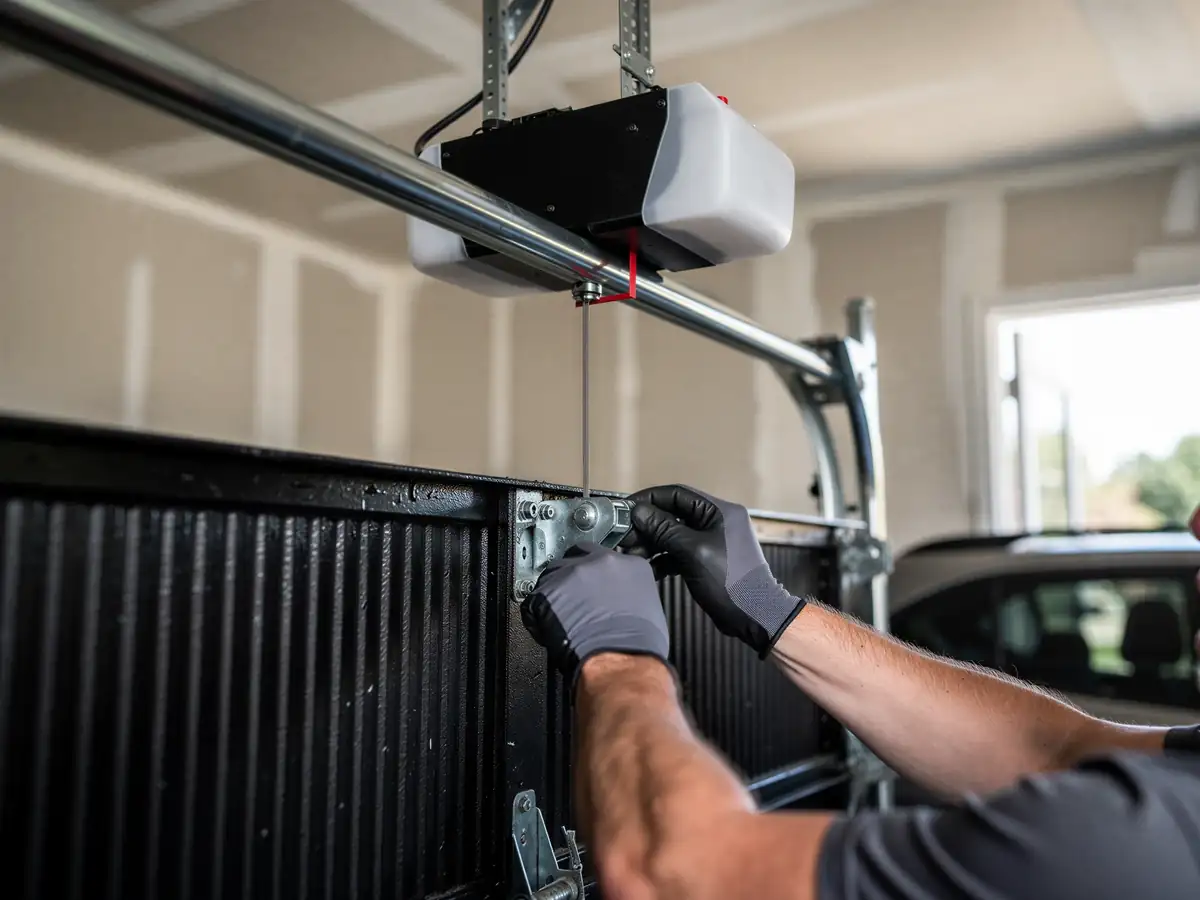
A door built before insulation rules has no foam core, no thermal break at the frame, and usually no bottom seal rated for sustained cold. Over 40 to 80 years of a cold moderate climate, three things happen on schedule: the weatherstrip at the base goes brittle and stops sealing, the panel itself develops hairline rust at the seams where condensation collects, and the torsion spring - sized for a lighter, simpler door - starts cycling harder than it was built for because the hardware has stiffened in the cold.
None of that shows up as a sudden failure. It shows up as a door that's heavier to lift by hand, a garage that runs ten or fifteen degrees colder than the rest of the house, and a spring that eventually snaps on an ordinary Tuesday morning with no warning at all.
Across 31,073 owner-occupied houses and 45,146 households in this area, that same pattern repeats block after block, because the housing stock is consistent even where the neighborhoods aren't. A door this old isn't broken in any one spot - it's just worn evenly, everywhere, the way a cold climate wears down anything that wasn't built to hold heat in the first place.
When to Get Help
Call before the spring breaks, not after. If the door feels noticeably heavier to lift than it did last winter, if you can see daylight along the bottom seal, or if the panel has started to flex or rust at a seam, that's the original hardware telling you it's near the end of what a pre-insulation door was built to do.
A door that still runs smooth and seals reasonably well doesn't need to be replaced just because of its age - a tune-up and a new bottom seal can carry an older door for years yet. But once the spring has already cycled through decades of cold-weather stiffening, waiting for it to fail on its own means it fails with the door open, which is the one time you don't want 150+ pounds of steel coming down unsupported.
The honest limit here: if the door's steel has rusted through at the hinge points or the track is bent from years of binding, patching it is a short-term fix. At that point you're not saving the door, you're renting a little more time out of it before the same call happens again next winter.
What It Costs
Pricing on a job like this depends on whether you're repairing the original hardware or replacing the door with an insulated panel built for a cold moderate climate
And that's a conversation worth having in person rather than guessing at over the phone. What's consistent across this area, with a median household income around $71,763, is that most owners are weighing a real repair against a full replacement rather than treating either as a throwaway decision.
- $71,763 median household income
An old door with good bones
Sound panel, no rust-through, just stiff hardware and a worn seal - is usually the cheaper path: new spring, new seal, lubed track. A door where the steel itself has given out is a different math entirely, because you're not fixing a 1960s door anymore, you're replacing it with something built to actually hold heat in this climate.
We'll look at the door in front of us before we quote anything
A door's age on paper and a door's actual condition after decades in a cold climate aren't always the same thing, and the price should follow the second one.