The Symptom
The call usually sounds the same
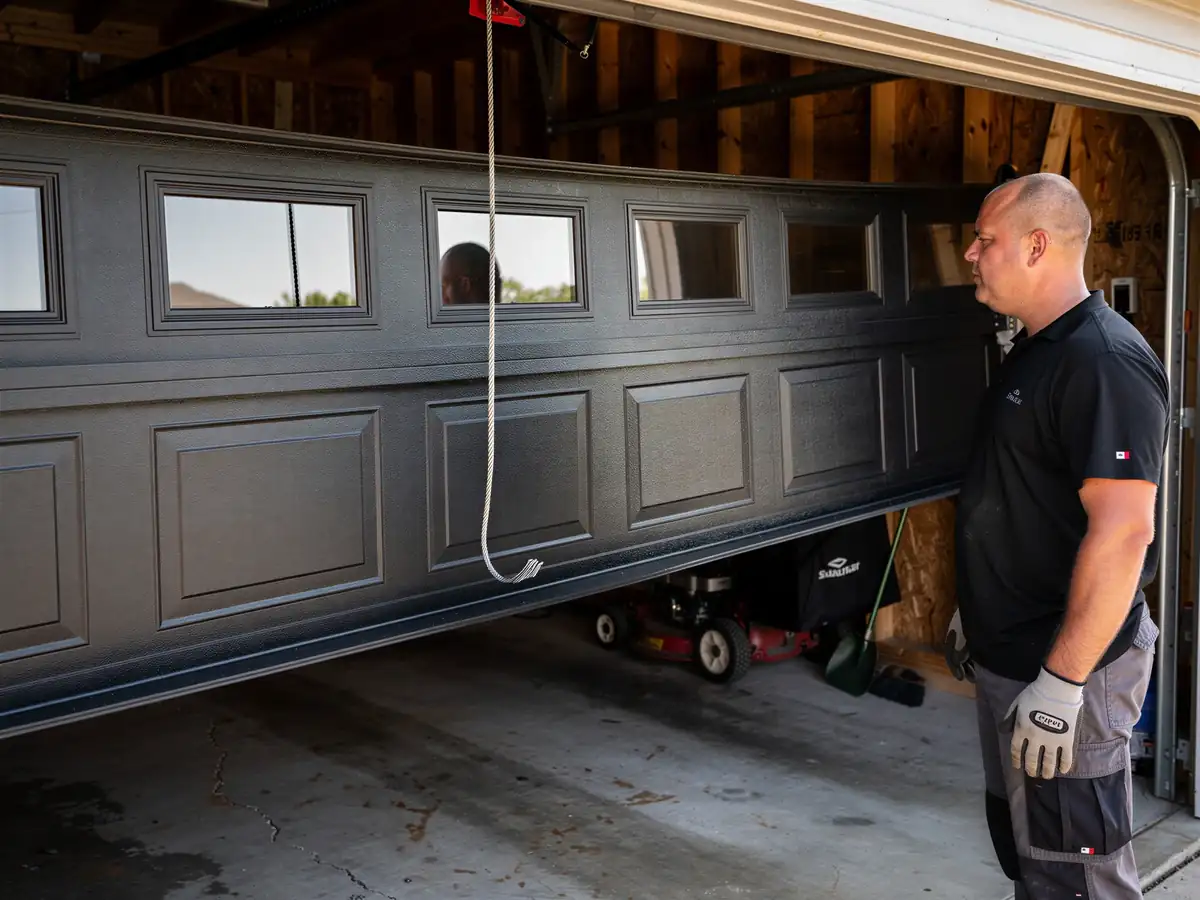
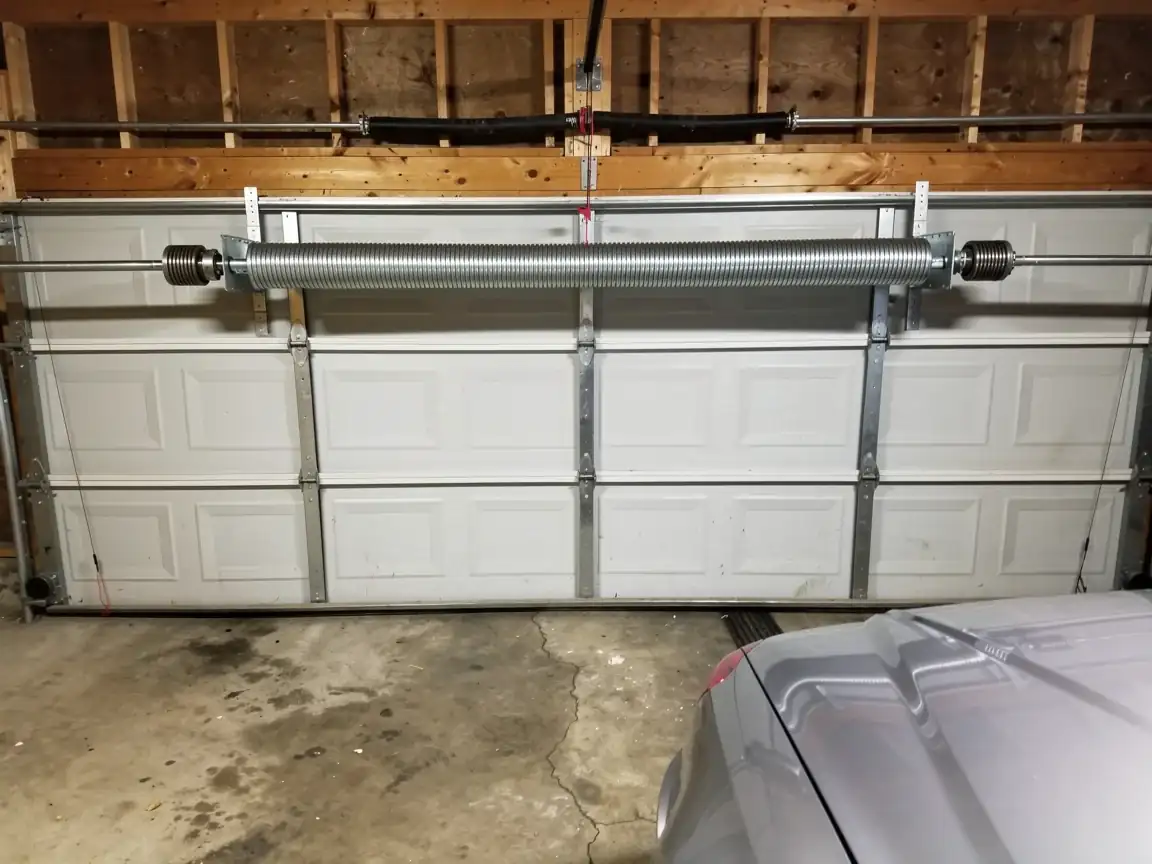
The door won't budge, or it came down with a bang and now sits crooked on the track. Sometimes it's a loud pop followed by the door refusing to open at all - that's a torsion spring letting go. Other times the opener hums but nothing moves, which points to a cable off the drum or a broken roller bracket.
In a service area where most houses went up between 1938 and 2002
With a lot of that stock clustered in the 1960s and 70s across the 26 named communities we cover, these failures aren't random. A spring rated for a certain number of cycles has usually put in 50-plus winters by now, and it fails on its own schedule, not on a convenient weekday afternoon. Cold makes steel brittle and lubricant thick, so the first hard freeze of the season is when a spring that's been weakening for years finally lets go. If your door died tonight, you're not dealing with a fluke - you're dealing with age plus temperature.
How We Fix It
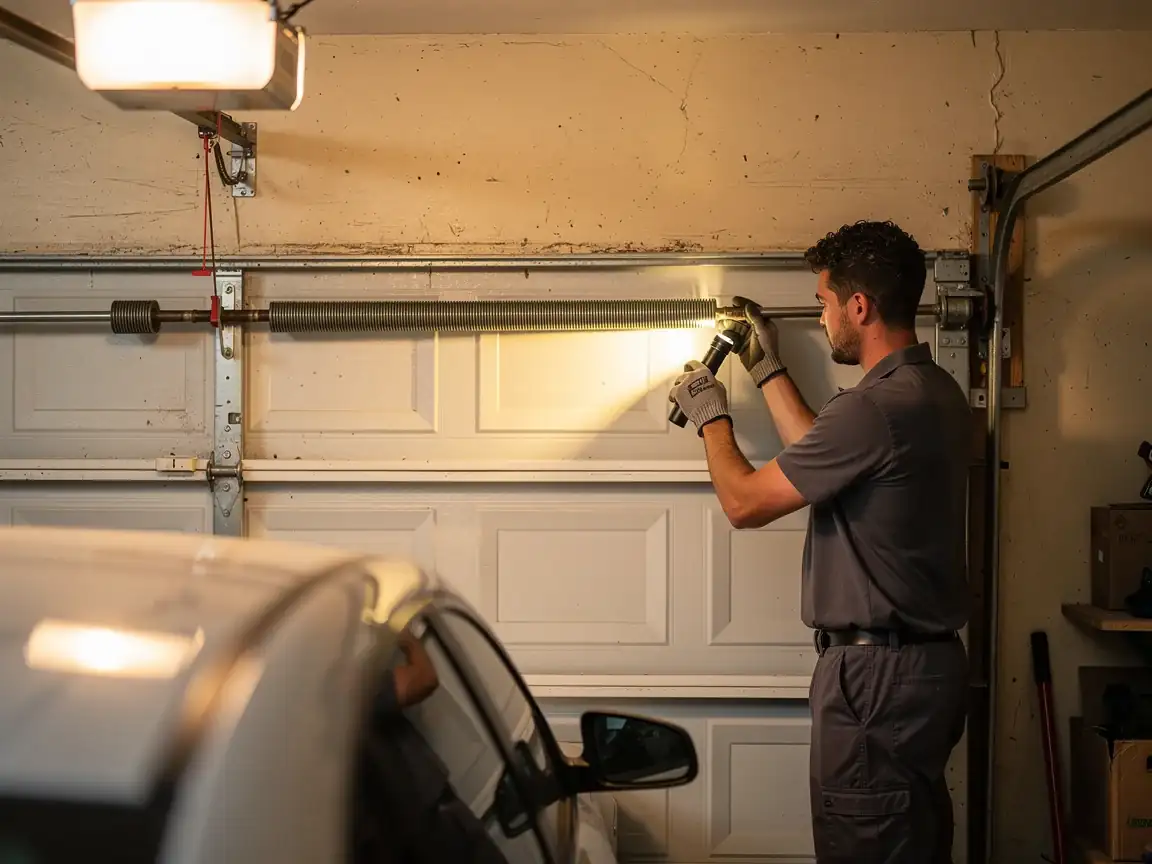
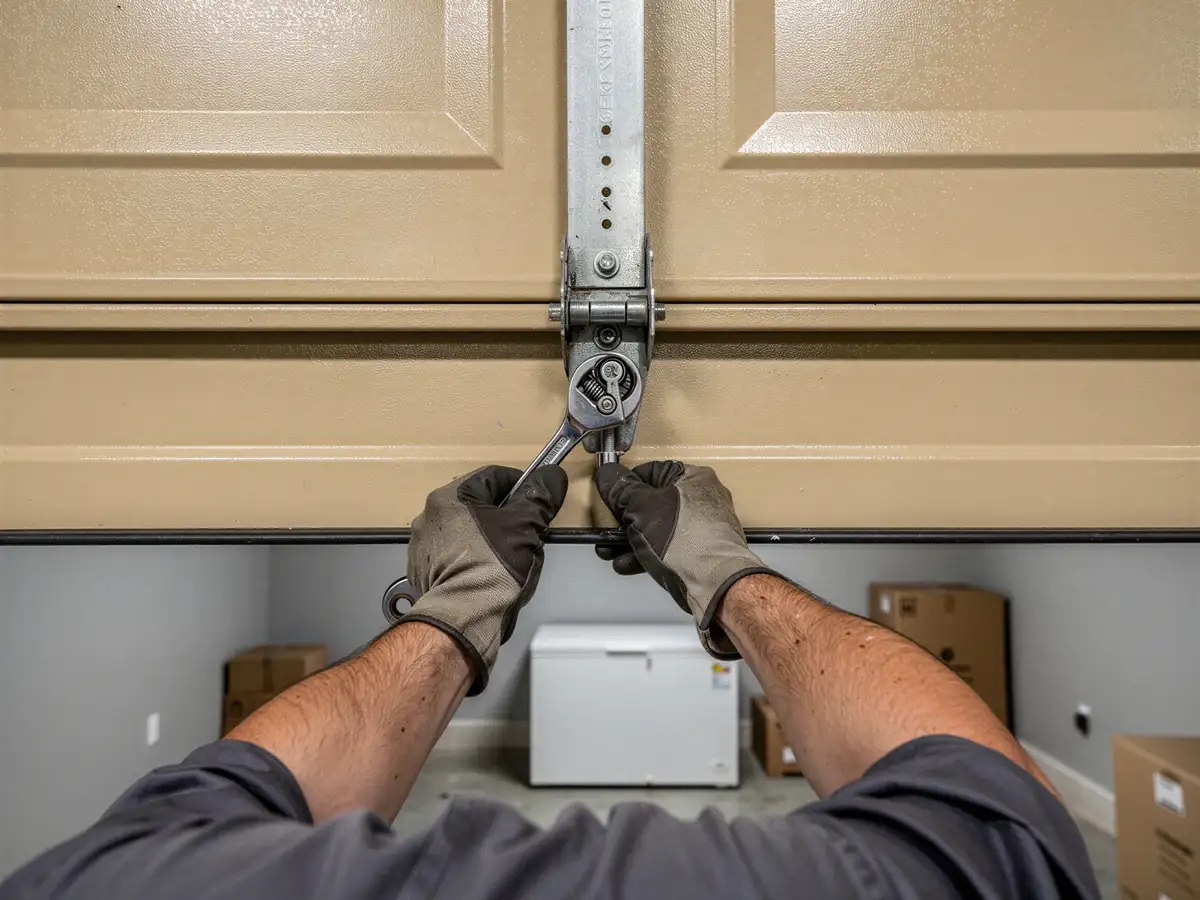
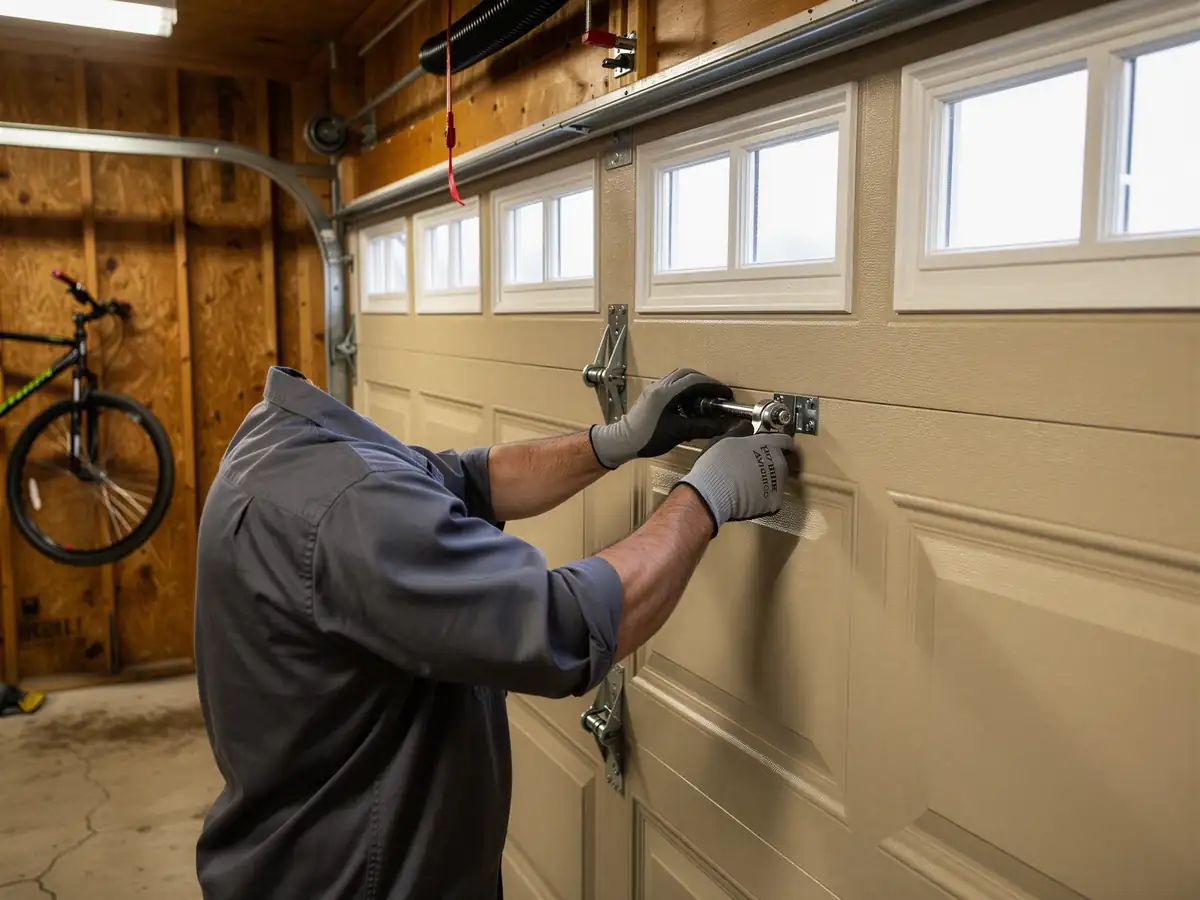
First thing on an emergency call: get the door safe. If a spring has broken, we secure the door so it can't fall while we work, since a torsion spring under tension is the single most dangerous part of this job to get wrong. We don't recommend DIY spring work for that reason - it's the one repair we tell homeowners to leave alone even if they're handy with everything else in the garage.
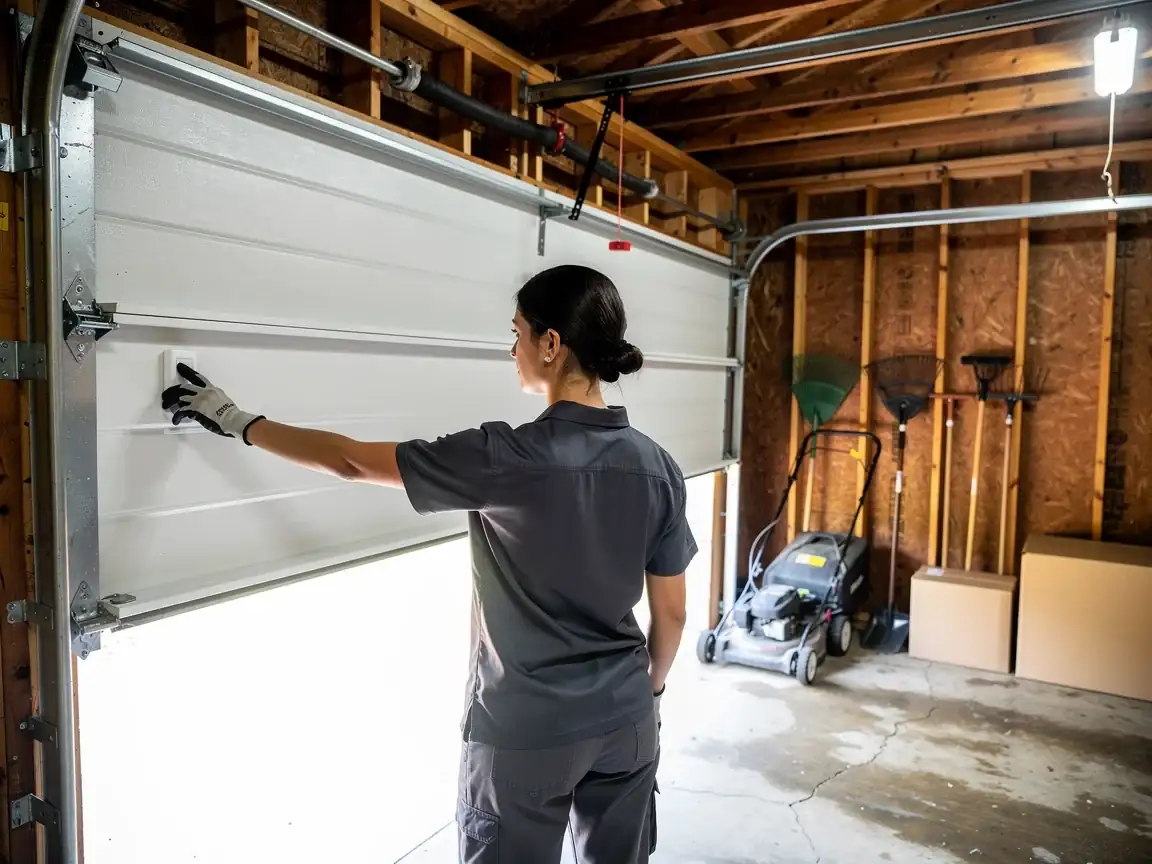
From there we check the whole system, not just the obvious break. A snapped cable often means a roller or bracket took damage on the way down, and a dead opener sometimes turns out to be a disconnected trolley rather than a motor problem. We test the door's balance once repairs are in, because a door that closes but isn't balanced will just strand you again in a few months.
We work across the service area that includes West Peoria, Mossville, Bellevue, East Peoria, Dunlap, Creve Coeur, Bartonville, Germantown Hills, North Pekin, Washington, Rome, Hanna City, Morton, Chillicothe, Metamora, Mapleton, Princeville, Trivoli, Brimfield, Kingston Mines, Glasford, Tremont, Deer Creek, South Pekin, Eureka, Elmwood. One honest limit: if a part has to be special-ordered for an older or oversized door, we can stabilize the door the same visit, but the final fix may wait on that part arriving.
Stocked Parts
Our trucks carry the parts that fail most often on the housing stock out here - standard torsion springs sized for doors built from the 1960s through the 1990s, extension springs for the older single-car setups still common on houses from the 1938-1964 end of that range, lift cables, rollers, and the brackets that crack when a cable snaps under load.
We also keep common opener parts on hand: drive gears, trolleys, and safety sensors, since sensor failure is a frequent no-start complaint, especially after a hard freeze shifts a garage floor slab enough to knock an eye out of alignment. What we don't carry on the truck is anything custom - a non-standard panel size or a discontinued opener model from a brand that's stopped making parts. Those jobs usually mean a return visit once the part is in, and we'll tell you that up front instead of guessing at an ETA.
Why This Fails Locally
This region sits in a cold climate band
And that's the detail that ties the whole problem together. Steel springs lose tension and become more likely to snap as temperatures drop, nylon rollers crack in the cold, and garage floor slabs shift slightly with frost, which throws opener sensors out of alignment. None of that is unique to any one street - it's what cold does to steel and plastic parts that are already decades old.
Across the service area's roughly 45,146 households
With about 31,073 of those owner-occupied houses, a big share of the garages behind those doors were built with hardware that's now original equipment from the 1960s and 70s. That's not a knock on the houses - it's just math. A median household income of $71,763 means most owners are weighing a repair against a replacement, and for a door that's otherwise sound, fixing the spring or cable is almost always the cheaper call. Where it isn't: a door with a bent track, a split panel, and a worn-out opener all at once. At that point you're paying to patch something that's going to need the next part replaced within a year anyway.
- 45,146 households
- 31,073 owner-occupied
- $71,763 median household income