Garage Door Maintenance Built for Peoria's Older Housing Stock
Garage door maintenance for Peoria's 1938-2002 housing stock, built for cold-climate wear on torsion springs, rollers, and openers. Service across the Peoria area.
The door starts loud. A grind on the way up, a shudder a few inches from the floor, a cable that looks fine until you notice it's not sitting square in the drum. On a lot of Peoria houses this shows up as a seasonal thing - fine in September, rough by December. That's not a coincidence. Houses in this area were built mostly between 1938 and 2002, with the bulk of the stock going up in the 1960s and 70s, and most of those garages still carry original or first-replacement hardware that was never rated for 60+ years of freeze-thaw cycling. In a cold-moderate climate band like this one, steel rollers pit, lubrication on torsion springs dries out and gets tacky, and track brackets that were torqued down in 1968 work loose a sixteenth of an inch at a time. None of that fails all at once. It fails as noise, then as hesitation, then as a door that won't open past waist height. By the time a homeowner calls, the symptom has usually been building for a full season.
How We Fix It
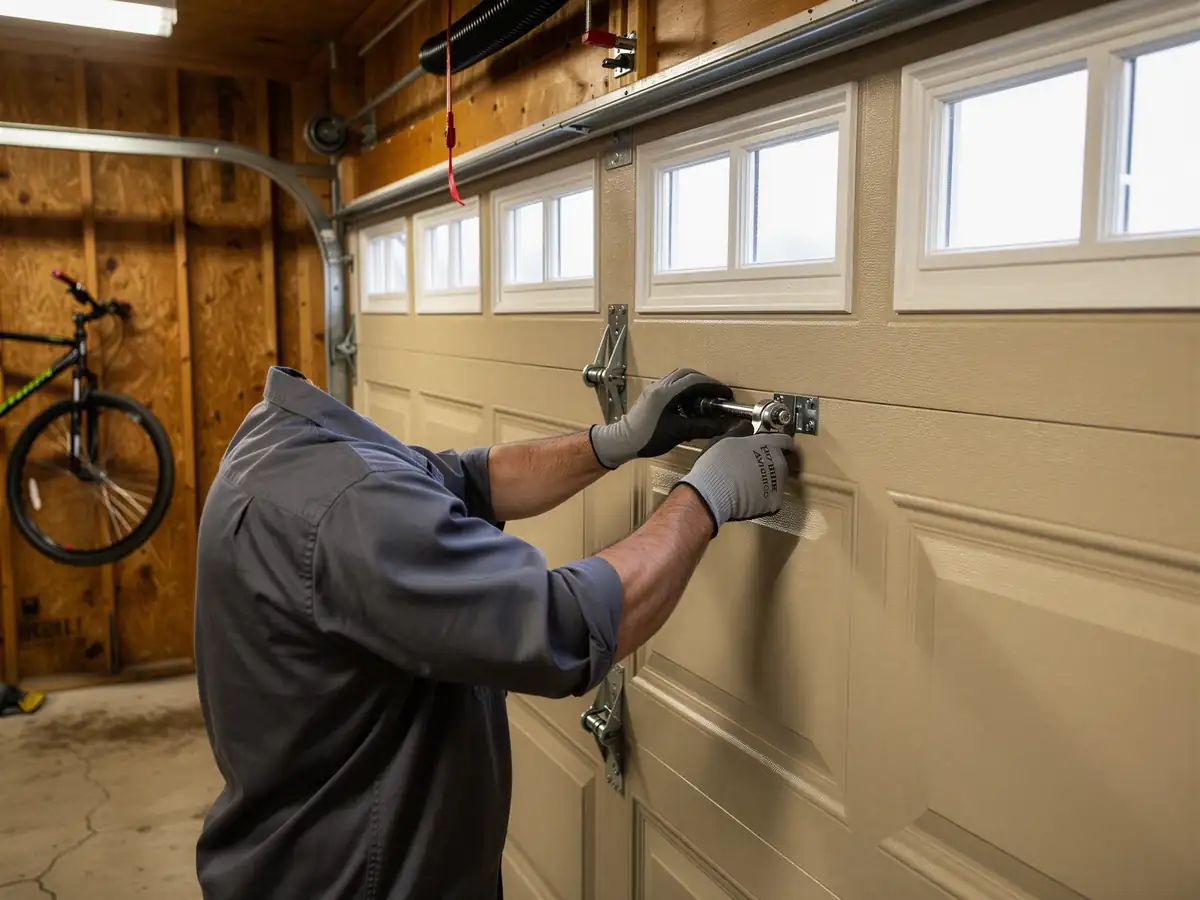
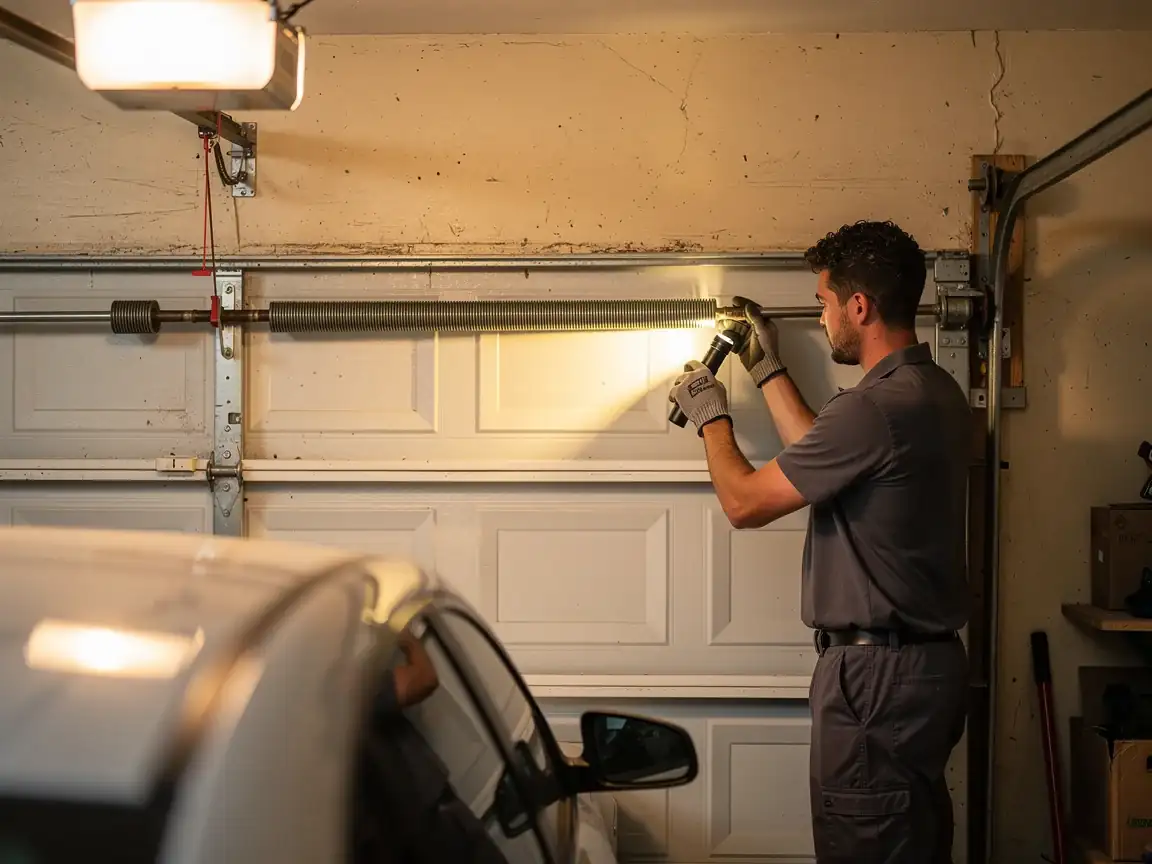
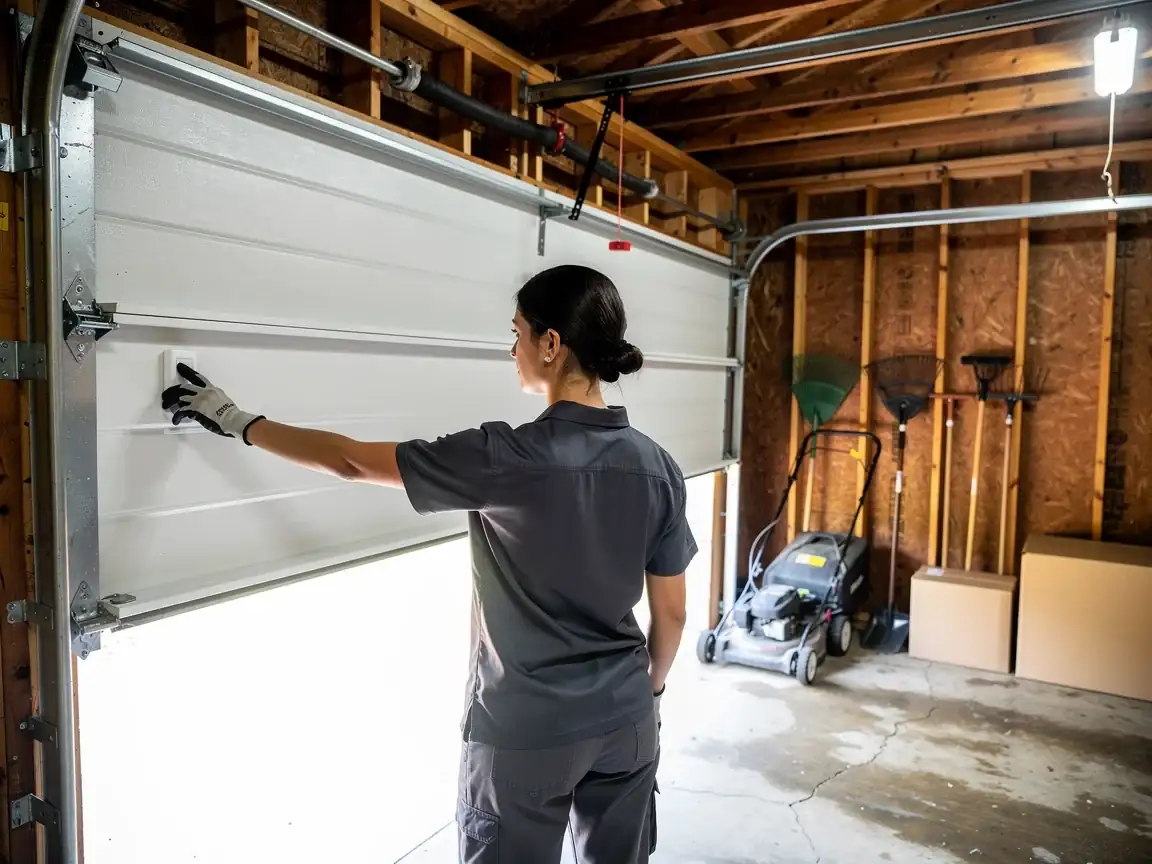
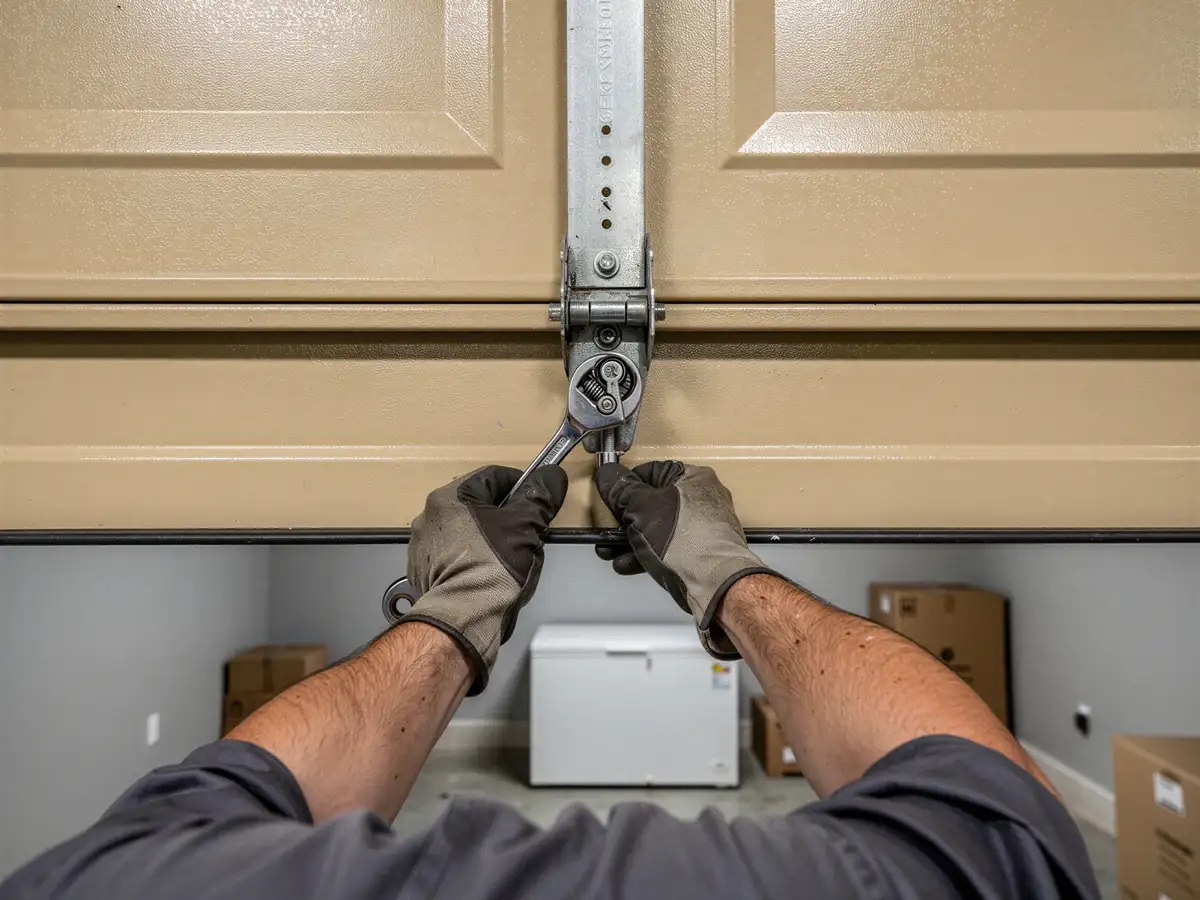
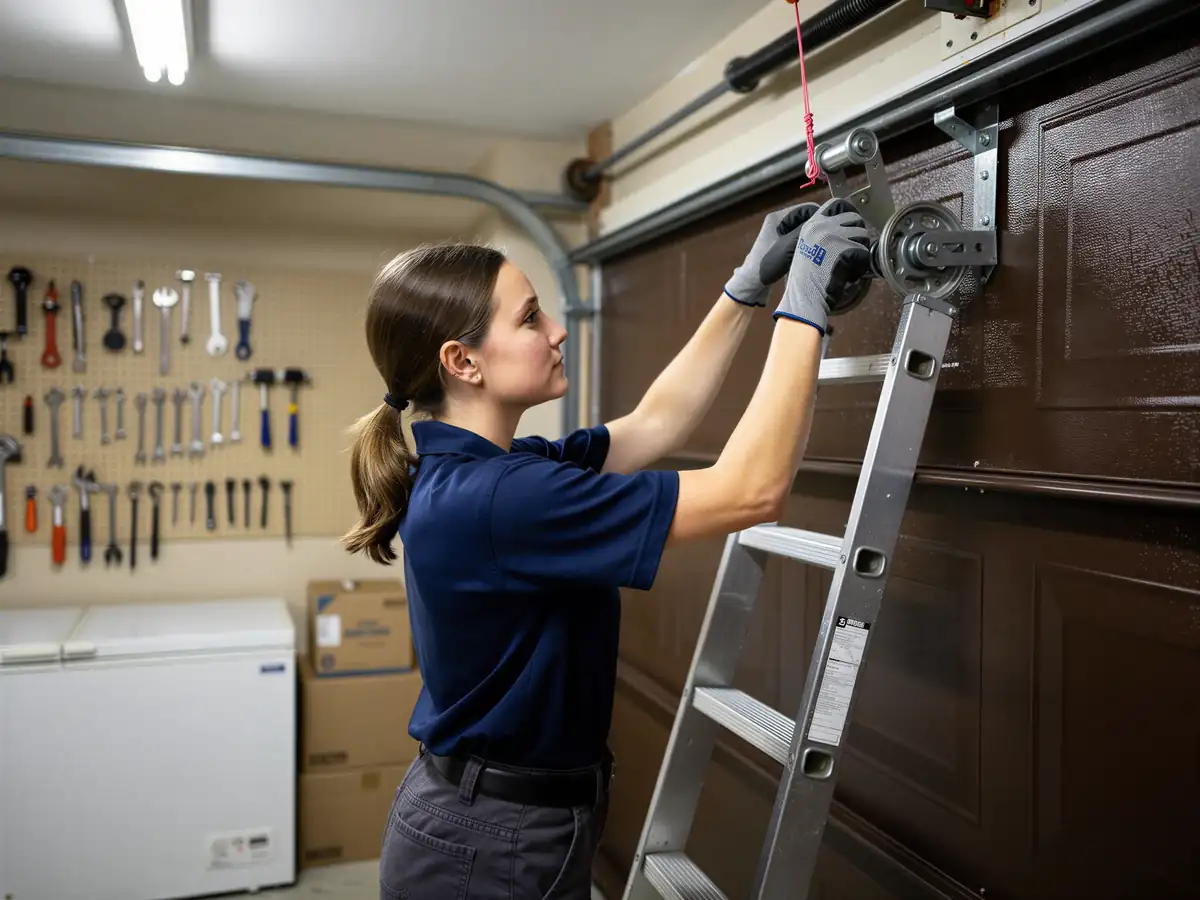
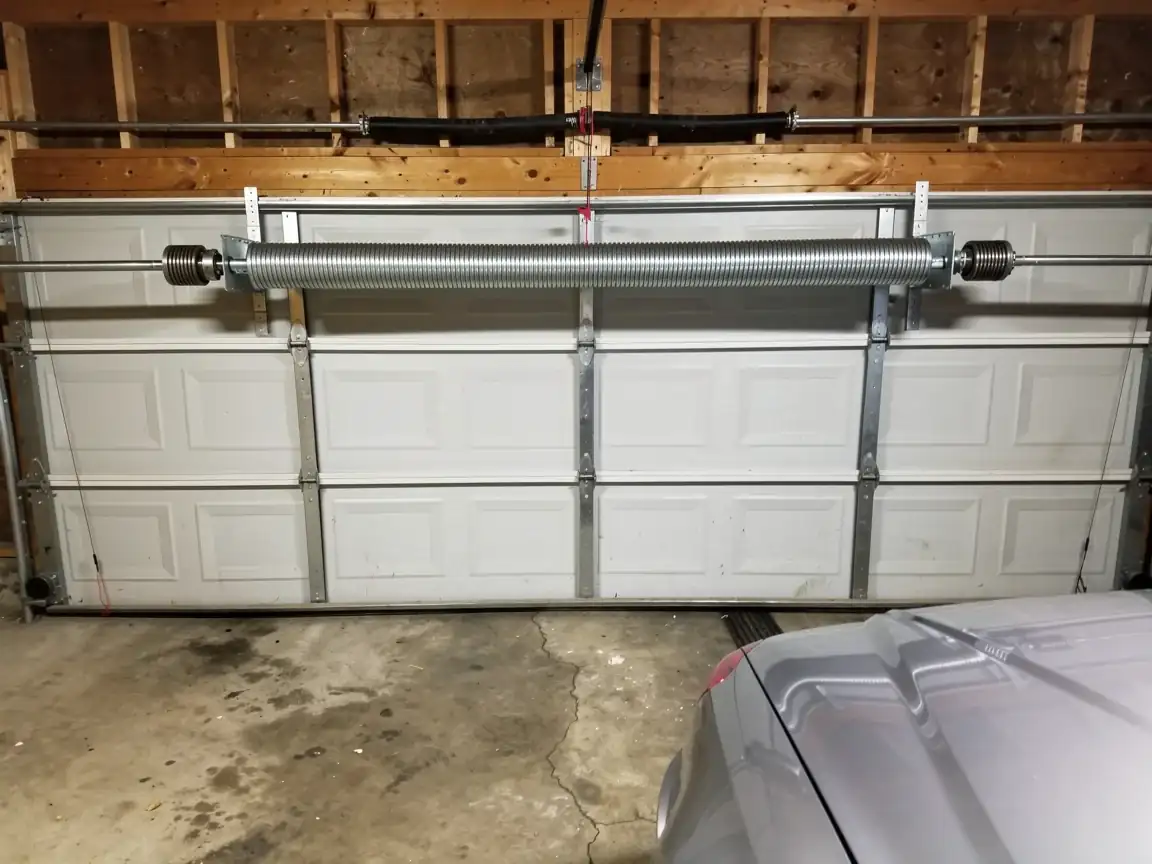
Maintenance on a door this age starts with the spring system, not the opener - the opener gets blamed first because it's the part that visibly struggles, but it's almost always compensating for drag somewhere else in the system. We check spring tension against door weight, inspect cable wear at the drum, and pull every roller to look at the bearing, not just the wheel. On 1960s and 70s track hardware we re-torque brackets to the jamb rather than just tightening what's loose, because the lag holes in framing from that era have often widened enough that a simple tightening doesn't hold through another winter. We lubricate springs and hinges with a product rated for the temperature swings this climate band actually sees, not an all-purpose grease that stiffens below freezing. One honest limit here: if a torsion spring is original to a pre-1980 install, we don't recommend patching it. Springs have a cycle life, and a 50-plus-year-old spring under new tension is a safety call we won't make for a customer.
Stocked Parts
We carry the rollers, cables, and hinge hardware that match the torsion and extension spring setups common to houses built in this area's 1938-2002 window, because those parts aren't always sitting on a shelf at a big-box store once a door is more than a few decades old. That includes standard-size torsion springs sized for the single and double door openings typical of this housing stock, nylon and steel rollers in the bearing sizes used through the 60s and 70s, and galvanized cable rated for the colder end of our climate band. What we don't stock on the truck is obsolete or proprietary opener logic boards - if a door's opener is old enough that the manufacturer no longer makes the control board, that part has to be special-ordered, and we'll tell you that up front instead of promising a same-visit fix we can't deliver.
Why This Fails Locally
This isn't a generic wear problem - it's specific to what's actually built here. Across the 26 named areas we cover, the housing stock clusters tightly around a 1964 median build year, and that means tens of thousands of garage doors are running hardware designed for a service life that's already been exceeded once, sometimes twice, with replacement parts instead of replacement systems. With 31,073 owner-occupied houses among 45,146 households in the service area, and a median household income of $71,763, most of these homes are owned long-term rather than flipped, which means doors get patched part by part over decades rather than replaced outright. Add a cold-moderate climate band that puts real freeze-thaw stress on steel and lubricant twice a year, and you get a maintenance pattern that looks different from what you'd see in a newer subdivision or a warmer region: more spring fatigue, more bracket loosening, fewer total failures but far more seasonal symptoms. Maintenance here means catching that wear before it becomes a stuck door.
How it works
From “it’s stuck” to “it’s fixed”
1
Tell us what’s wrong
Describe the symptom - won’t open, loud bang, opener runs but the door won’t move.
2
On-site diagnosis
A technician tests the door under power and by hand and finds what actually failed.
3
Clear, up-front plan
You get the fix that’s needed and what drives the cost - before any work starts.
4
Repaired & tested
The repair is done, the door is set true and tested, and the work area left clean.
Not sure which repair your door needs in Peoria, IL? Describe what it’s doing - every job starts with a diagnosis.
01How often should I get my garage door serviced in Peoria?
Given the age of most garage door hardware in this area - much of it dating to the 1960s and 70s - we'd rather check spring tension and rollers once a year, timed before the cold sets in, than wait for a symptom. A door that's quiet in fall can be grinding by January once lubricant stiffens in freezing temperatures.
02Why does my door only act up in winter?
Lubricant on torsion springs and rollers thickens in cold temperatures, and metal brackets contract slightly, which tightens tolerances that were already loose from decades of use. In this climate band that seasonal swing is enough to turn a quiet door into a noisy or sticking one without anything actually breaking.
03Is my original garage door spring safe to keep using?
If your house was built in the 1938-2002 window common to this area and the spring looks original, we'll check its wear but we won't just re-grease it and call it done. Springs have a limited cycle life, and on pre-1980 installs we generally recommend replacement over continued patching.
04Do you stock parts for older garage doors?
We carry rollers, cables, and standard torsion springs sized for the door openings typical of houses built through the 1960s and 70s in this area. Proprietary opener control boards on very old units sometimes have to be special-ordered, and we'll flag that before starting the job.
Ready to get your garage door sorted?
Tell us what it’s doing and where you are in Peoria - we’ll take it from there.