Serving Peoria, IL & nearby
(309) 217-9683
Peoria, IL

What We Actually Do on a Peoria Service Call

A look at what our techs actually check on a Peoria service call, from 1960s torsion hardware to cold-weather opener failures in this housing stock.

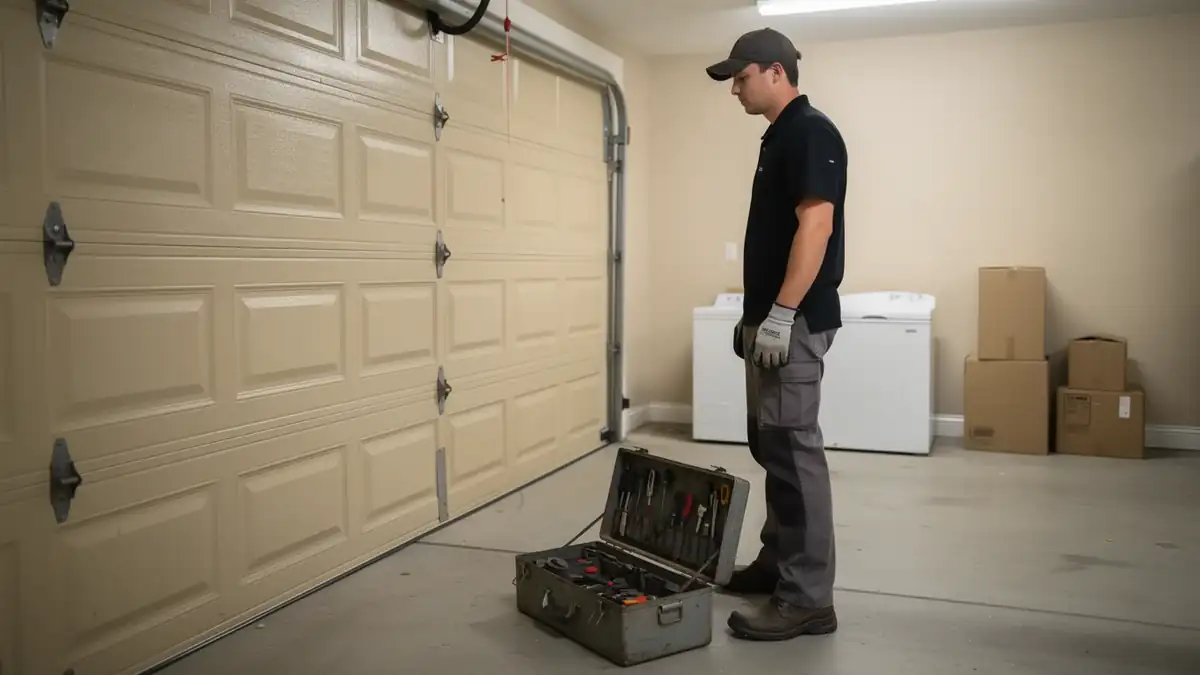
A technician stands next to an open toolbox and a beige garage door.

What Local Conditions Do

Most of the housing in and around Peoria went up between 1938 and 2002, with the bulk of it dating to the 1960s and 70s across the 26 named areas we work in. That matters more than people think. A door built in 1966 doesn't use the same spring mounting, track gauge, or opener bracket as one installed in 2001, and a lot of these houses have been through at least one partial upgrade - a newer opener bolted onto original hardware, or a replacement door hung on the original track. On a service call we're not just looking at the symptom you called about. We're checking whether the rest of the system still matches what's supposed to be attached to it, because in this area it often doesn't. Add in a cold moderate climate band, and you get steel doors and galvanized springs that see real temperature swings season to season, which changes how metal expands, how grease behaves, and how fast a worn part finally lets go. None of this is unique to one house - it's the pattern across the service area, from older sections near Peoria itself out toward newer construction closer to Dunlap and Germantown Hills.

The Problem

The most common failure we see ties directly back to age and climate working together. A torsion spring rated for a certain cycle count does fewer total cycles before failing when it's cold half the year, because cold metal is stiffer and takes more stress per open-close than it would in a warm climate. On houses built before the 1980s, we're also finding springs and cables that were never upsized when a heavier insulated door replaced a lighter original one - the hardware is doing more work than it was built for. Openers are the second pattern. A chain-drive unit from the 80s or 90s straining against a cold garage in January either burns out the drive gear or starts slipping, and by the time you notice, it's usually done more damage to the trolley or rail than the original issue. We don't guess at this. Part of the service call is confirming which of these two systems - spring assembly or opener - is actually the point of failure, because they get misdiagnosed as each other more than people realize.

When to Get Help

Call before the door won't open at all, not after. A spring that's visibly stretched or has a gap where it's wound is close to going, and a cable fraying near the bottom bracket is the same story with different hardware. If your door is original to a house built in the 1960s or 70s and you've never had the torsion system serviced, that's worth a call on its own - this is the housing stock we see fail first, simply because of age and the number of winters the hardware has been through. On the opener side, grinding, a motor that runs but the door doesn't move, or a unit that reverses for no reason are all signs worth addressing before the cold months, since opener strain gets worse as temperatures drop. One limitation worth being honest about: if your door and track are both original to a 1960s build and heavily rusted or warped, a service call might tell you that repair isn't the right move - replacement will cost less over time than patching failing original parts.
What It Costs

We're not going to put a number here that doesn't hold up once a tech is actually looking at your hardware. What drives the cost on any given call is the age and type of the system - original 1960s-70s torsion hardware takes longer to source parts for than anything installed in the last twenty years, and that affects both the visit and any follow-up. A straightforward spring replacement on newer hardware is a different job than diagnosing a mismatched opener-and-track setup on an older house, and we won't quote either one without seeing it. What we can tell you is that the median household income across this service area sits at $71,763, which is part of why we try to give a clear, written estimate before any repair starts rather than padding a call with work that isn't needed.

How it works

From “it’s stuck” to “it’s fixed”

  1. 1
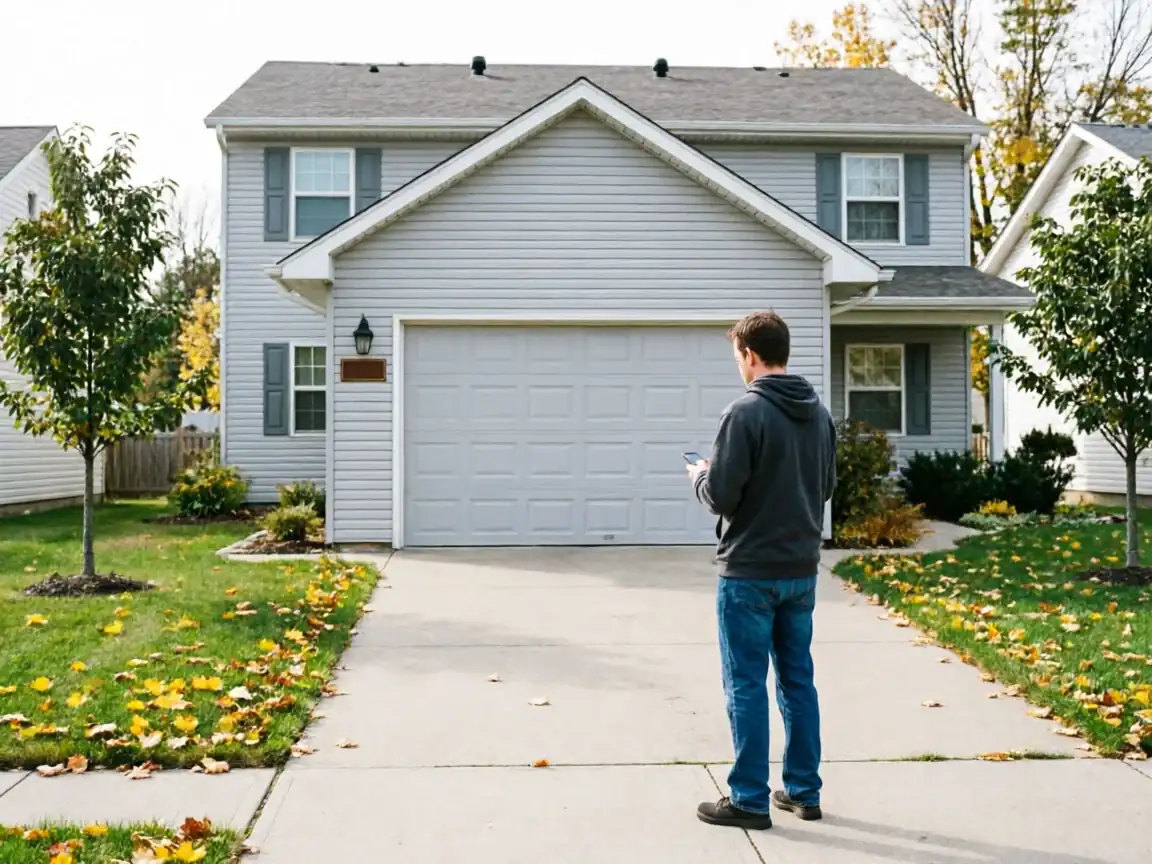
    A man stands in a driveway looking at his phone in front of a house.

    Tell us what’s wrong

    Describe the symptom - won’t open, loud bang, opener runs but the door won’t move.

  2. 2
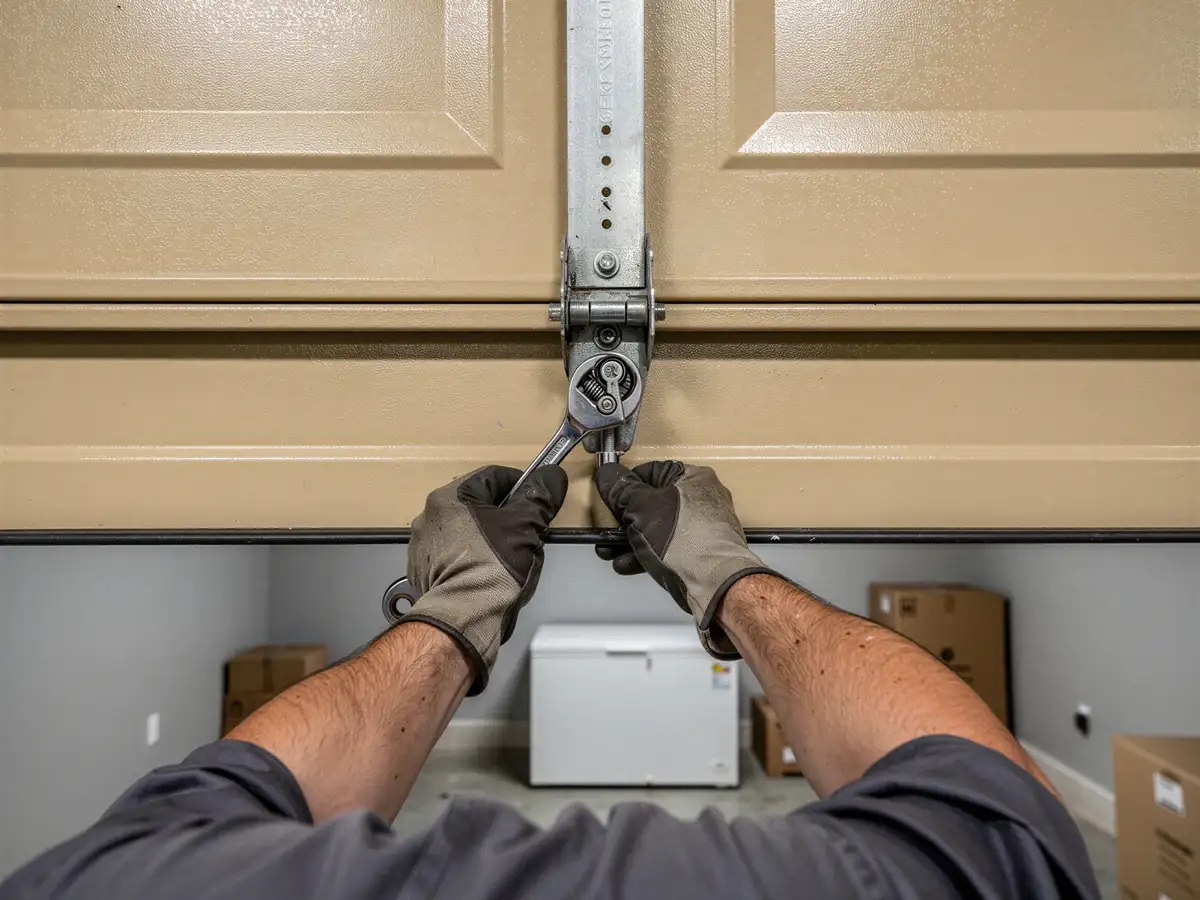
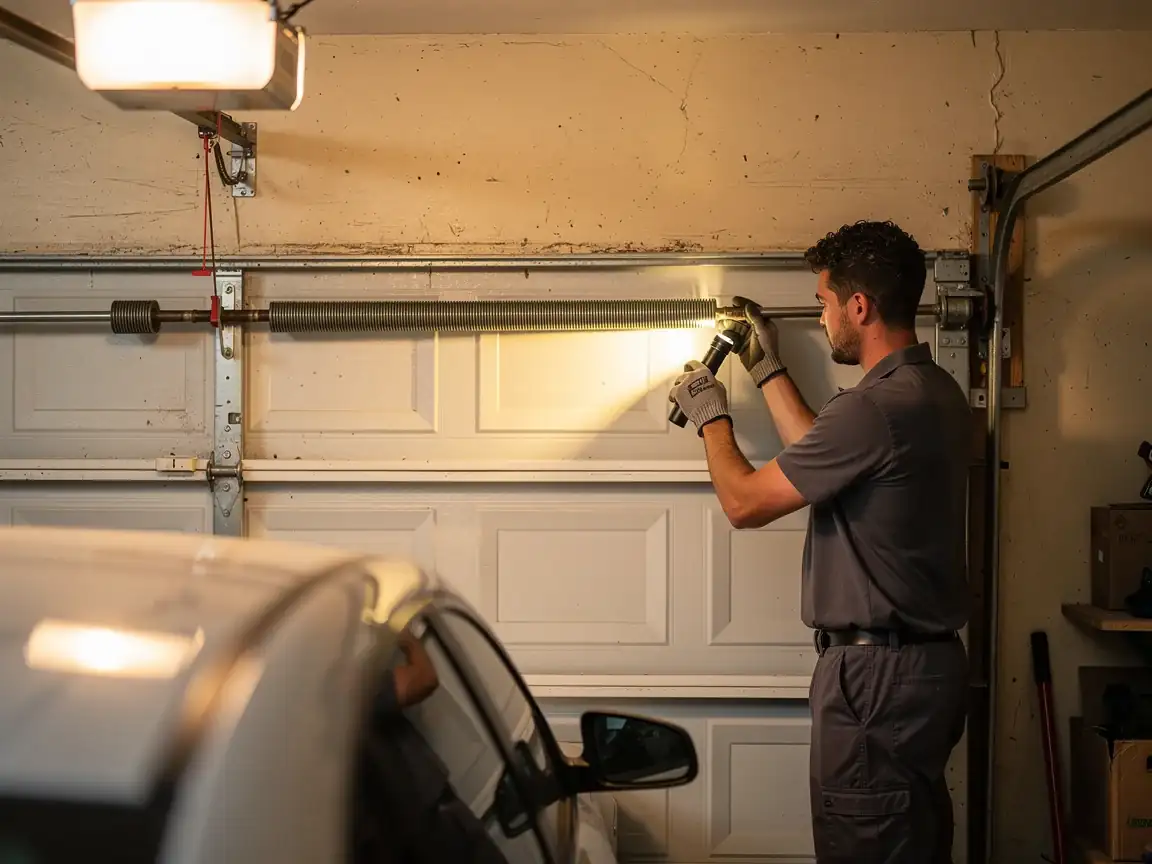
    A technician inspects a garage door torsion spring with a flashlight.

    On-site diagnosis

    A technician tests the door under power and by hand and finds what actually failed.

  3. 3
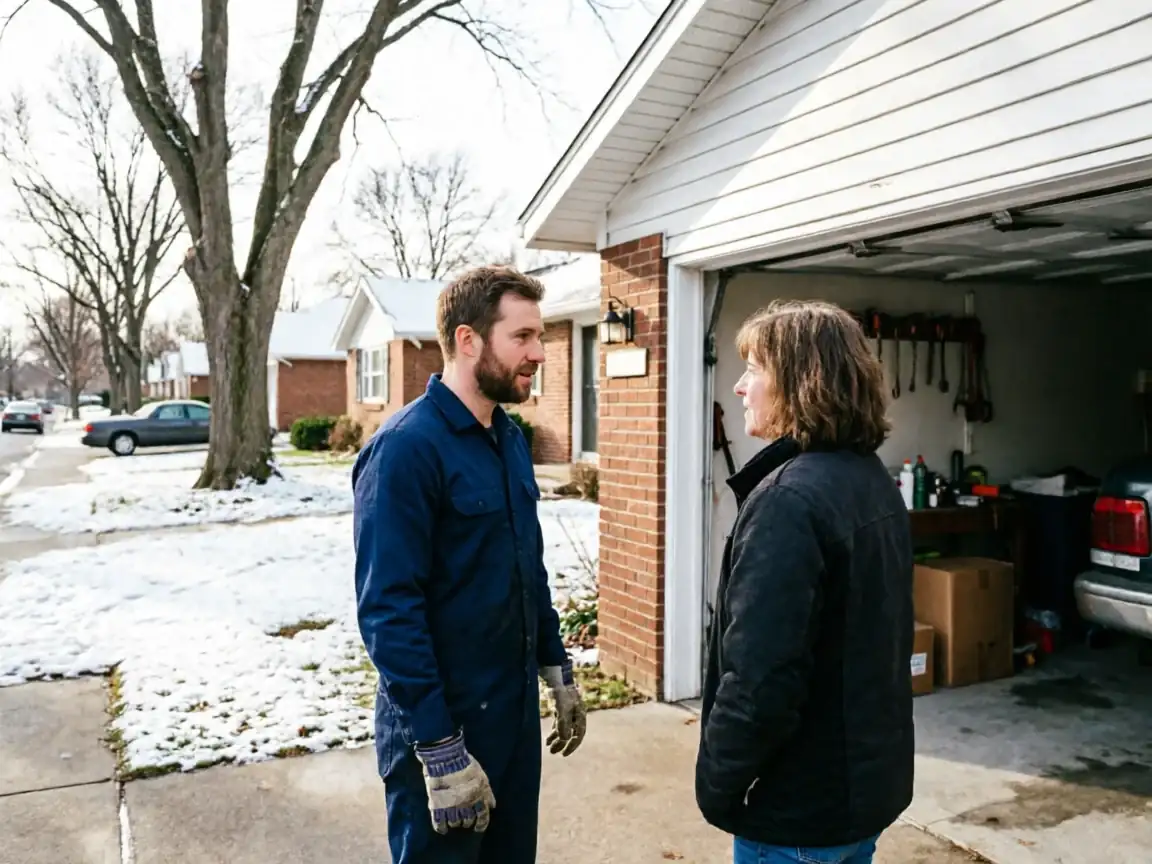
    A technician in a blue uniform talks to a woman in front of a garage.

    Clear, up-front plan

    You get the fix that’s needed and what drives the cost - before any work starts.

  4. 4
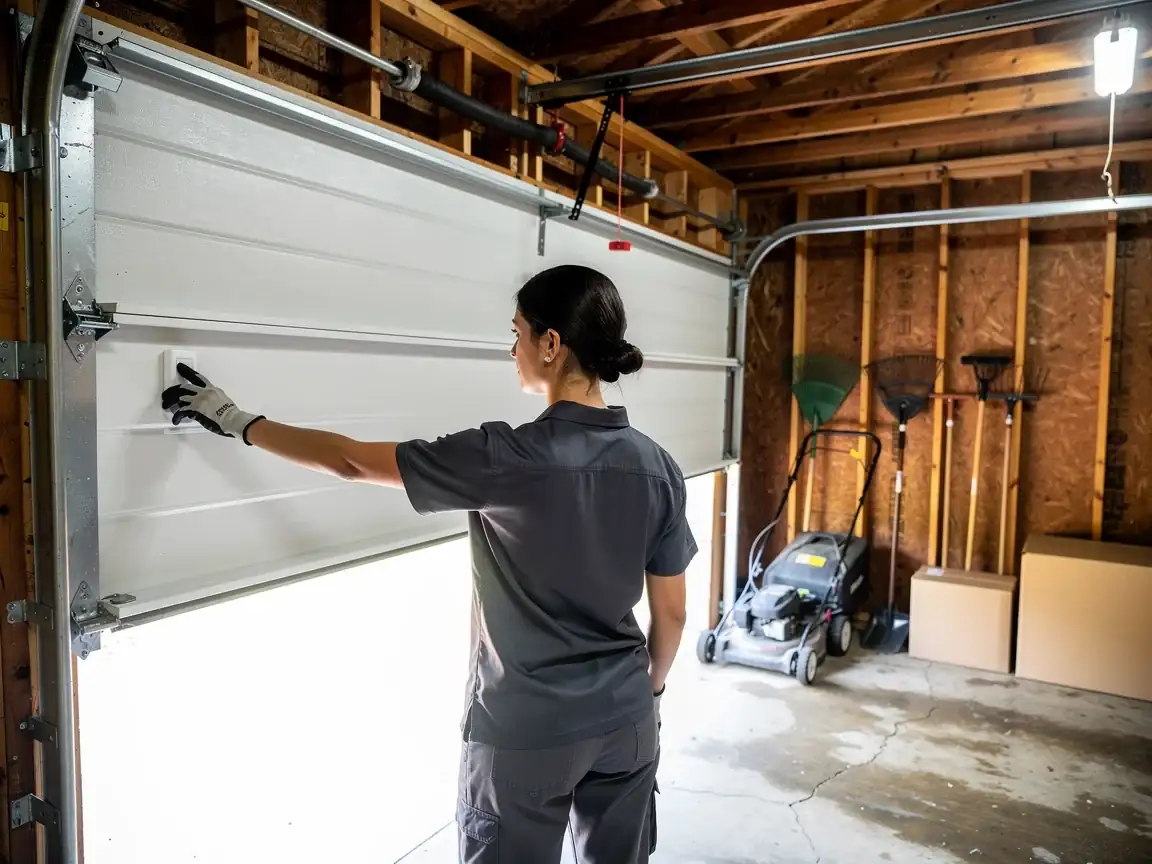
    A technician in a gray uniform presses a button on a white garage door.

    Repaired & tested

    The repair is done, the door is set true and tested, and the work area left clean.

Not sure which repair your door needs in Peoria, IL? Describe what it’s doing - every job starts with a diagnosis.

How we work

What to expect

Diagnosis firstEvery visit starts by finding what actually failed - not a pre-written parts list.
The right part for the doorSprings and openers matched to the door’s weight and age, so the fix holds up.
Straight answersWhen a repair makes more sense than a replacement - or the reverse - you hear it plainly.
Clean, careful workTension released safely, hardware set true, the door tested under power before we leave.
What we do

Garage Door Services

Repair and installation work for Peoria homes and businesses.

Questions

Frequently asked

Straight answers about garage door repair in Peoria. Still unsure? Ask us directly.

01Why does my garage door act up more in winter?

In this cold moderate climate, torsion springs and cables are under more stress in freezing temperatures than in warm weather, and older openers strain harder against cold grease and stiff metal. Houses built in the 1960s and 70s, which make up much of the stock here, tend to show this first since the hardware has been through more winters.

02Do you serve areas outside Peoria itself?

Yes, we work throughout the surrounding service area, including communities like West Peoria, Mossville, Bellevue, and out to places like Morton and Metamora. Distance from Peoria runs from about 4 miles for the closest towns to around 18 miles for the farthest.

03Is my old spring hardware a sign I need a whole new door?

Not always. If the track and door panels are in decent shape, we often just replace the spring assembly. But on houses with original 1960s-70s hardware that's heavily worn or mismatched to a newer door, repair sometimes costs more over time than replacing the whole system - we'll tell you straight if that's the case.

04How do you figure out if it's the spring or the opener?

We check both during the visit rather than assuming based on the symptom you describe, since a failing spring and a straining opener can look similar from the homeowner's side. This matters more here because a lot of houses have mixed-era hardware where one part was upgraded and the other wasn't.

Ready to get your garage door sorted?

Tell us what it’s doing and where you are in Peoria - we’ll take it from there.

Request a QuoteCall