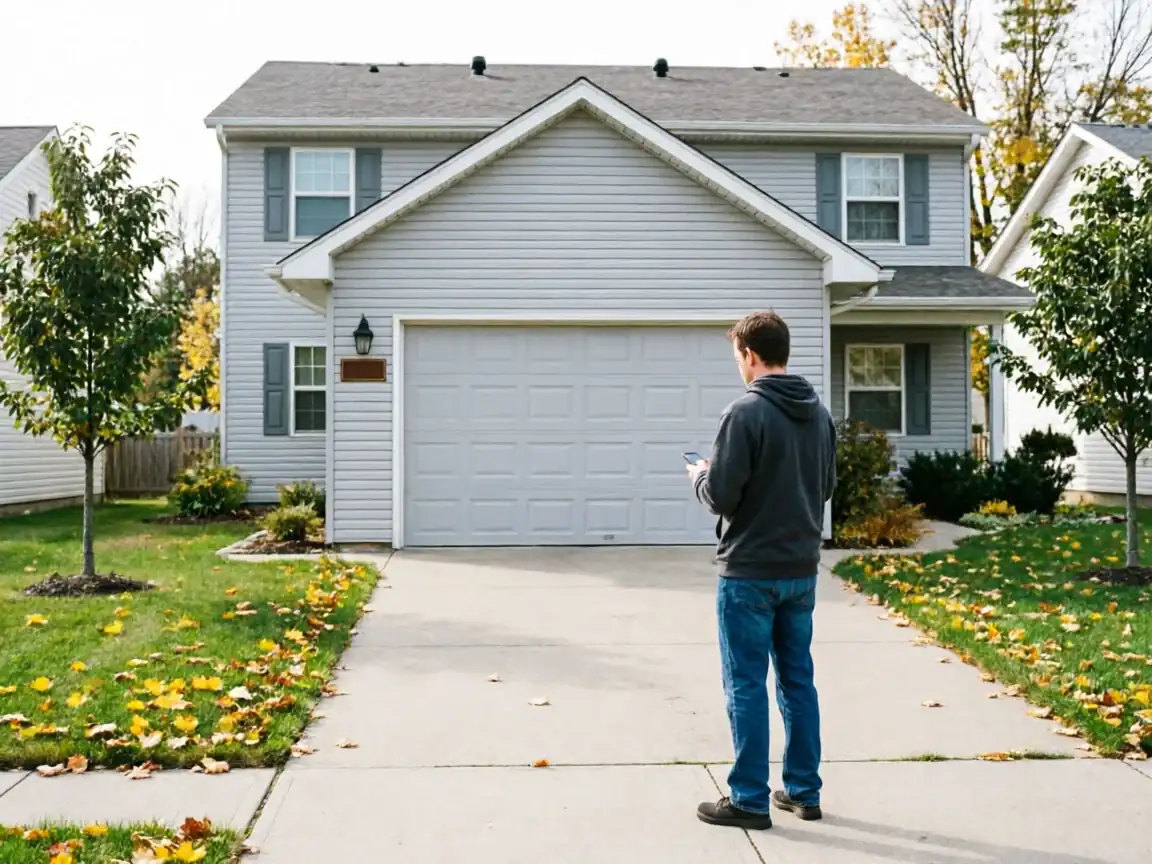
The DIY Question
Most houses in East Peoria went up around 1968
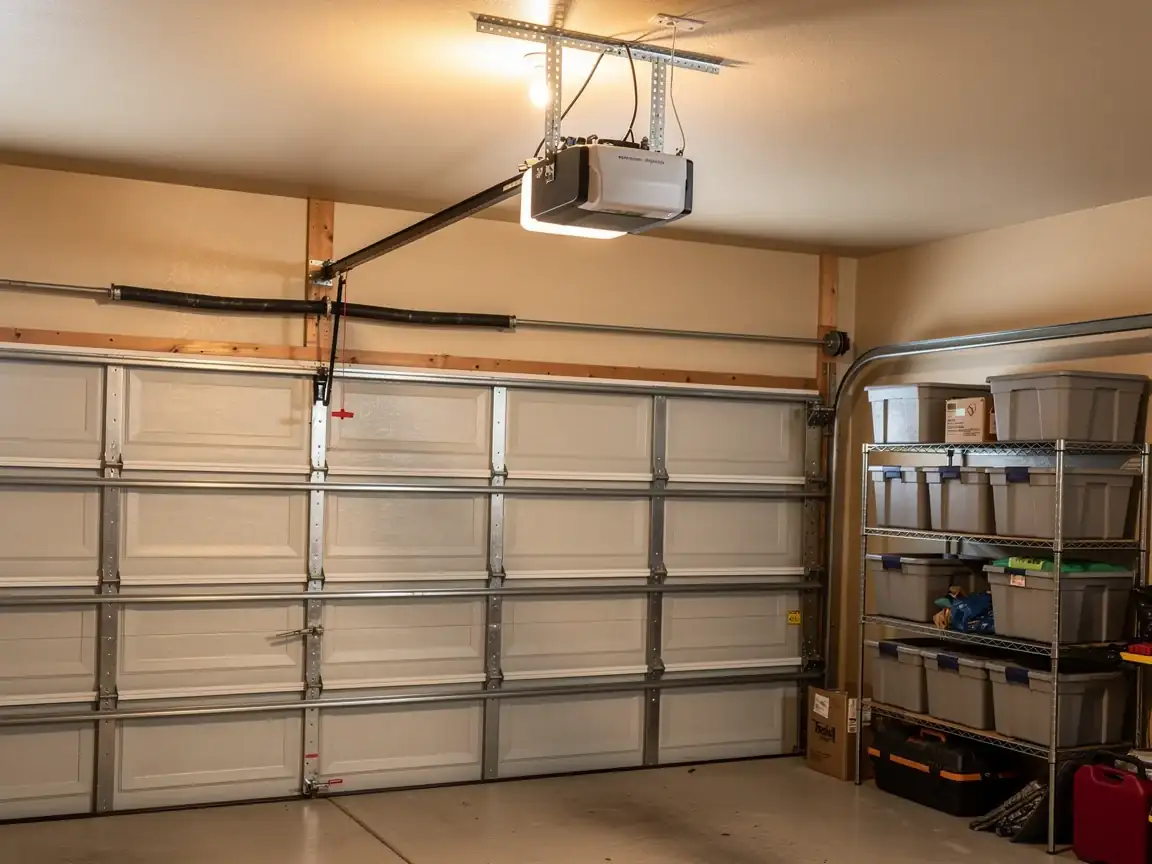
And a lot of that original garage door hardware has never been swapped out. That matters more than people think. A torsion spring or a set of cables installed when a house was built in the late 1960s has had five decades to fatigue, rust, or just plain wear past spec. When it finally lets go, it usually does it at the worst moment - door stuck half open, car trapped inside, kids late for school.
Can you fix it yourself?
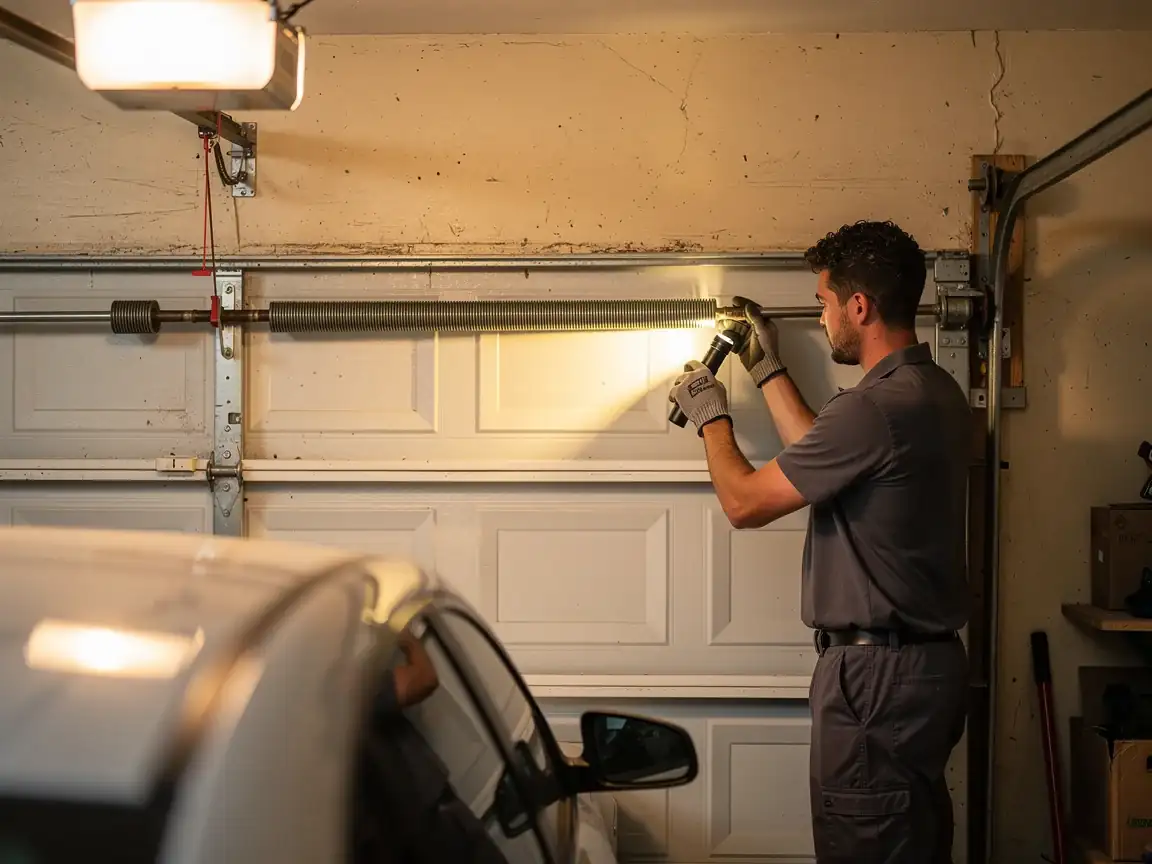
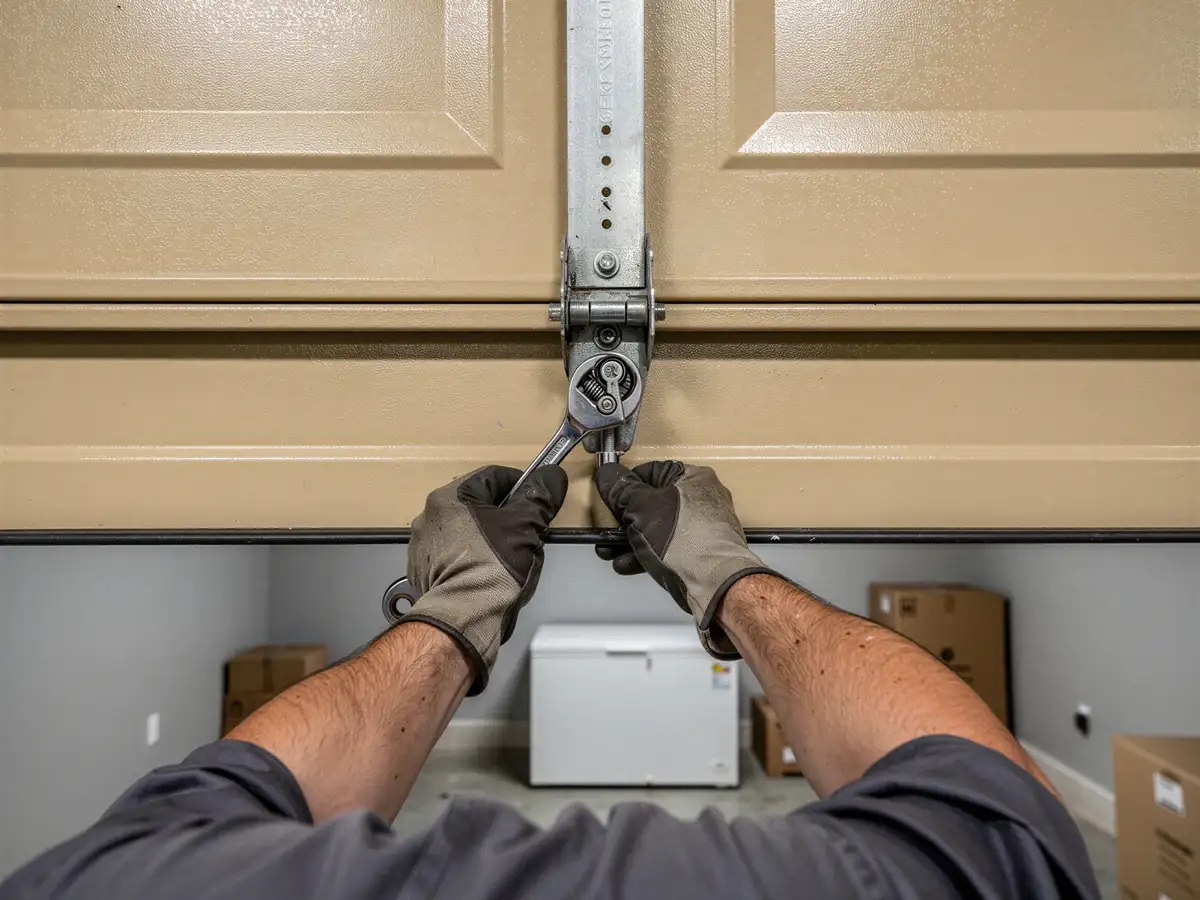
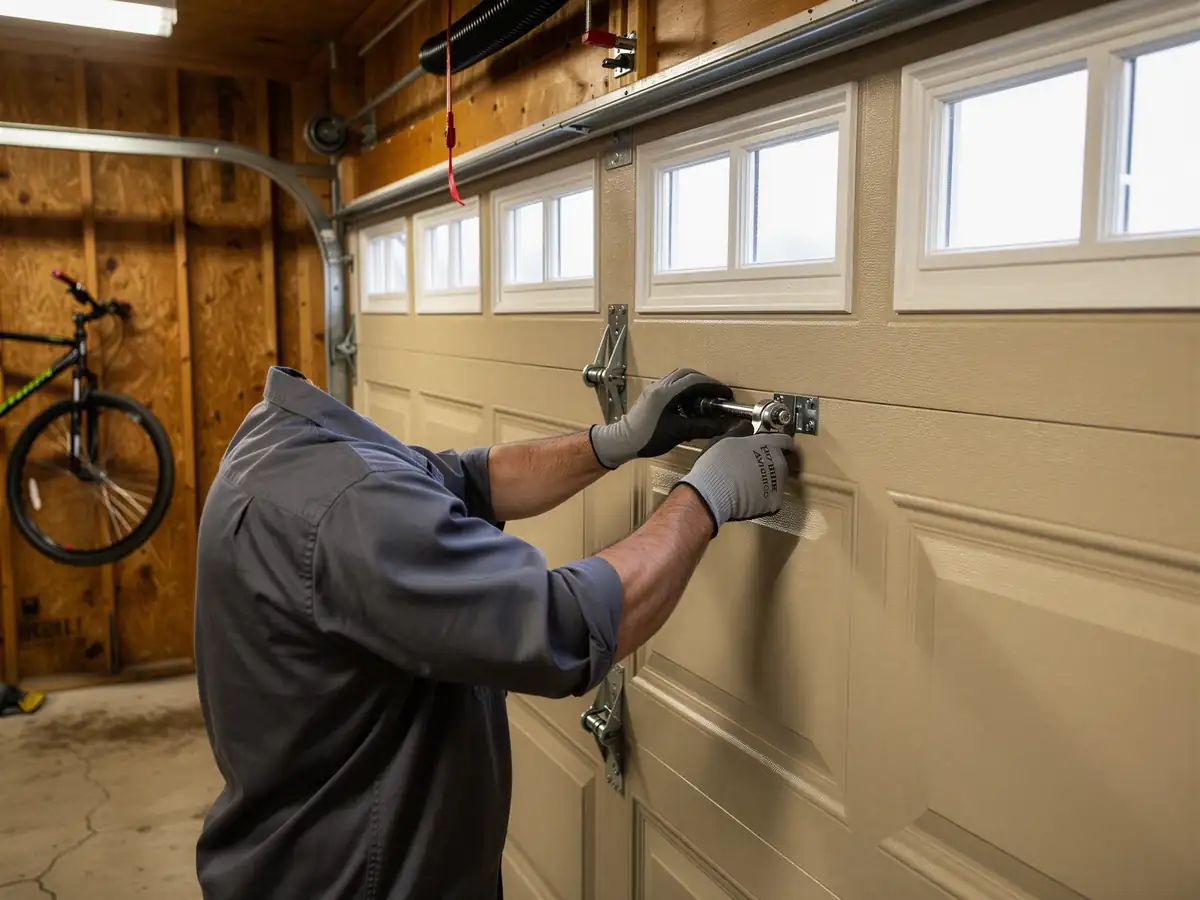
Depends what broke. A bent sensor bracket or a track that's knocked loose, sure, a homeowner with a level and some patience can usually sort that. A snapped torsion spring is a different animal. Those springs are wound under serious tension, and the drums, cables, and bearing plates holding that tension are often the same age as the spring - meaning if one part goes, the others aren't far behind. We'd rather talk you out of that repair over the phone than patch you up and get a second call next month.
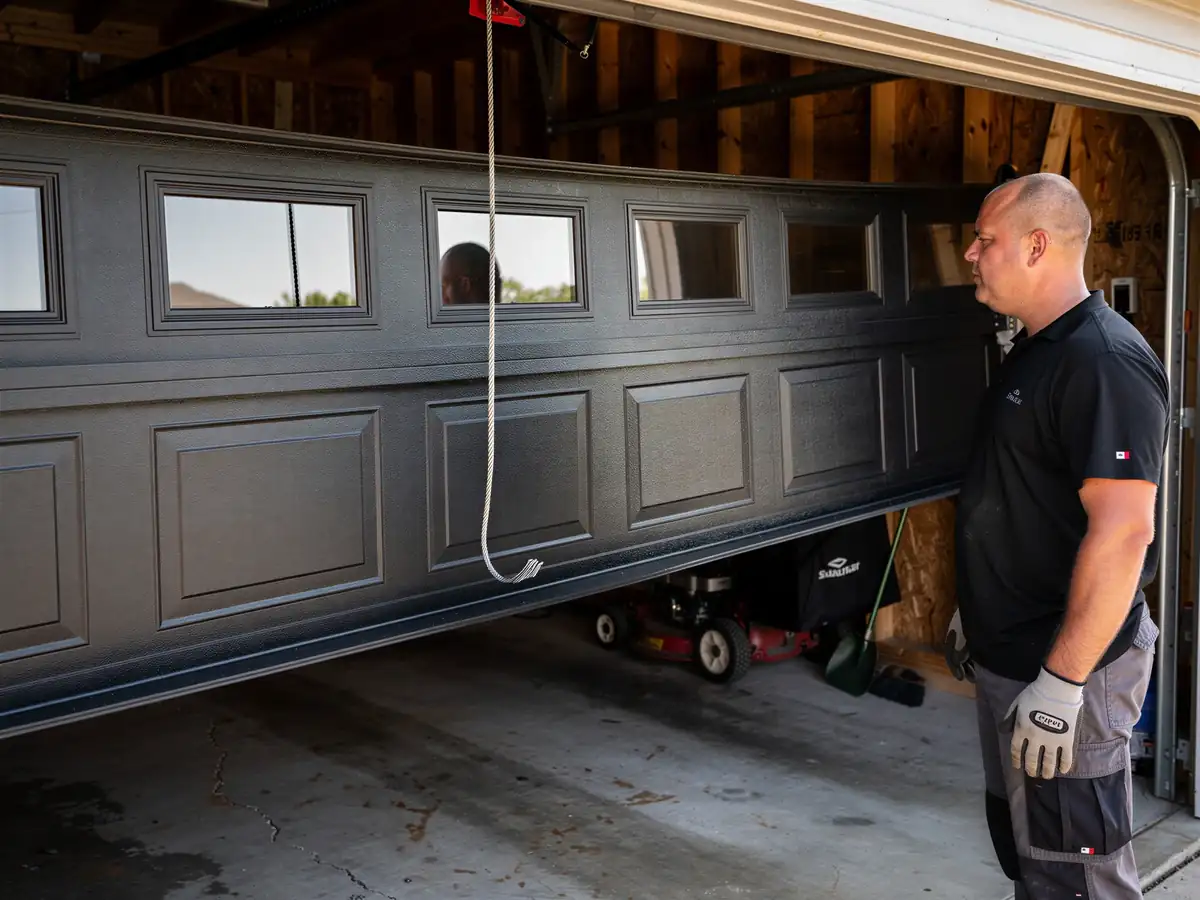
If your door won't move at all, or it moves and then slams
Stop opening and closing it by hand. That's the line between a repair call and a trip to urgent care.
What It Costs
We don't post a flat number for East Peoria calls because what's actually broken on a house built in 1968 varies more than people expect. Some homes had their openers replaced decades ago and kept the original spring and track; others still have everything stock. A cable repair costs less than a full spring and drum replacement, and a door that's also racked on its tracks from years of an undersized opener straining against it costs more than either on its own.
What we can tell you honestly: we price the job after we see the hardware, not before. Quoting blind on a door we haven't looked at means someone gets overcharged or we get underpaid, and neither helps you. If you want a number before we're on site, tell us the symptom - door won't open, loud bang then nothing, opener runs but door doesn't move - and we can narrow down what you're likely looking at.
One honest limitation: we don't carry every obsolete part for every era of hardware on the truck. If your door uses a track or spring size that stopped being made years ago, we may need a day to source it rather than finish the same visit.
Getting It Booked In
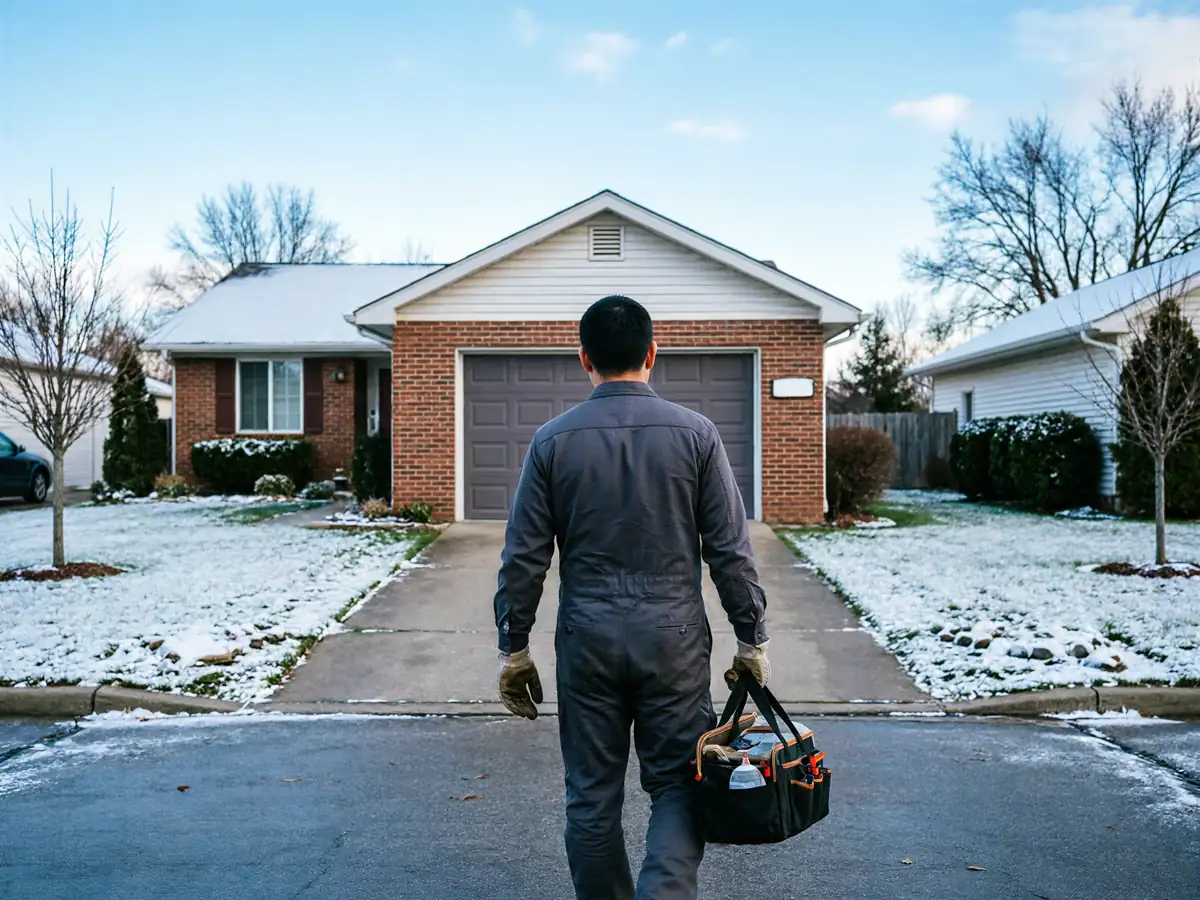
We run out of Peoria, about seven miles from East Peoria, so when you call, tell us what the door is doing right now - stuck, off track, making noise, opener running but nothing moving. That lets us bring the right spring size, cable length, or roller set instead of guessing and making a second trip.
If the door is open and won't close, or closed and won't open with a car inside, say so up front. We sort calls by what's actually blocking someone's day, not by who called first.
Have the house built-year handy if you know it - most of East Peoria dates to the late 1960s, and that tells us a lot about what we'll find before we even pull up.
Why This Fails Locally
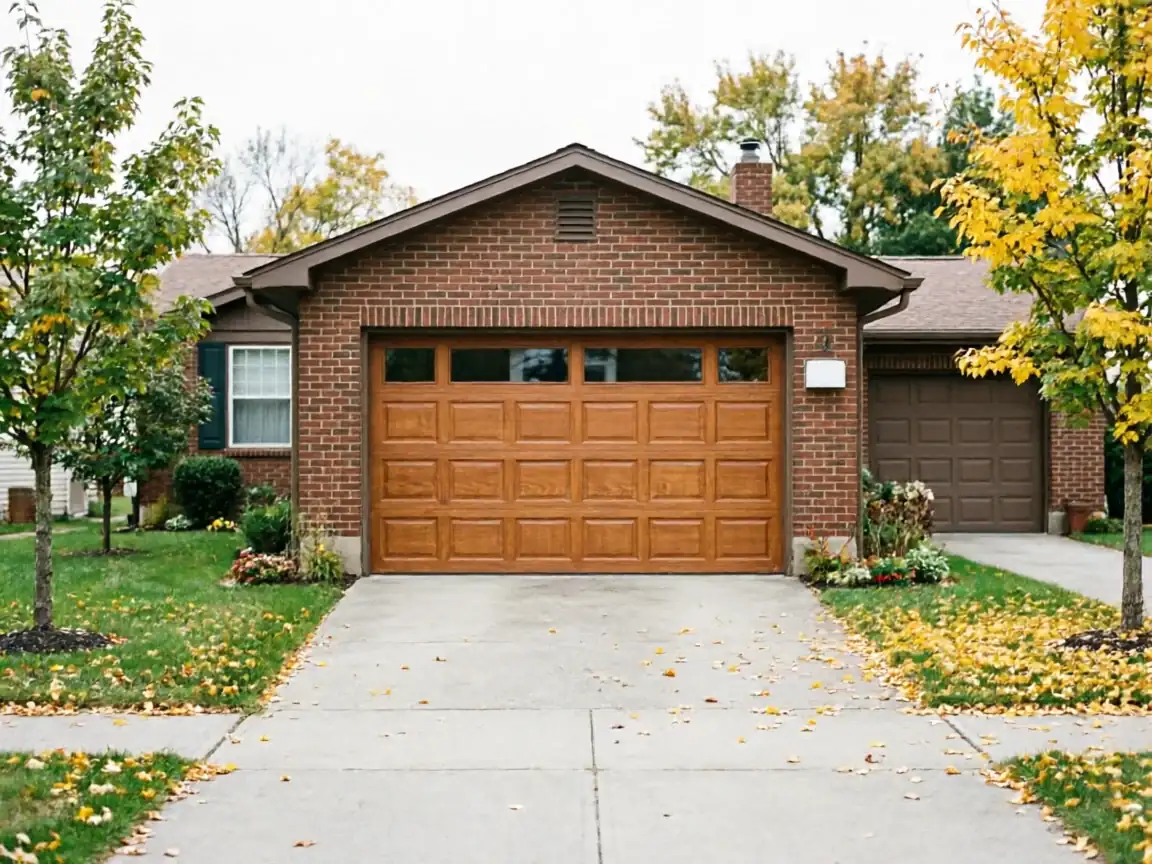
East Peoria's housing stock clusters tightly around 1968
Which means a huge share of garage doors in town are still running on hardware sized for the cars, openers, and usage patterns of that era. A single-car household in 1968 opened that door maybe twice a day. Two-income households with two cars running the door four to six times a day puts decades more wear-cycles on the same thirty-year-old spring than it was ever rated for.
Add the climate: this area sits in a cold-moderate band
Which means real freeze-thaw cycling every winter. Moisture gets into worn cable strands and spring coils, rusts them from the inside, and they fail without warning - not gradually creaking, just snapping. A door that was fine in October can fail in January because the cold finally found the weak spot the summer humidity started.
We see this pattern across the towns east of Peoria that share this build era
It's not an East Peoria-only problem, but with median income here at $71,763 and a town of roughly 9,900 households, a lot of these doors are original equipment nobody's thought to inspect since the house was bought.
- 9,900 households
How We Fix It
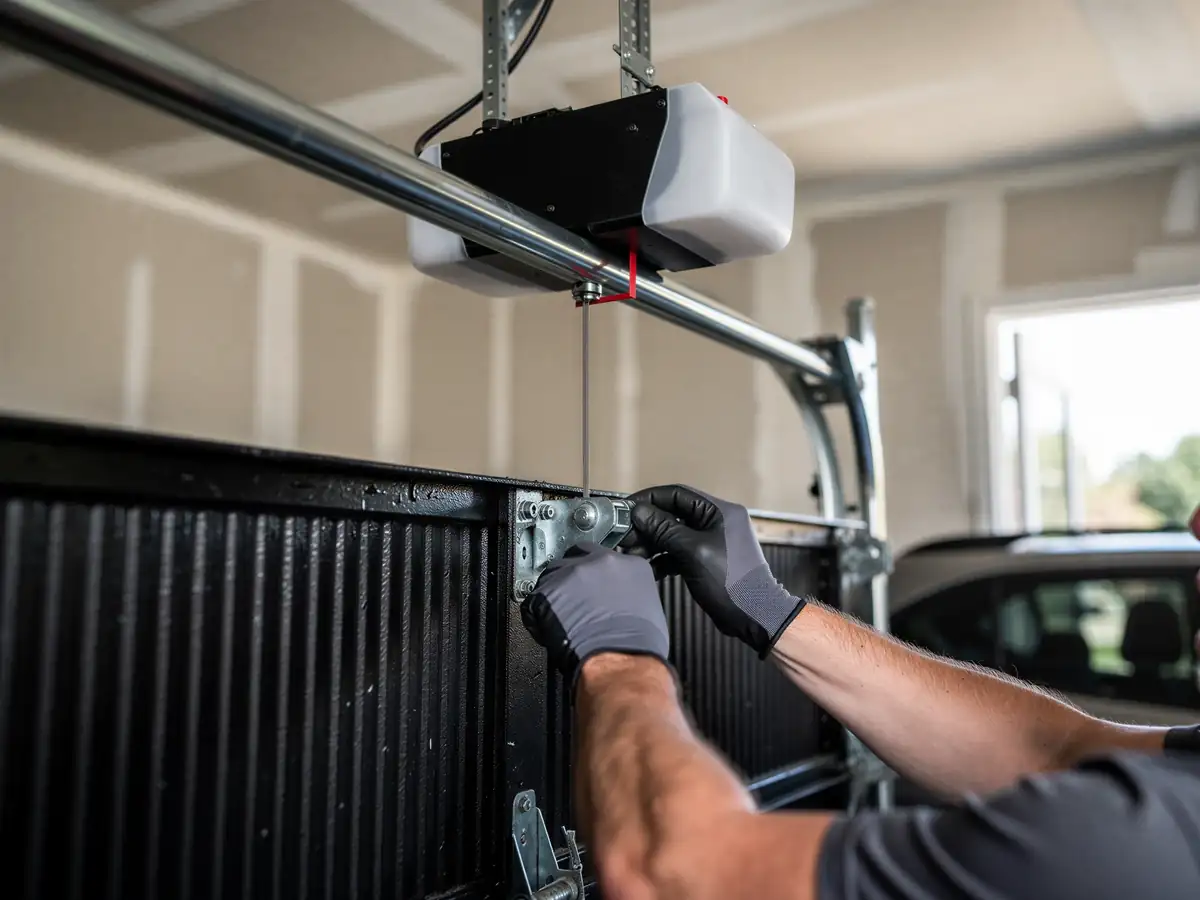
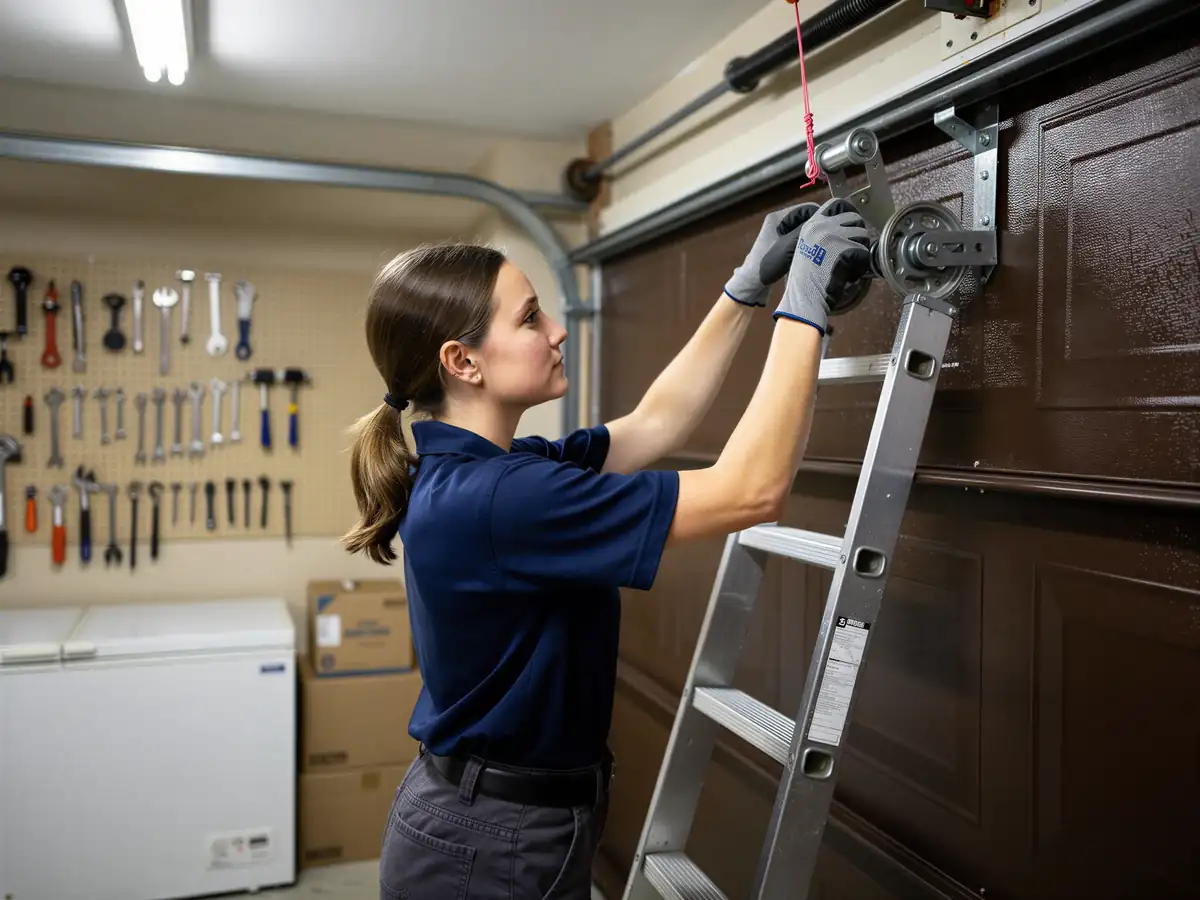
When we get to a stuck or broken door, we start by checking whether the spring, cables, drums, and bearing plates are original or already replaced - that tells us whether we're fixing one part or the whole system. On a lot of East Peoria doors, if one piece from 1968 is failing, we'll flag the rest so you're not calling us back in six months for the next part in line.
For a snapped torsion spring, we replace it matched to your door's weight and size, not just swap in whatever's closest - an undersized spring strains the opener and wears out fast in cold weather. Cables and rollers get replaced as a set if they're original, since mismatched wear on one side throws the door off track again within a season.
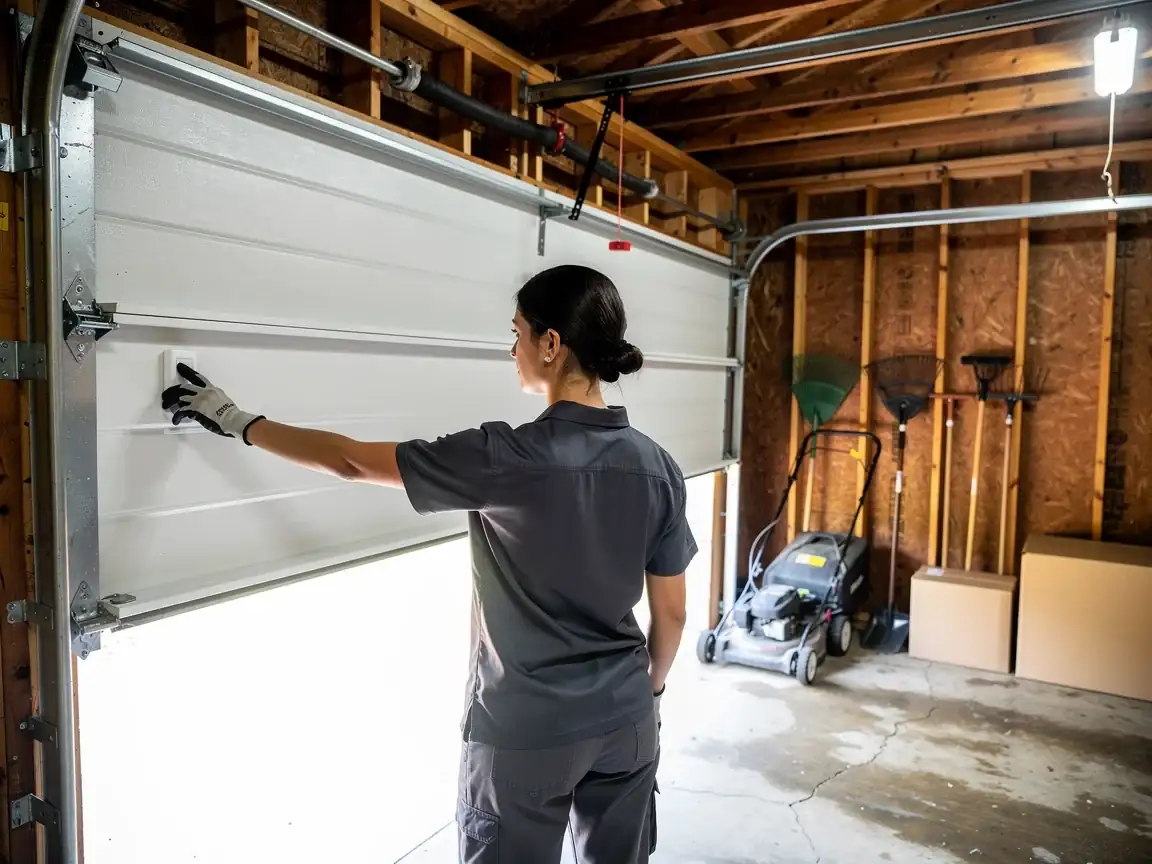
We test the balance by hand before we leave - a properly balanced door should hold position about halfway up without the opener holding it there. If it doesn't, something's still off, and we don't call the job done until it does.