
What It Costs
We don't have a fixed emergency rate to publish here, and quoting one before we've seen the door would be a guess dressed up as a fact. What we can say is that cost on a 1950s door in Creve Coeur tends to run higher than on a newer door, not because the parts are exotic but because they're obsolete - a torsion spring sized for an older low-headroom setup, or a track that was never updated to current hardware. With median household income here at $49,853, below the broader Peoria-area median, we try to be straight about when a repair makes sense versus when the door's age means you're paying to patch something that'll fail again in a year. We'll tell you which situation you're in before we start, not after.
How Long You Are Without the Door
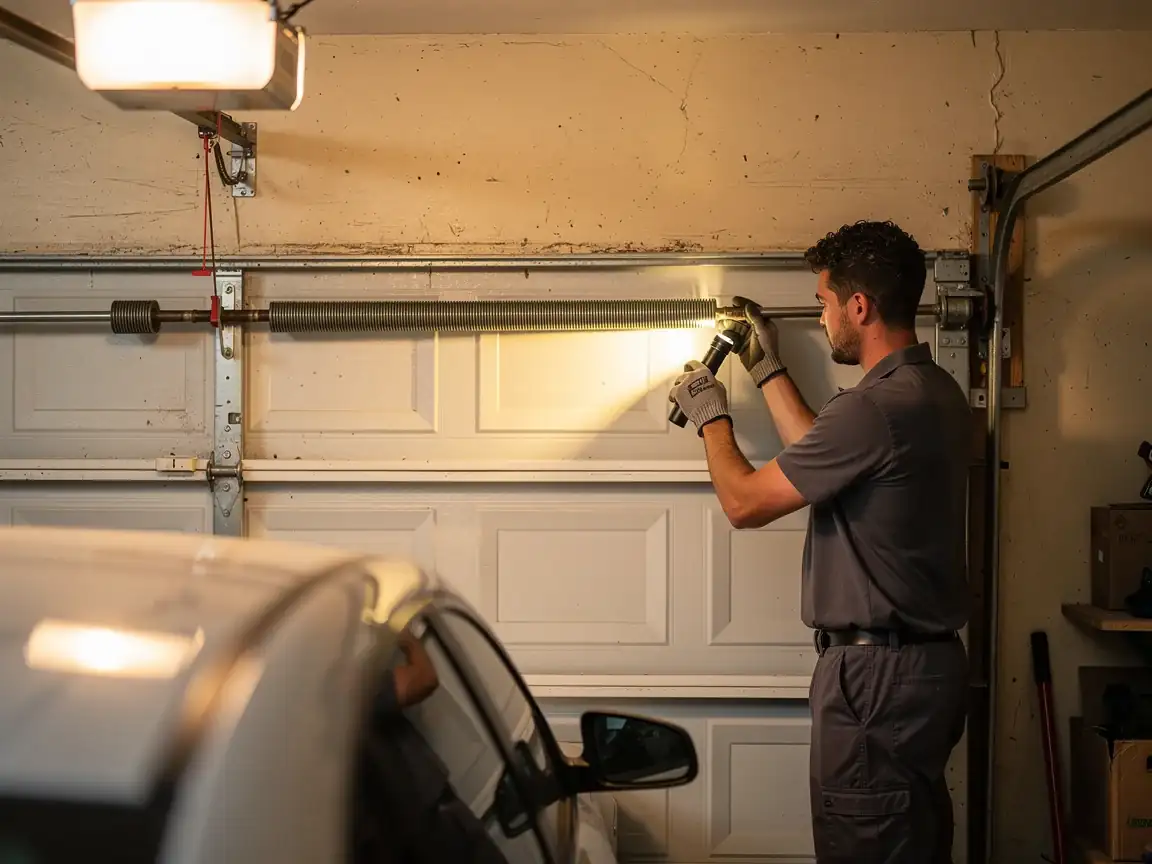
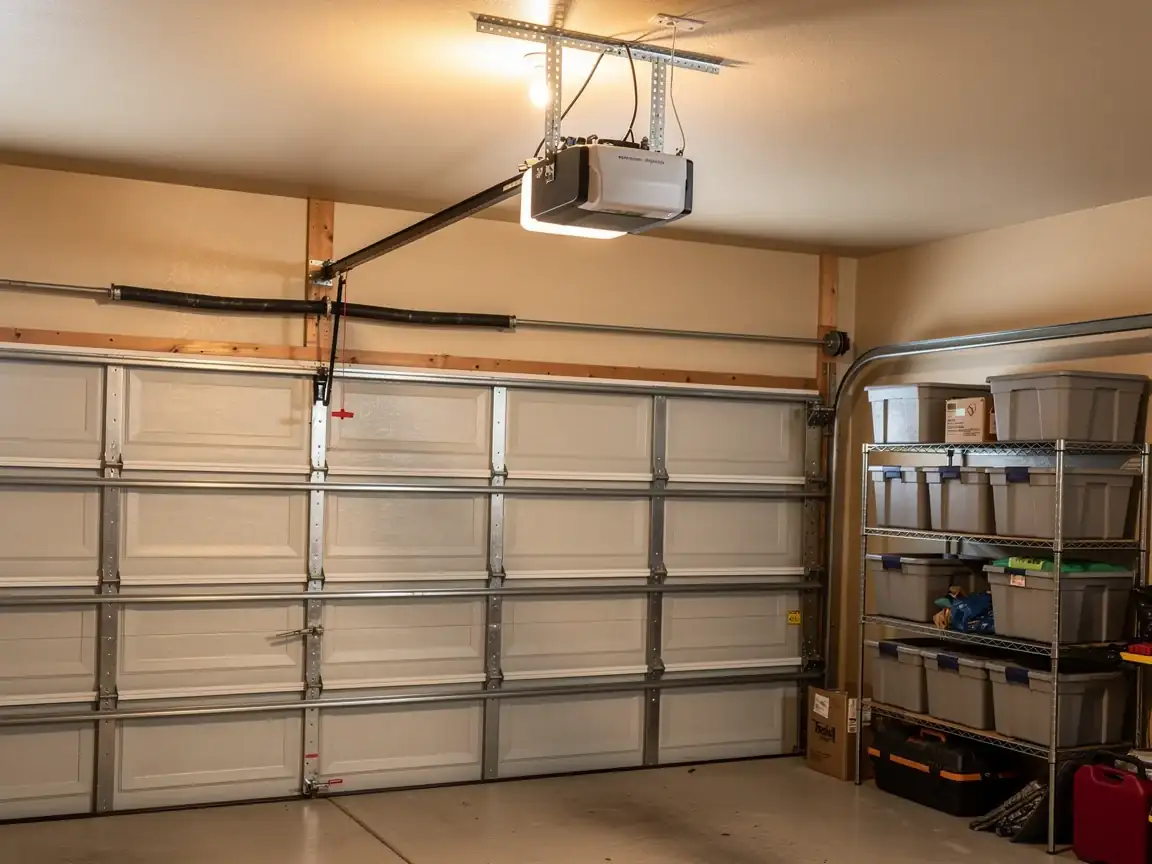
A broken spring or snapped cable on an original 1954-era door usually means the job takes longer than it would on a door built in the last fifteen years, simply because the opener, track, and spring system weren't designed to the same tolerances as current hardware. If the drum or the shaft itself is original, we're matching old dimensions, not swapping in a stock part and moving on. Add the 8-mile drive from Peoria into the mix and the honest answer is: plan for longer than a same-neighborhood call in town. We'd rather tell you that up front than have you standing in a cold garage wondering why it's taking a while.
Stocked Parts
Because a meaningful share of Creve Coeur's garage doors date to the 1950s, we carry older-pattern torsion springs and standard-width track hardware on the truck, not just the current big-box sizes. That's a direct response to the age of the housing stock here, not a universal stocking policy - a newer subdivision wouldn't need it. What we can't always carry is a match for a door panel from that era; sourcing an exact replacement panel for a 1950s-built door can mean a wait we don't control, which is the one honest limitation worth naming before you're counting on same-day everything.
The Complications
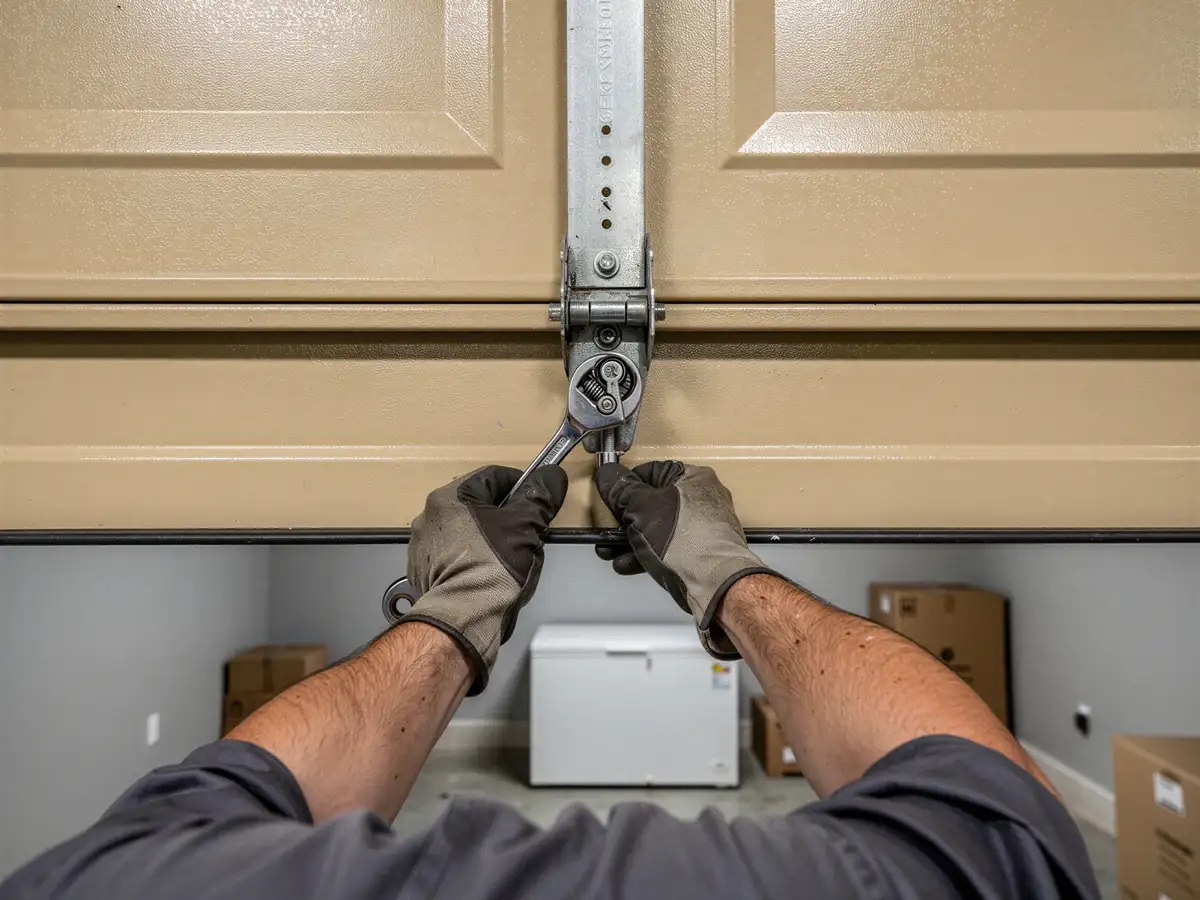
The complication in Creve Coeur isn't usually the repair itself - it's what the repair uncovers. Pull a broken spring off a door that's been on the same hardware since 1954 and you sometimes find a bent track, a rusted hinge, or a bracket that was never meant to carry today's heavier insulated panels if the door's been swapped once already. We'll flag that before replacing just the one part that broke, because fixing a spring and leaving a worn track means we're back out here in a few months. With 2,242 households in Creve Coeur and a housing stock this age, that pattern isn't unusual - it's close to the norm.